What does Esther 1:5 mean?
“And when these days were expired, the king made a feast unto all the people that were present in Shushan the palace, both unto great and small, seven days, in the court of the garden of the king’s palace;” — Esther 1:5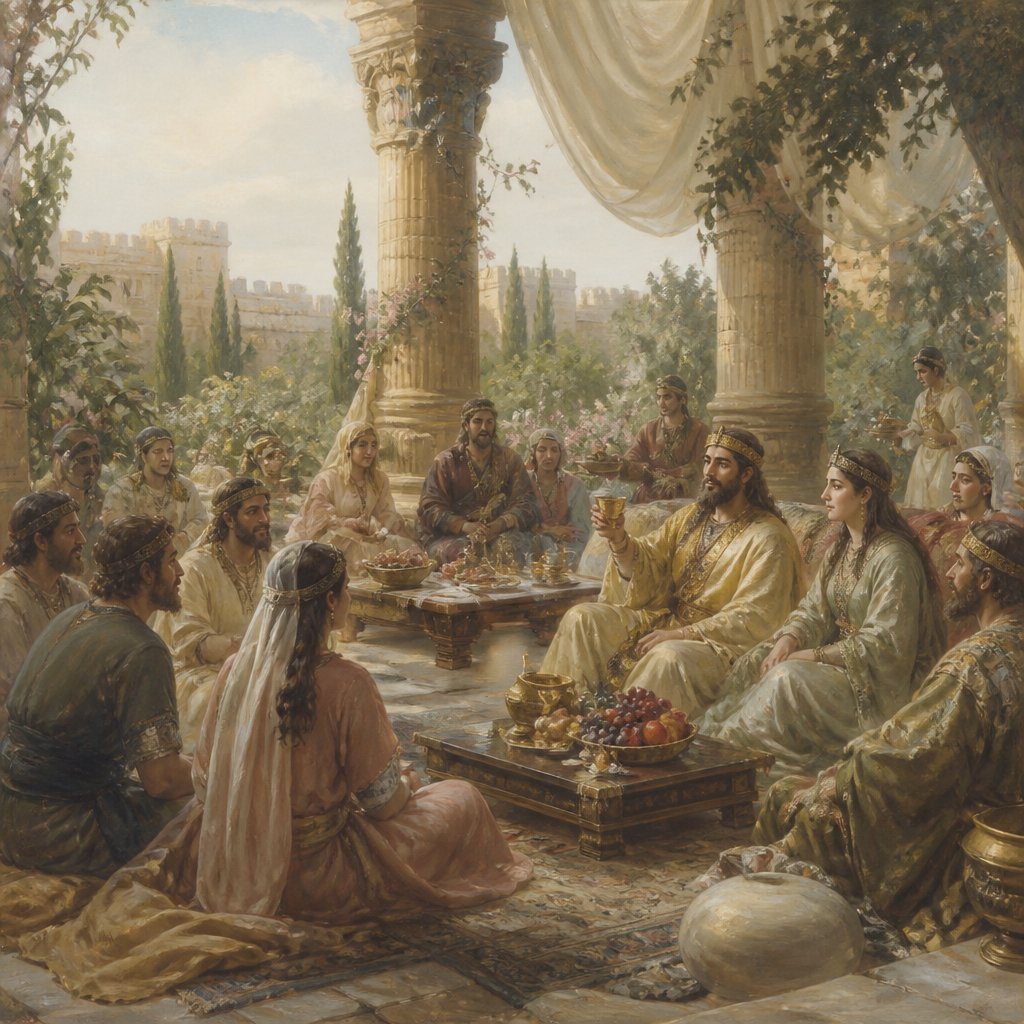
Esther 1:5 in the King James Version (KJV) of the Bible states, "And when these days were expired, the king made a feast unto all the people that were present in Shushan the palace, both unto great and small, seven days, in the court of the garden of the king's palace." This verse comes from the book of Esther, which is found in the Old Testament. The book of Esther is unique in that it is one of two books in the Bible that does not directly mention God. Despite this, it is still considered a part of the biblical canon and contains important themes and lessons for believers.
The book of Esther is set during the time of the Babylonian captivity when the Jewish people were living in exile. The story revolves around a young Jewish woman named Esther who becomes queen to King Xerxes of Persia. The verse in question describes a lavish feast that King Xerxes hosts for the people in the city of Shushan. This feast is significant because it sets the stage for the events that will unfold in the rest of the book.
The feast is a symbol of opulence and extravagance, as it lasts for a full seven days and is open to both the great and small in the city. It serves as a backdrop to the power dynamics at play in the Persian court and foreshadows the conflict that will arise between the king and his wife, Queen Vashti. This conflict ultimately leads to Esther's rise to power and her pivotal role in saving her people from destruction.
The feast in Esther 1:5 also serves as a backdrop to the theme of providence and God's sovereignty. Although God is not explicitly mentioned in the book of Esther, his hand can be seen working behind the scenes to orchestrate events in such a way that the Jewish people are ultimately saved from destruction. The feast, with all its grandeur and excess, stands in contrast to the power of God to bring about salvation through seemingly ordinary and unlikely means.
In addition to its role in setting the stage for the plot of the book, the feast in Esther 1:5 can also be seen as a cautionary tale about the dangers of excess and indulgence. Throughout the Bible, there are warnings about the perils of pursuing wealth, power, and pleasure at the expense of righteousness and justice. The feast in Esther serves as a vivid example of the temptations that come with opulence and luxury, and the potential consequences of succumbing to such temptations.
Furthermore, the feast can be seen as a microcosm of the social dynamics at play in the Persian court. The fact that it is open to all, from the greatest to the least, reflects the hierarchical nature of Persian society at the time. This hierarchical structure plays a significant role in the events of the book, as it informs the power dynamics and relationships between the characters. The feast, therefore, serves as a reflection of the broader social and political context in which the story unfolds.
In conclusion, Esther 1:5 and the feast it describes are rich in symbolism and themes that resonate throughout the book of Esther and the broader biblical narrative. From its role in setting the stage for the plot, to its reflection of the themes of providence, excess, and social hierarchy, the feast serves as a powerful and multi-layered symbol that informs our understanding of the story and its implications for our own lives.
Get our apps


Artwork for Esther 1:5
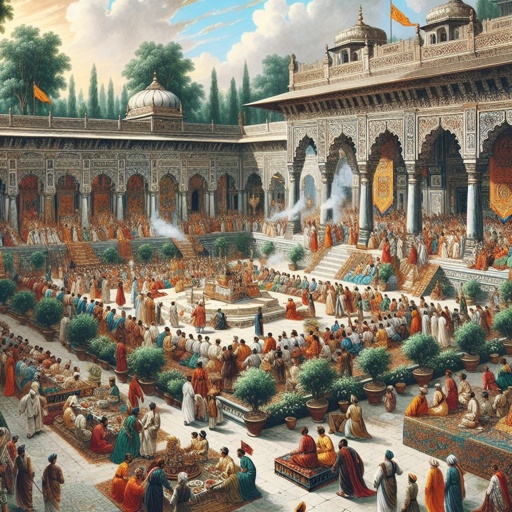
Esther 1:5 - "And when these days were expired, the king made a feast unto all the people that were present in Shushan the palace, both unto great and small, seven days, in the court of the garden of the king's palace;"
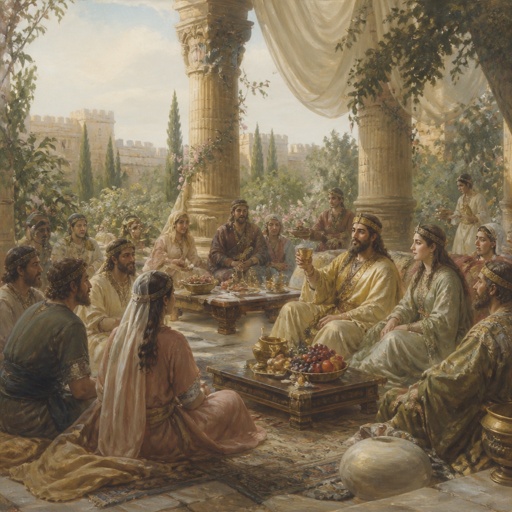
"And when these days were expired, the king made a feast unto all the people that were present in Shushan the palace, both unto great and small, seven days, in the court of the garden of the king's palace;" - Esther 1:5

Esther 5:5 - "Then the king said, Cause Haman to make haste, that he may do as Esther hath said. So the king and Haman came to the banquet that Esther had prepared."

Esther 5:7 - "Then answered Esther, and said, My petition and my request is;"

Esther 5:1 - "Now it came to pass on the third day, that Esther put on her royal apparel, and stood in the inner court of the king's house, over against the king's house: and the king sat upon his royal throne in the royal house, over against the gate of the house."

Esther 5:2

Esther 5:2 - "And it was so, when the king saw Esther the queen standing in the court, that she obtained favour in his sight: and the king held out to Esther the golden sceptre that was in his hand. So Esther drew near, and touched the top of the sceptre."

Esther 5:2

Esther 5:2

Esther 5:4 - "And Esther answered, If it seem good unto the king, let the king and Haman come this day unto the banquet that I have prepared for him."
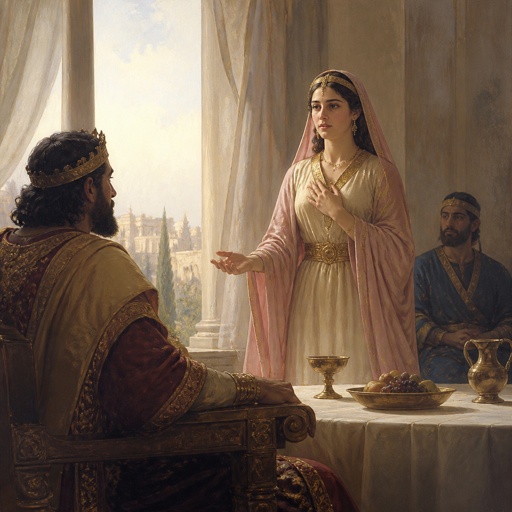
"Then answered Esther, and said, My petition and my request is;" - Esther 5:7

Esther 5:3 - "Then said the king unto her, What wilt thou, queen Esther? and what is thy request? it shall be even given thee to the half of the kingdom."

Esther 7:5 - "¶ Then the king Ahasuerus answered and said unto Esther the queen, Who is he, and where is he, that durst presume in his heart to do so?"

Esther 5:2 - "And it was so, when the king saw Esther the queen standing in the court, that she obtained favour in his sight: and the king held out to Esther the golden sceptre that was in his hand. So Esther drew near, and touched the top of the sceptre."
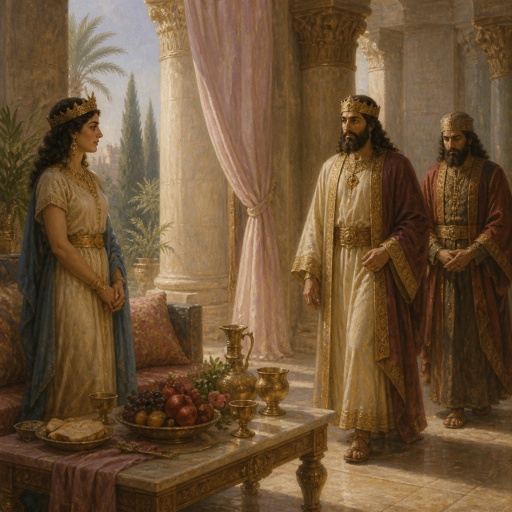
"Then the king said, Cause Haman to make haste, that he may do as Esther hath said. So the king and Haman came to the banquet that Esther had prepared." - Esther 5:5

Esther 4:5 - "Then called Esther for Hatach, one of the king's chamberlains, whom he had appointed to attend upon her, and gave him a commandment to Mordecai, to know what it was, and why it was."

Esther 7:1 - "So the king and Haman came to banquet with Esther the queen."

Esther 5:6 - "¶ And the king said unto Esther at the banquet of wine, What is thy petition? and it shall be granted thee: and what is thy request? even to the half of the kingdom it shall be performed."

Esther 1:17

Esther 8:1 - "On that day did the king Ahasuerus give the house of Haman the Jews' enemy unto Esther the queen. And Mordecai came before the king; for Esther had told what he was unto her."

Esther 5:12 - "Haman said moreover, Yea, Esther the queen did let no man come in with the king unto the banquet that she had prepared but myself; and to morrow am I invited unto her also with the king."

Esther, the courageous queen

"So the king and Haman came to banquet with Esther the queen." - Esther 7:1

Esther 1:6

Esther 3:5 - "And when Haman saw that Mordecai bowed not, nor did him reverence, then was Haman full of wrath."
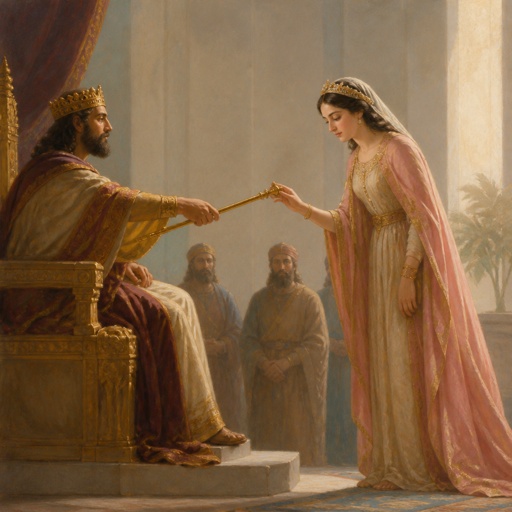
"And it was so, when the king saw Esther the queen standing in the court, that she obtained favour in his sight: and the king held out to Esther the golden sceptre that was in his hand. So Esther drew near, and touched the top of the sceptre." - Esther 5:2

Esther 6:5 - "And the king's servants said unto him, Behold, Haman standeth in the court. And the king said, Let him come in."

Esther 5:13 - "Yet all this availeth me nothing, so long as I see Mordecai the Jew sitting at the king's gate."

Esther 2:5 - "¶ Now in Shushan the palace there was a certain Jew, whose name was Mordecai, the son of Jair, the son of Shimei, the son of Kish, a Benjamite;"

Esther 5:10 - "Nevertheless Haman refrained himself: and when he came home, he sent and called for his friends, and Zeresh his wife."