Trusting God's Timing in the Casting of Lots: An Esther Devotional
“In the first month, that is, the month Nisan, in the twelfth year of king Ahasuerus, they cast Pur, that is, the lot, before Haman from day to day, and from month to month, to the twelfth month, that is, the month Adar.” — Esther 3:7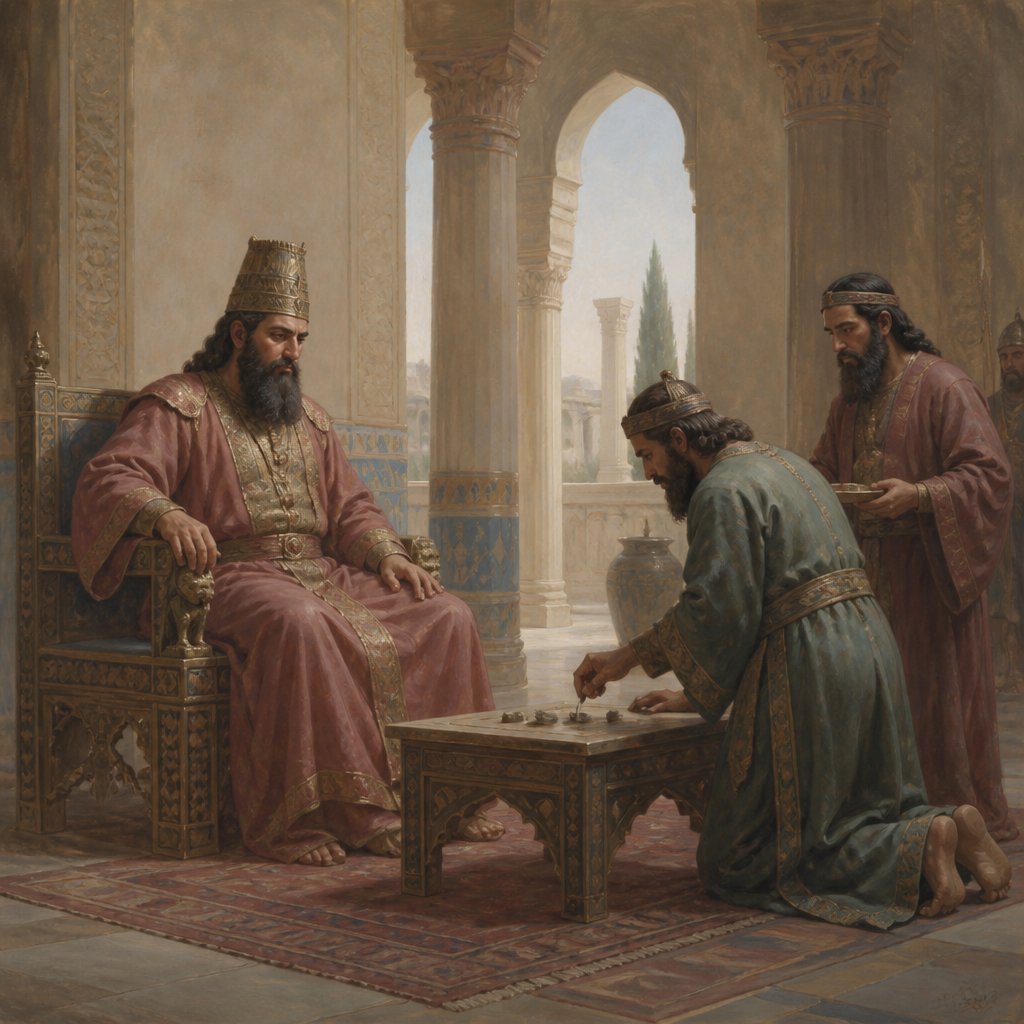
The world often seems like a tapestry of randomness—events unfold without our understanding of the deeper purpose or divine timing underlying them. Esther 3:7 reminds us of the sweeping providence of God even in what appears to be mere chance. In the King James Version, the verse reads: "In the first month, that is, the month Nisan, in the twelfth year of king Ahasuerus, they cast Pur, that is, the lot, before Haman from day to day, and from month to month, to the twelfth month, that is, the month Adar."
The context of this verse is pivotal. Haman, an aggrandizing official in the Persian Empire, had been granted substantial power, and his plot against the Jews was quickly unwinding. In his scheming, Haman cast lots—called Pur—to determine the most favorable day to annihilate an entire people. At a cursory glance, it might seem as though Haman was in control, that fate rested in the hands of blind chance. However, a deeper theological lens reveals that God was immensely present and orchestrating events behind the scenes.
Casting lots was a common practice in ancient cultures, often associated with discerning fate or divine will. In this instance, over the course of several months, these lots culminated in a specific time—the twelfth month, the month of Adar. This seemingly arbitrary choice played a crucial role in the tapestry of God’s plan for saving His people. Timing is everything, particularly in God's grand design.
Understanding God’s timing prepares our hearts for a number of lessons. Firstly, patience is essential in trusting His plan. The Jews endured many days and months of uncertain destiny as they awaited the outcome of Haman's determination. Rather than immediately intervening to change their plight, God seemed to allow the process to unfold—a vital lesson that triumphs often come embedded in prolonged trials. God knows our hearts and our battles; He asks us to endure and wait upon Him. We reflect on Isaiah 40:31 where it states, "But they that wait upon the LORD shall renew their strength; they shall mount up with wings as eagles; they shall run, and not be weary; and they shall walk, and not faint."
Secondly, this scripture illustrates God's sovereignty amidst chaotic circumstances. Haman believed that through the casting of lots, he could cement the fate of the Jewish people in his favor. However, unbeknownst to him, God’s providence was actively redirecting these events. Proverbs 21:1 states, "The king's heart is in the hand of the LORD, as the rivers of water: he turneth it whithersoever he will." Our circumstances might look bleak, and worldly authorities may appear to hold power over us, yet we serve a God who moves hearts in ways we cannot see.
Lastly, Esther 3:7 instills hope in the face of despair. The casting of the lot determined the date that Haman would launch his genocidal orders, but it also set the stage for Esther’s intervention and the eventual salvation of her people. God worked through seemingly unholy allegiances and dire situations to manifest a divine outcome. Hope is nourished when we realize that God weaves our stories together even when we are unaware of it.
As we meditate on this scripture, let us pause to reflect on the areas of our lives where we await God’s timing. In the waiting, let us embrace patience, recognize His sovereignty, and cultivate the hope that His purposes will prevail. We can find peace in knowing that when circumstances seem to cast a shadow, God is present with us, threading His divine will through the fabric of time. Let us trust in His timing, for He is at work—even when we cannot yet see the full picture.
Get our apps


Artwork for Esther 3:7

Esther 3:7 - "¶ In the first month, that is, the month Nisan, in the twelfth year of king Ahasuerus, they cast Pur, that is, the lot, before Haman from day to day, and from month to month, to the twelfth month, that is, the month Adar."
"¶ In the first month, that is, the month Nisan, in the twelfth year of king Ahasuerus, they cast Pur, that is, the lot, before Haman from day to day, and from month to month, to the twelfth month, that is, the month Adar." - Esther 3:7

Esther 7:3 - "Then Esther the queen answered and said, If I have found favour in thy sight, O king, and if it please the king, let my life be given me at my petition, and my people at my request:"

Esther 5:7 - "Then answered Esther, and said, My petition and my request is;"

Esther 7:1 - "So the king and Haman came to banquet with Esther the queen."

Esther 7:6 - "And Esther said, The adversary and enemy is this wicked Haman. Then Haman was afraid before the king and the queen."

Esther 7:2 - "And the king said again unto Esther on the second day at the banquet of wine, What is thy petition, queen Esther? and it shall be granted thee: and what is thy request? and it shall be performed, even to the half of the kingdom."

Esther 7:7 - "¶ And the king arising from the banquet of wine in his wrath went into the palace garden: and Haman stood up to make request for his life to Esther the queen; for he saw that there was evil determined against him by the king."

Esther 9:7 - "And Parshandatha, and Dalphon, and Aspatha,"

"So the king and Haman came to banquet with Esther the queen." - Esther 7:1

Esther 8:7 - "¶ Then the king Ahasuerus said unto Esther the queen and to Mordecai the Jew, Behold, I have given Esther the house of Haman, and him they have hanged upon the gallows, because he laid his hand upon the Jews."
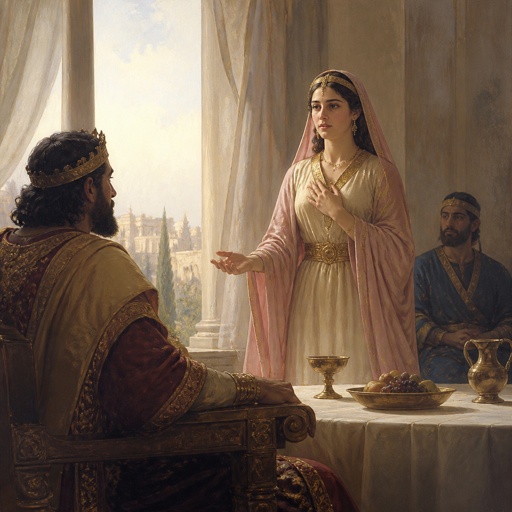
"Then answered Esther, and said, My petition and my request is;" - Esther 5:7

Esther 7:5 - "¶ Then the king Ahasuerus answered and said unto Esther the queen, Who is he, and where is he, that durst presume in his heart to do so?"

Esther 5:3 - "Then said the king unto her, What wilt thou, queen Esther? and what is thy request? it shall be even given thee to the half of the kingdom."
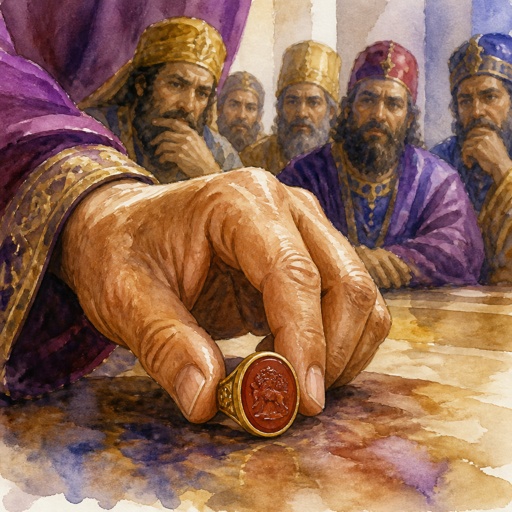
Esther 3:10 focus on ring

"And Parshandatha, and Dalphon, and Aspatha," - Esther 9:7
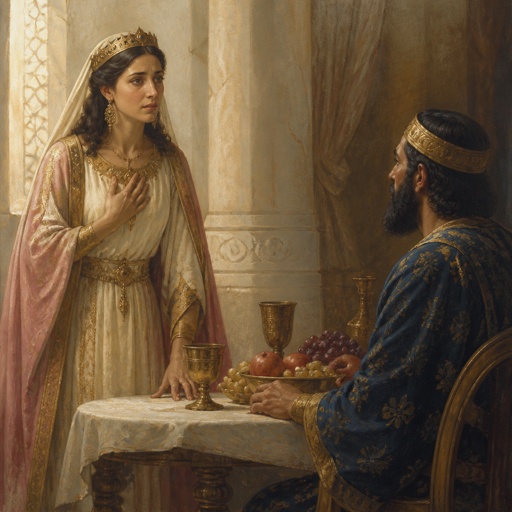
"Then Esther the queen answered and said, If I have found favour in thy sight, O king, and if it please the king, let my life be given me at my petition, and my people at my request:" - Esther 7:3

Esther 6:7 - "And Haman answered the king, For the man whom the king delighteth to honour,"

Esther 3:3 - "Then the king's servants, which were in the king's gate, said unto Mordecai, Why transgressest thou the king's commandment?"

"And Esther said, The adversary and enemy is this wicked Haman. Then Haman was afraid before the king and the queen." - Esther 7:6

Esther 8:3 - "¶ And Esther spake yet again before the king, and fell down at his feet, and besought him with tears to put away the mischief of Haman the Agagite, and his device that he had devised against the Jews."

Esther 7:10 - "So they hanged Haman on the gallows that he had prepared for Mordecai. Then was the king's wrath pacified."

Esther 2:7 - "And he brought up Hadassah, that is, Esther, his uncle's daughter: for she had neither father nor mother, and the maid was fair and beautiful; whom Mordecai, when her father and mother were dead, took for his own daughter."

Esther 7:8 - "Then the king returned out of the palace garden into the place of the banquet of wine; and Haman was fallen upon the bed whereon Esther was. Then said the king, Will he force the queen also before me in the house? As the word went out of the king's mouth, they covered Haman's face."

Esther 3:5 - "And when Haman saw that Mordecai bowed not, nor did him reverence, then was Haman full of wrath."

"¶ Then the king Ahasuerus answered and said unto Esther the queen, Who is he, and where is he, that durst presume in his heart to do so?" - Esther 7:5

Esther 9:3 - "And all the rulers of the provinces, and the lieutenants, and the deputies, and officers of the king, helped the Jews; because the fear of Mordecai fell upon them."

Esther 3:14 - "The copy of the writing for a commandment to be given in every province was published unto all people, that they should be ready against that day."

Esther 3:11 - "And the king said unto Haman, The silver is given to thee, the people also, to do with them as it seemeth good to thee."

Esther 1:7 - "And they gave them drink in vessels of gold, (the vessels being diverse one from another,) and royal wine in abundance, according to the state of the king."