What does Esther 3:7 mean?
“In the first month, that is, the month Nisan, in the twelfth year of king Ahasuerus, they cast Pur, that is, the lot, before Haman from day to day, and from month to month, to the twelfth month, that is, the month Adar.” — Esther 3:7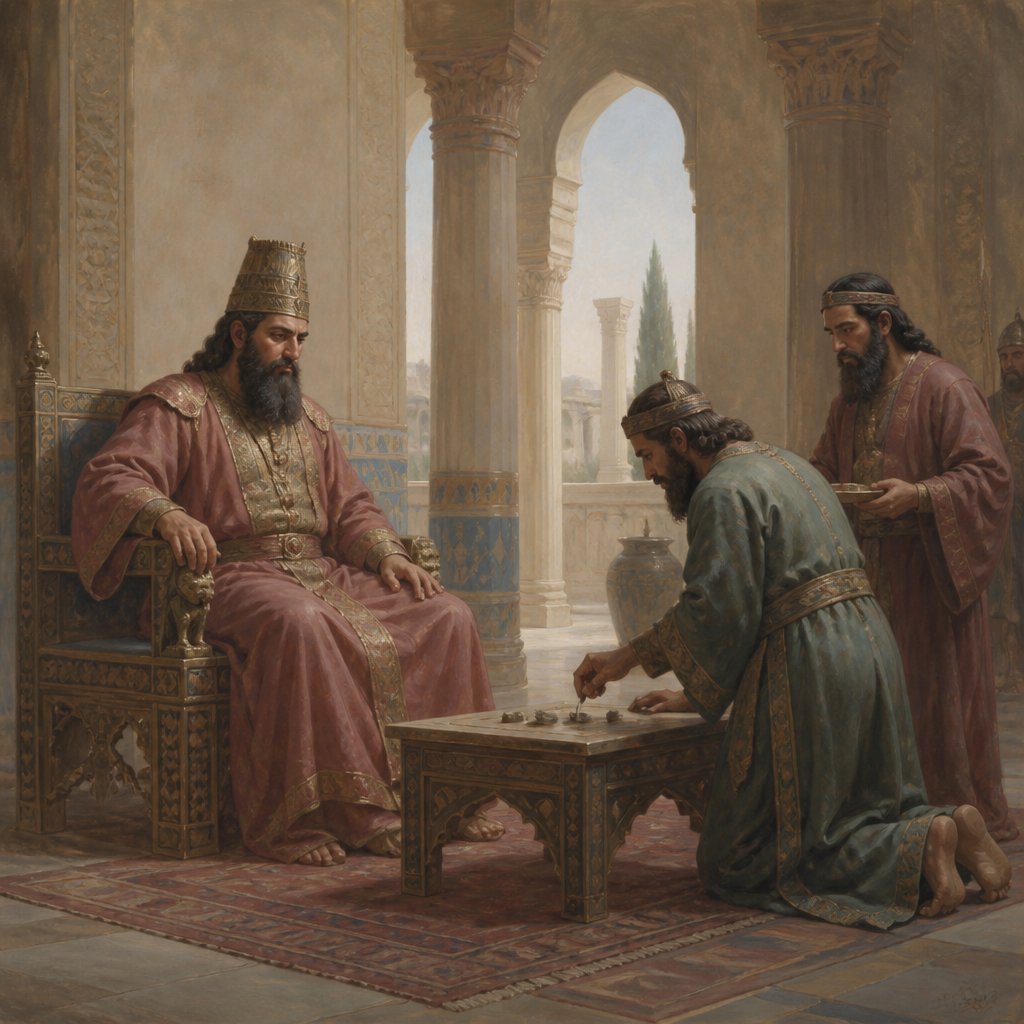
The Bible verse Esther 3:7 from the King James Version (KJV) states, "In the first month, that is, the month Nisan, in the twelfth year of king Ahasuerus, they cast Pur, that is, the lot, before Haman from day to day, and from month to month, to the twelfth month, that is, the month Adar."
This verse is part of the Old Testament book of Esther, which recounts the story of a Jewish woman who becomes queen of Persia and ultimately saves her people from a plot to destroy them. The verse itself serves as a specific detail within the larger narrative, but it also holds deeper symbolic and thematic significance within the context of the entire book.
The month of Nisan, mentioned in this verse, is the first month of the Jewish calendar and holds great significance within the Jewish faith. It is the month in which Passover is celebrated, commemorating the Israelites' liberation from slavery in Egypt. This connection to the month of Nisan adds a layer of symbolism to the events described in the book of Esther, highlighting the themes of deliverance, redemption, and the providential timing of God's intervention in the lives of His people.
The reference to "the twelfth year of king Ahasuerus" situates the events of the book in a specific historical and political context. King Ahasuerus, also known as Xerxes I, ruled over the vast Persian Empire from 486-465 BC. The political backdrop of the story provides insights into the power dynamics, royal intrigues, and cultural tensions that permeate the narrative. It also serves as a reminder that God's faithfulness and sovereignty extend over all realms of human authority and history.
The casting of Pur, or the lot, before Haman is a pivotal moment in the narrative, as it sets in motion the plot to destroy the Jewish people. The use of the lot was a common method of decision-making in ancient times, often associated with chance and fate. However, within the biblical context, the casting of lots is also seen as a means by which God's will is revealed (Proverbs 16:33). In the case of Esther, the casting of the lot becomes a symbol of the enemy's attempt to orchestrate events according to his own sinister purposes, but ultimately, it becomes an instrument by which God's providential plan unfolds.
The time frame from the first month to the twelfth month, mentioned in the verse, signifies a period of nearly a year during which the plot against the Jews was set in motion. This extended timeframe underscores the theme of suspense and impending doom that looms over the Jewish people, as well as the gradual unfolding of God's deliverance. It also serves as a reminder that God's timing often differs from human expectations, and His purposes are ultimately fulfilled in His perfect timing.
The month of Adar, mentioned as the twelfth month, holds particular significance in Jewish tradition as the month in which the festival of Purim is celebrated. The events described in the book of Esther culminate in the establishment of the festival of Purim, which commemorates the deliverance of the Jewish people from the threat of annihilation. The mention of the month Adar in this verse foreshadows the ultimate victory and celebration that will come at the end of the narrative, emphasizing the theme of God's faithfulness and His power to turn the tables on the plans of the enemy.
In conclusion, Esther 3:7 carries a rich tapestry of themes, contexts, and symbolism within its seemingly specific details. It reflects the providential timing of God's intervention, the tension between human agency and divine sovereignty, and the ultimate triumph of God's people over their adversaries. It also serves as a poignant reminder of the enduring relevance and significance of the biblical narrative for believers of all generations.
Get our apps


Artwork for Esther 3:7

Esther 3:7 - "¶ In the first month, that is, the month Nisan, in the twelfth year of king Ahasuerus, they cast Pur, that is, the lot, before Haman from day to day, and from month to month, to the twelfth month, that is, the month Adar."
"¶ In the first month, that is, the month Nisan, in the twelfth year of king Ahasuerus, they cast Pur, that is, the lot, before Haman from day to day, and from month to month, to the twelfth month, that is, the month Adar." - Esther 3:7

Esther 7:3 - "Then Esther the queen answered and said, If I have found favour in thy sight, O king, and if it please the king, let my life be given me at my petition, and my people at my request:"

Esther 5:7 - "Then answered Esther, and said, My petition and my request is;"

Esther 7:1 - "So the king and Haman came to banquet with Esther the queen."

Esther 7:6 - "And Esther said, The adversary and enemy is this wicked Haman. Then Haman was afraid before the king and the queen."

Esther 7:2 - "And the king said again unto Esther on the second day at the banquet of wine, What is thy petition, queen Esther? and it shall be granted thee: and what is thy request? and it shall be performed, even to the half of the kingdom."

Esther 7:7 - "¶ And the king arising from the banquet of wine in his wrath went into the palace garden: and Haman stood up to make request for his life to Esther the queen; for he saw that there was evil determined against him by the king."

Esther 9:7 - "And Parshandatha, and Dalphon, and Aspatha,"

"So the king and Haman came to banquet with Esther the queen." - Esther 7:1

Esther 8:7 - "¶ Then the king Ahasuerus said unto Esther the queen and to Mordecai the Jew, Behold, I have given Esther the house of Haman, and him they have hanged upon the gallows, because he laid his hand upon the Jews."
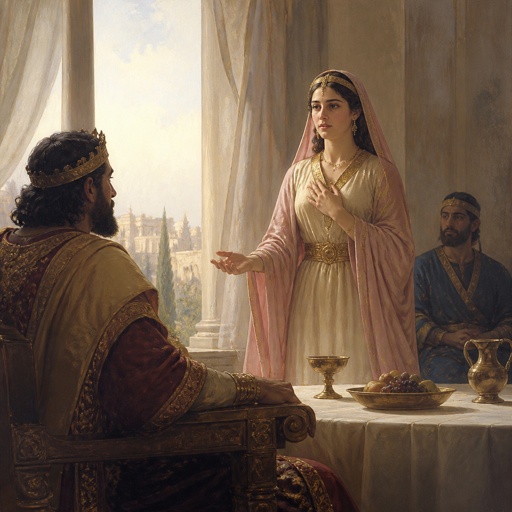
"Then answered Esther, and said, My petition and my request is;" - Esther 5:7

Esther 7:5 - "¶ Then the king Ahasuerus answered and said unto Esther the queen, Who is he, and where is he, that durst presume in his heart to do so?"

Esther 5:3 - "Then said the king unto her, What wilt thou, queen Esther? and what is thy request? it shall be even given thee to the half of the kingdom."
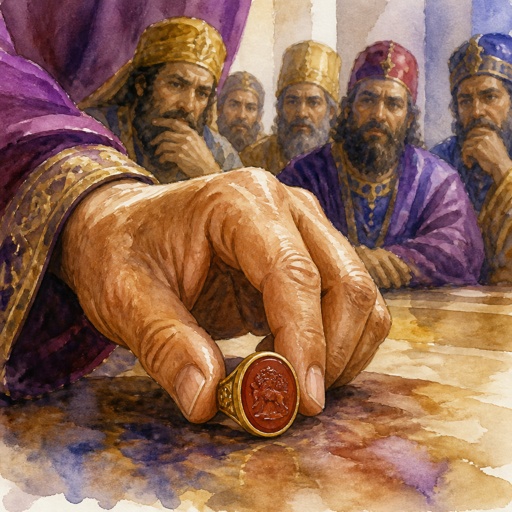
Esther 3:10 focus on ring

"And Parshandatha, and Dalphon, and Aspatha," - Esther 9:7
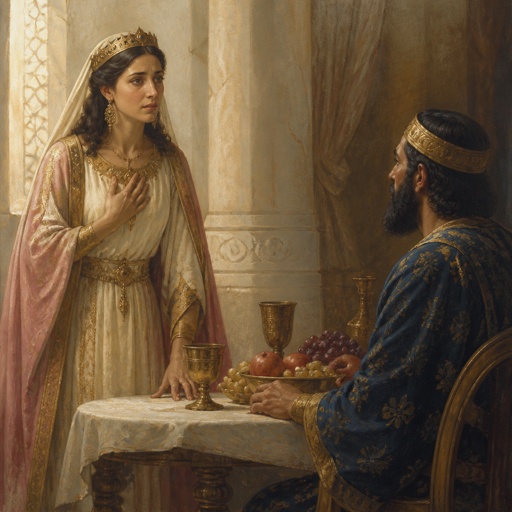
"Then Esther the queen answered and said, If I have found favour in thy sight, O king, and if it please the king, let my life be given me at my petition, and my people at my request:" - Esther 7:3

Esther 6:7 - "And Haman answered the king, For the man whom the king delighteth to honour,"

Esther 3:3 - "Then the king's servants, which were in the king's gate, said unto Mordecai, Why transgressest thou the king's commandment?"

"And Esther said, The adversary and enemy is this wicked Haman. Then Haman was afraid before the king and the queen." - Esther 7:6

Esther 8:3 - "¶ And Esther spake yet again before the king, and fell down at his feet, and besought him with tears to put away the mischief of Haman the Agagite, and his device that he had devised against the Jews."

Esther 7:10 - "So they hanged Haman on the gallows that he had prepared for Mordecai. Then was the king's wrath pacified."

Esther 2:7 - "And he brought up Hadassah, that is, Esther, his uncle's daughter: for she had neither father nor mother, and the maid was fair and beautiful; whom Mordecai, when her father and mother were dead, took for his own daughter."

Esther 7:8 - "Then the king returned out of the palace garden into the place of the banquet of wine; and Haman was fallen upon the bed whereon Esther was. Then said the king, Will he force the queen also before me in the house? As the word went out of the king's mouth, they covered Haman's face."

Esther 3:5 - "And when Haman saw that Mordecai bowed not, nor did him reverence, then was Haman full of wrath."

"¶ Then the king Ahasuerus answered and said unto Esther the queen, Who is he, and where is he, that durst presume in his heart to do so?" - Esther 7:5

Esther 9:3 - "And all the rulers of the provinces, and the lieutenants, and the deputies, and officers of the king, helped the Jews; because the fear of Mordecai fell upon them."

Esther 3:14 - "The copy of the writing for a commandment to be given in every province was published unto all people, that they should be ready against that day."

Esther 3:11 - "And the king said unto Haman, The silver is given to thee, the people also, to do with them as it seemeth good to thee."

Esther 1:7 - "And they gave them drink in vessels of gold, (the vessels being diverse one from another,) and royal wine in abundance, according to the state of the king."