From Joy to Indignation: A Lesson on Humility and Pride
“Then went Haman forth that day joyful and with a glad heart: but when Haman saw Mordecai in the king’s gate, that he stood not up, nor moved for him, he was full of indignation against Mordecai.” — Esther 5:9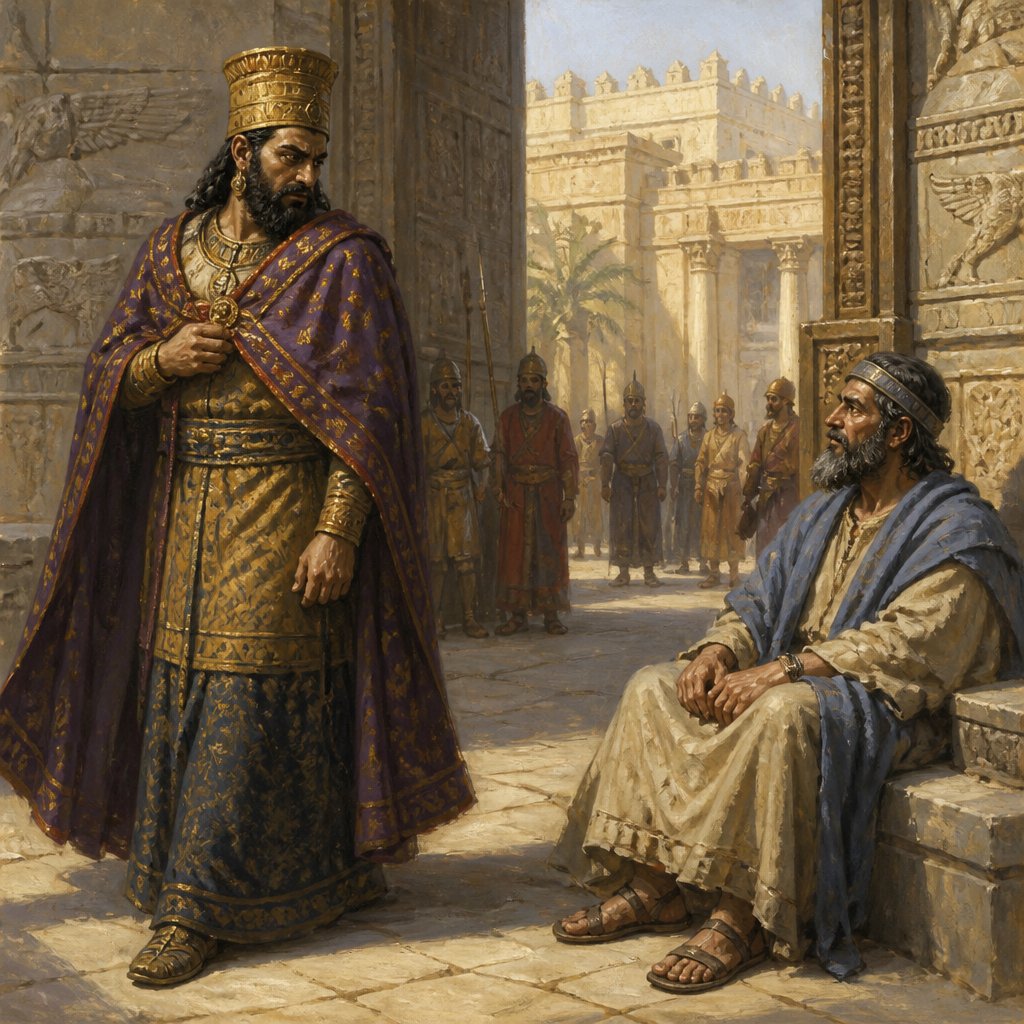
In the Book of Esther, we come across a profound moment encapsulated in Esther 5:9 (KJV): "Then went Haman forth that day joyful and with a glad heart: but when Haman saw Mordecai in the king's gate, that he stood not up, nor moved for him, he was full of indignation against Mordecai." This verse presents a rich tapestry of emotions, showcasing the drastic shift from joy to anger, and it serves as a compelling reminder of the complexities within the human heart.
Haman, a high-ranking official in the Persian Empire, had just experienced a significant moment of triumph. He had been invited to a royal banquet with Queen Esther and King Ahasuerus, a privilege that filled him with joy. In his pride, he sauntered through the streets, likely expecting admiration and respect from all who encountered him. Yet, his revelry was abruptly disrupted by the figure of Mordecai, a Jew who refused to bow down to him.
Herein lies the first lesson of this passage: the danger of pride. Haman's gladness was conditional; it rested entirely on the admiration and acknowledgement of others, particularly Mordecai. The moment Mordecai stood firm in his refusal to honor Haman—an act of defiance against his inflated sense of self-worth—Haman's joy evaporated, giving way to a deep-seated rage. This teaches us that true joy must be founded on something far more solid than external accolades or recognition.
Haman’s response to Mordecai’s lack of fealty clearly illustrates the fragility of pride. It suggests that our sense of self-worth can become volatile when it is contingent upon the approval of others. As followers of Christ, our identity and joy should be rooted in our relationship with God. Philippians 4:4 calls us to “Rejoice in the Lord always: and again I say, Rejoice.” Unlike Haman, who allowed his happiness to collapse before the actions of one man, we are invited to experience a joy that transcends circumstances.
Furthermore, Haman’s indignation reflects the destructive nature of arrogance. Instead of recognizing that Mordecai's stance came from deep-seated convictions, Haman allowed himself to be consumed by wrath. In this moment, he demonstrated a reluctance to engage in self-reflection—that is, to consider why his authority was being challenged. Often, our indignation shields us from confronting our own shortcomings. Rather than seeking to understand or address the reasons behind our frustrations, we can fall into the trap of blaming others, which only deepens our bitterness.
Mordecai’s stance serves as a challenge to us as well. He did not seek Haman’s approval, nor did he bend to societal pressures. His integrity and commitment to his beliefs took precedence over Haman’s temporary authority. Romans 12:2 encourages us not to conform to the patterns of this world but to be transformed by the renewing of our minds. In a society that often values status, popularity, and power, we are called to exemplify humility and sincerity in our interactions – even when it puts us at odds with those around us.
As we reflect on Esther 5:9, let us examine our hearts and identify areas where pride may have crept in, tempting us to find joy in the approval of others rather than in the grace and love of God. We are invited to cultivate humility and seek a joy that is anchored in our Creator and His purposes. This verse not only expresses the fragility of Haman’s happiness but also heralds the strength found in unwavering faith and steadfastness in one’s convictions.
In conclusion, let the story of Haman and Mordecai inspire us to choose humility over pride, joy over indignation, and love over anger. As we invite God to speak into our hearts, may we allow His joy to flourish in our lives regardless of the circumstances around us. Let this week be a reminder that true joy is found in serving God and remaining steadfast in our convictions.
Get our apps


Artwork for Esther 5:9

Esther 5:9 - "¶ Then went Haman forth that day joyful and with a glad heart: but when Haman saw Mordecai in the king's gate, that he stood not up, nor moved for him, he was full of indignation against Mordecai."

Esther 5:9-13 - "Esther 5:9-13: Then Haman went out that day joyful and with a glad heart; but when Haman saw Mordecai in the king’s gate, and that he did not stand or tremble before him, he was filled with indignation against Mordecai. Nevertheless Haman restrained himself and went home, and he sent and called for his friends and his wife Zeresh. Then Haman told them of his great riches, the multitude of his children, everything in which the king had promoted him, and how he had advanced him above the officials and servants of the king. Moreover Haman said, “Besides, Queen Esther invited no one but me to come in with the king to the banquet that she prepared; and tomorrow I am again invited by her, along with the king. Yet all this avails me nothing, so long as I see Mordecai the Jew sitting at the king’s gate.”"
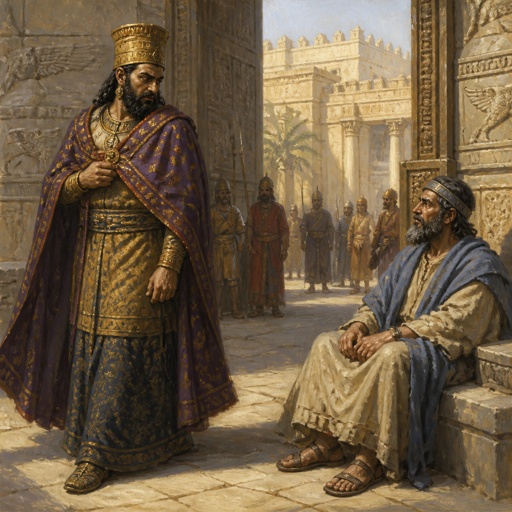
"¶ Then went Haman forth that day joyful and with a glad heart: but when Haman saw Mordecai in the king's gate, that he stood not up, nor moved for him, he was full of indignation against Mordecai." - Esther 5:9
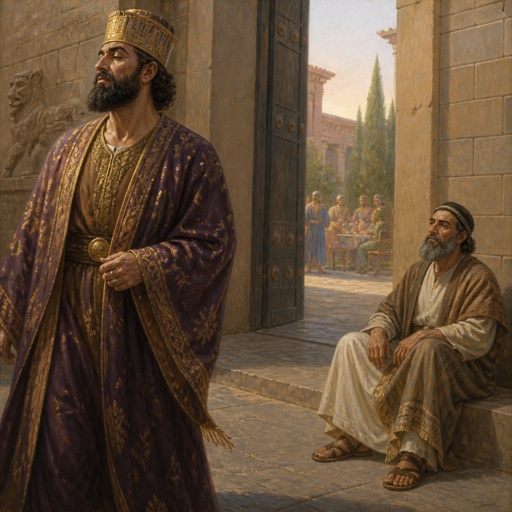
"Esther 5:9-13: Then Haman went out that day joyful and with a glad heart; but when Haman saw Mordecai in the king’s gate, and that he did not stand or tremble before him, he was filled with indignation against Mordecai. Nevertheless Haman restrained himself and went home, and he sent and called for his friends and his wife Zeresh. Then Haman told them of his great riches, the multitude of his children, everything in which the king had promoted him, and how he had advanced him above the officials and servants of the king. Moreover Haman said, “Besides, Queen Esther invited no one but me to come in with the king to the banquet that she prepared; and tomorrow I am again invited by her, along with the king. Yet all this avails me nothing, so long as I see Mordecai the Jew sitting at the king’s gate.”" - Esther 5:9-13

Esther 9:5 - "Thus the Jews smote all their enemies with the stroke of the sword, and slaughter, and destruction, and did what they would unto those that hated them."

Esther 5:5 - "Then the king said, Cause Haman to make haste, that he may do as Esther hath said. So the king and Haman came to the banquet that Esther had prepared."

Esther 4:9 - "And Hatach came and told Esther the words of Mordecai."

Esther 9:32 - "And the decree of Esther confirmed these matters of Purim; and it was written in the book."

Esther 5:7 - "Then answered Esther, and said, My petition and my request is;"

Esther 9:9 - "And Parmashta, and Arisai, and Aridai, and Vajezatha,"

Esther 5:2

Esther 5:2 - "And it was so, when the king saw Esther the queen standing in the court, that she obtained favour in his sight: and the king held out to Esther the golden sceptre that was in his hand. So Esther drew near, and touched the top of the sceptre."

Esther 9:29 - "Then Esther the queen, the daughter of Abihail, and Mordecai the Jew, wrote with all authority, to confirm this second letter of Purim."

Esther 5:2

Esther 5:2

"And Hatach came and told Esther the words of Mordecai." - Esther 4:9

Esther 9:8 - "And Poratha, and Adalia, and Aridatha,"

Esther 9:7 - "And Parshandatha, and Dalphon, and Aspatha,"

"And the decree of Esther confirmed these matters of Purim; and it was written in the book." - Esther 9:32
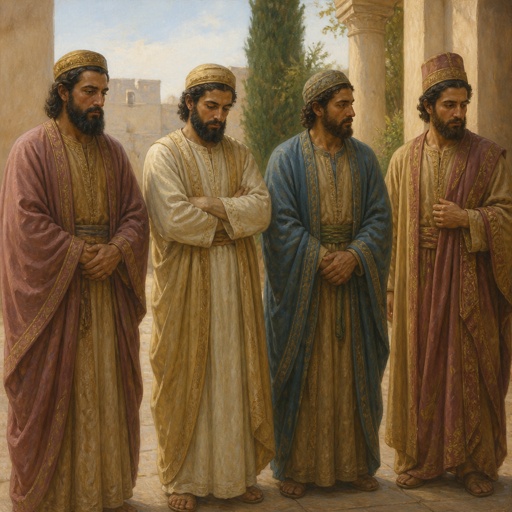
"And Parmashta, and Arisai, and Aridai, and Vajezatha," - Esther 9:9

Esther 5:4 - "And Esther answered, If it seem good unto the king, let the king and Haman come this day unto the banquet that I have prepared for him."
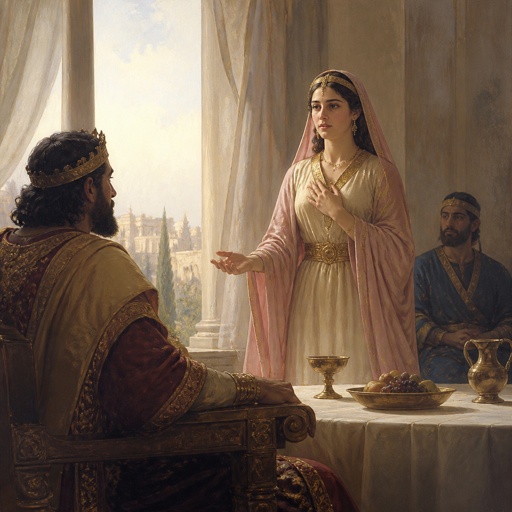
"Then answered Esther, and said, My petition and my request is;" - Esther 5:7

Esther 5:3 - "Then said the king unto her, What wilt thou, queen Esther? and what is thy request? it shall be even given thee to the half of the kingdom."

Esther 7:5 - "¶ Then the king Ahasuerus answered and said unto Esther the queen, Who is he, and where is he, that durst presume in his heart to do so?"

Esther 5:2 - "And it was so, when the king saw Esther the queen standing in the court, that she obtained favour in his sight: and the king held out to Esther the golden sceptre that was in his hand. So Esther drew near, and touched the top of the sceptre."
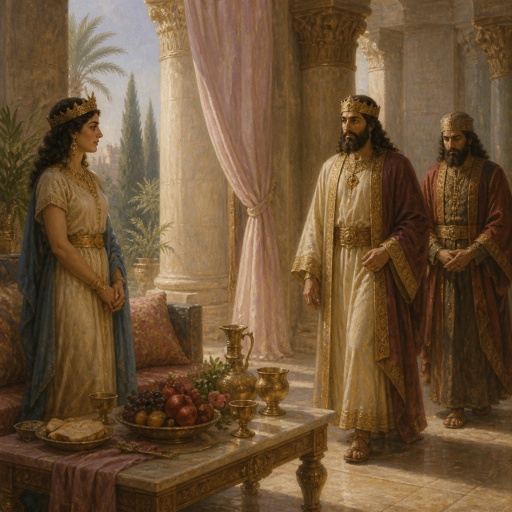
"Then the king said, Cause Haman to make haste, that he may do as Esther hath said. So the king and Haman came to the banquet that Esther had prepared." - Esther 5:5

Esther 4:5 - "Then called Esther for Hatach, one of the king's chamberlains, whom he had appointed to attend upon her, and gave him a commandment to Mordecai, to know what it was, and why it was."

Esther 9:31 - "To confirm these days of Purim in their times appointed, according as Mordecai the Jew and Esther the queen had enjoined them, and as they had decreed for themselves and for their seed, the matters of the fastings and their cry."

Esther 9:13 - "Then said Esther, If it please the king, let it be granted to the Jews which are in Shushan to do to morrow also according unto this day's decree, and let Haman's ten sons be hanged upon the gallows."

Esther 5:6 - "¶ And the king said unto Esther at the banquet of wine, What is thy petition? and it shall be granted thee: and what is thy request? even to the half of the kingdom it shall be performed."