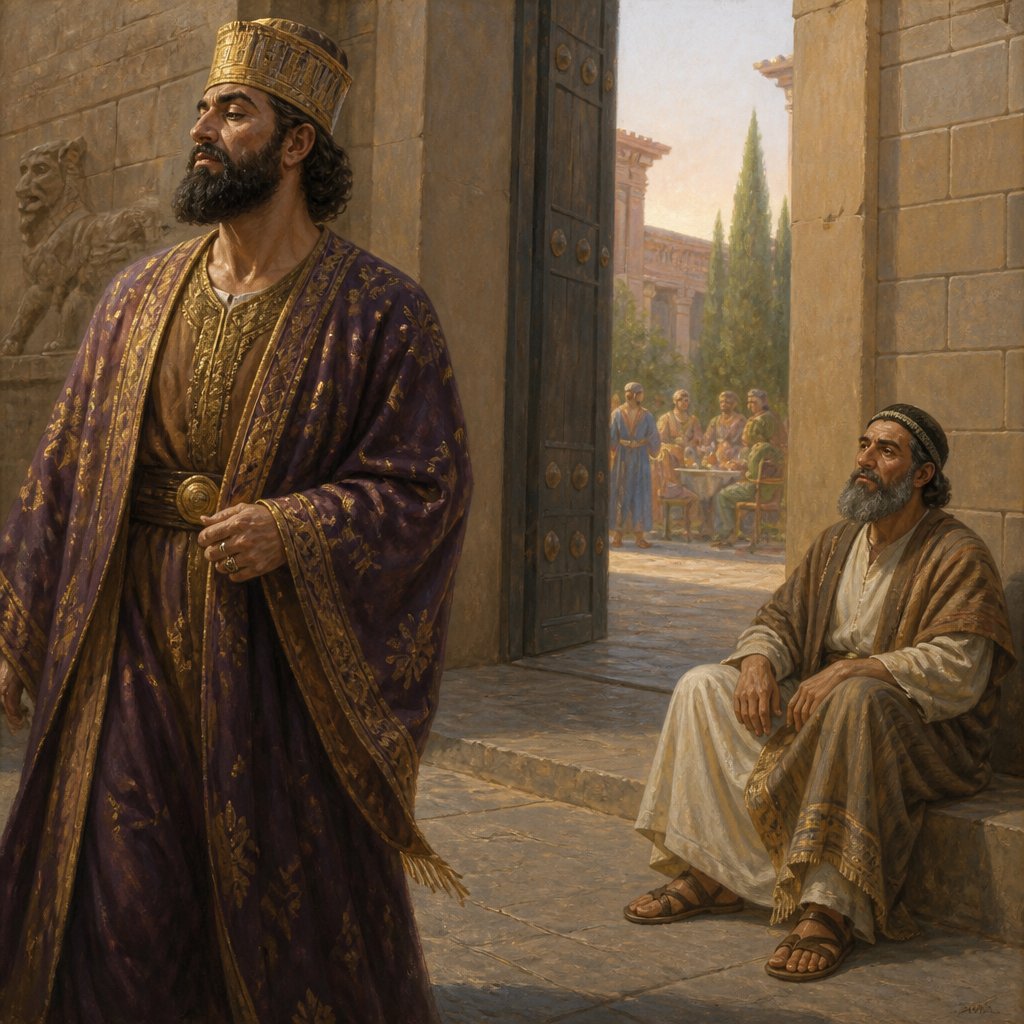
As we delve into Esther 5:9-13, the narrative paints a vivid picture of Haman, a man exalted in position and privilege, yet deeply ensnared by his own pride and insecurity. The contrast between Haman’s external fortune and internal turmoil invites us to reflect on the nature of true happiness and fulfillment.
The passage begins with Haman exiting the king's palace ‘joyful and with a glad heart.’ His promotion and recognition from King Ahasuerus left him in a state of euphoria, a fleeting hope that perhaps he had finally reached a pinnacle of success. Yet, this feeling was overshadowed the moment he encountered Mordecai, who neither rose in respect nor made any motion to acknowledge him. Verse 9 reveals that Haman was ‘full of indignation against Mordecai.’ This reaction illustrates a critical truth about pride: it is often brittle and easily shattered by the smallest affront.
Haman's irritation with Mordecai leads him down a familiar path of self-reliance and comparison. In verse 10, he chooses to ‘refrain himself’ from immediate retaliation, which shows a level of self-control, but also a deeper reflection on his own state of mind. Instead of addressing what truly troubled him, he goes home to boast about his accomplishments and possessions. He begins to recount ‘the glory of his riches’ and ‘the multitude of his children’ (verse 11). Herein lies the first lesson: true satisfaction in life should not hinge on material wealth or public recognition, yet Haman's identity is wrapped entirely around his successes.
The accolades and advantages Haman enumerates provide a façade of contentment. He has been promoted above his peers, and he has a significant social standing, highlighted by an invitation to dine with the queen herself (verse 12). However, this self-celebration reveals a gnawing discontentment; as stated in verse 13, ‘Yet all this availeth me nothing, so long as I see Mordecai the Jew sitting at the king's gate.’ His entire sense of achievement is diminished in the face of a single figure who refuses to acknowledge him.
Haman’s fixation on Mordecai signifies a profound struggle with envy and fear, emotions that often undermine even the most prosperous individuals. His wealth cannot drown out the perceived insult he receives from a single individual whose mere existence challenges his authority. This stark contradiction serves as a potent reminder for us: despite achieving many of life’s accolades, any pride we may nurture can quickly lead to bitterness, especially when we allow others' actions to dictate our joy.
Consequently, we are led to ponder: What do we truly value? Are we measuring our worth by societal standards, or are we seeking an identity grounded in our relationship with Christ? Haman’s journey reveals that outward success means little when it is intertwined with envy and pride. In a world that constantly pushes us to elevate ourselves through accolades and materials, we must learn to see beyond these shallow measurements.
As we meditate on this passage, let us examine our hearts and minds for signs of Haman’s prideful tendencies. Are we allowing the opinions and actions of others to dictate our happiness? In reflecting on Mordecai’s silent stand of dignity, we find a call to maintain our integrity and faith, regardless of our circumstance.
Finally, let us cling to the words of the Apostle Paul in Philippians 4:11-13 that declares, ‘Not that I speak in respect of want: for I have learned, in whatsoever state I am, therewith to be content.’ Let the story of Esther encourage us to seek a heart that finds joy, not in the approval of others or in our status, but in the steadfast love of God that transcends all worldly entreaties.
Get our apps


Artwork for Esther 5:9-13

Esther 5:9-13 - "Esther 5:9-13: Then Haman went out that day joyful and with a glad heart; but when Haman saw Mordecai in the king’s gate, and that he did not stand or tremble before him, he was filled with indignation against Mordecai. Nevertheless Haman restrained himself and went home, and he sent and called for his friends and his wife Zeresh. Then Haman told them of his great riches, the multitude of his children, everything in which the king had promoted him, and how he had advanced him above the officials and servants of the king. Moreover Haman said, “Besides, Queen Esther invited no one but me to come in with the king to the banquet that she prepared; and tomorrow I am again invited by her, along with the king. Yet all this avails me nothing, so long as I see Mordecai the Jew sitting at the king’s gate.”"
"Esther 5:9-13: Then Haman went out that day joyful and with a glad heart; but when Haman saw Mordecai in the king’s gate, and that he did not stand or tremble before him, he was filled with indignation against Mordecai. Nevertheless Haman restrained himself and went home, and he sent and called for his friends and his wife Zeresh. Then Haman told them of his great riches, the multitude of his children, everything in which the king had promoted him, and how he had advanced him above the officials and servants of the king. Moreover Haman said, “Besides, Queen Esther invited no one but me to come in with the king to the banquet that she prepared; and tomorrow I am again invited by her, along with the king. Yet all this avails me nothing, so long as I see Mordecai the Jew sitting at the king’s gate.”" - Esther 5:9-13

Esther 9:13 - "Then said Esther, If it please the king, let it be granted to the Jews which are in Shushan to do to morrow also according unto this day's decree, and let Haman's ten sons be hanged upon the gallows."

Esther 5:13 - "Yet all this availeth me nothing, so long as I see Mordecai the Jew sitting at the king's gate."

Esther 9:5 - "Thus the Jews smote all their enemies with the stroke of the sword, and slaughter, and destruction, and did what they would unto those that hated them."

Esther 5:5 - "Then the king said, Cause Haman to make haste, that he may do as Esther hath said. So the king and Haman came to the banquet that Esther had prepared."

Esther 4:9 - "And Hatach came and told Esther the words of Mordecai."

Esther 9:32 - "And the decree of Esther confirmed these matters of Purim; and it was written in the book."

Esther 5:7 - "Then answered Esther, and said, My petition and my request is;"

Esther 9:9 - "And Parmashta, and Arisai, and Aridai, and Vajezatha,"

Esther 5:2

Esther 5:2 - "And it was so, when the king saw Esther the queen standing in the court, that she obtained favour in his sight: and the king held out to Esther the golden sceptre that was in his hand. So Esther drew near, and touched the top of the sceptre."

Esther 9:29 - "Then Esther the queen, the daughter of Abihail, and Mordecai the Jew, wrote with all authority, to confirm this second letter of Purim."

Esther 5:9 - "¶ Then went Haman forth that day joyful and with a glad heart: but when Haman saw Mordecai in the king's gate, that he stood not up, nor moved for him, he was full of indignation against Mordecai."

Esther 5:2

Esther 5:2

Esther 4:13 - "Then Mordecai commanded to answer Esther, Think not with thyself that thou shalt escape in the king's house, more than all the Jews."

"And Hatach came and told Esther the words of Mordecai." - Esther 4:9

Esther 9:8 - "And Poratha, and Adalia, and Aridatha,"

Esther 9:7 - "And Parshandatha, and Dalphon, and Aspatha,"

"And the decree of Esther confirmed these matters of Purim; and it was written in the book." - Esther 9:32
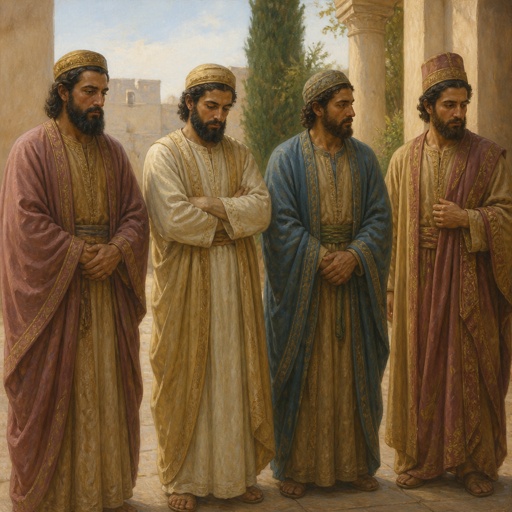
"And Parmashta, and Arisai, and Aridai, and Vajezatha," - Esther 9:9

Esther 5:4 - "And Esther answered, If it seem good unto the king, let the king and Haman come this day unto the banquet that I have prepared for him."
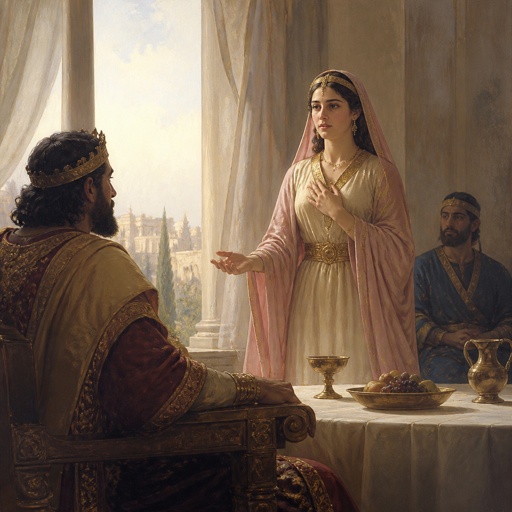
"Then answered Esther, and said, My petition and my request is;" - Esther 5:7
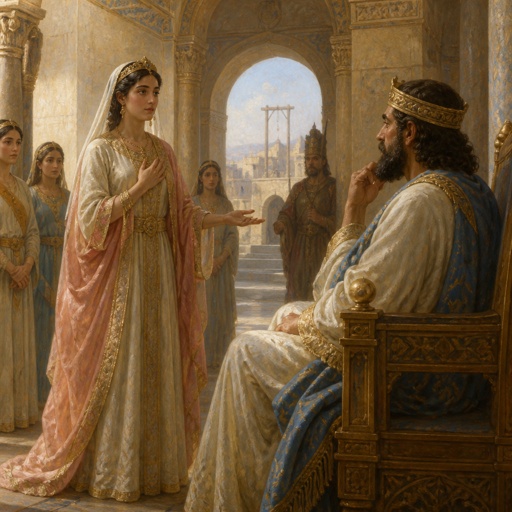
"Then said Esther, If it please the king, let it be granted to the Jews which are in Shushan to do to morrow also according unto this day's decree, and let Haman's ten sons be hanged upon the gallows." - Esther 9:13

Esther 5:3 - "Then said the king unto her, What wilt thou, queen Esther? and what is thy request? it shall be even given thee to the half of the kingdom."

Esther 7:5 - "¶ Then the king Ahasuerus answered and said unto Esther the queen, Who is he, and where is he, that durst presume in his heart to do so?"

Esther 5:2 - "And it was so, when the king saw Esther the queen standing in the court, that she obtained favour in his sight: and the king held out to Esther the golden sceptre that was in his hand. So Esther drew near, and touched the top of the sceptre."
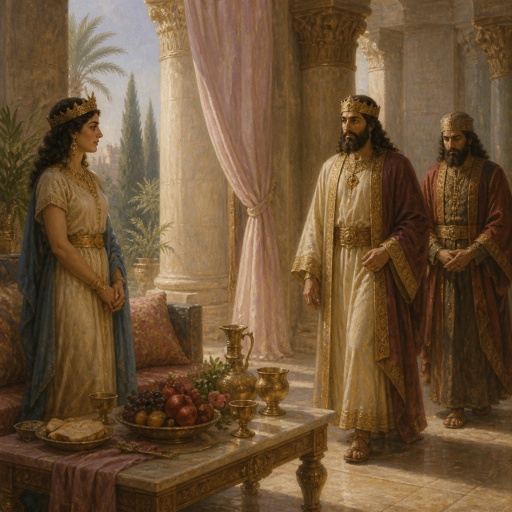
"Then the king said, Cause Haman to make haste, that he may do as Esther hath said. So the king and Haman came to the banquet that Esther had prepared." - Esther 5:5

Esther 4:5 - "Then called Esther for Hatach, one of the king's chamberlains, whom he had appointed to attend upon her, and gave him a commandment to Mordecai, to know what it was, and why it was."