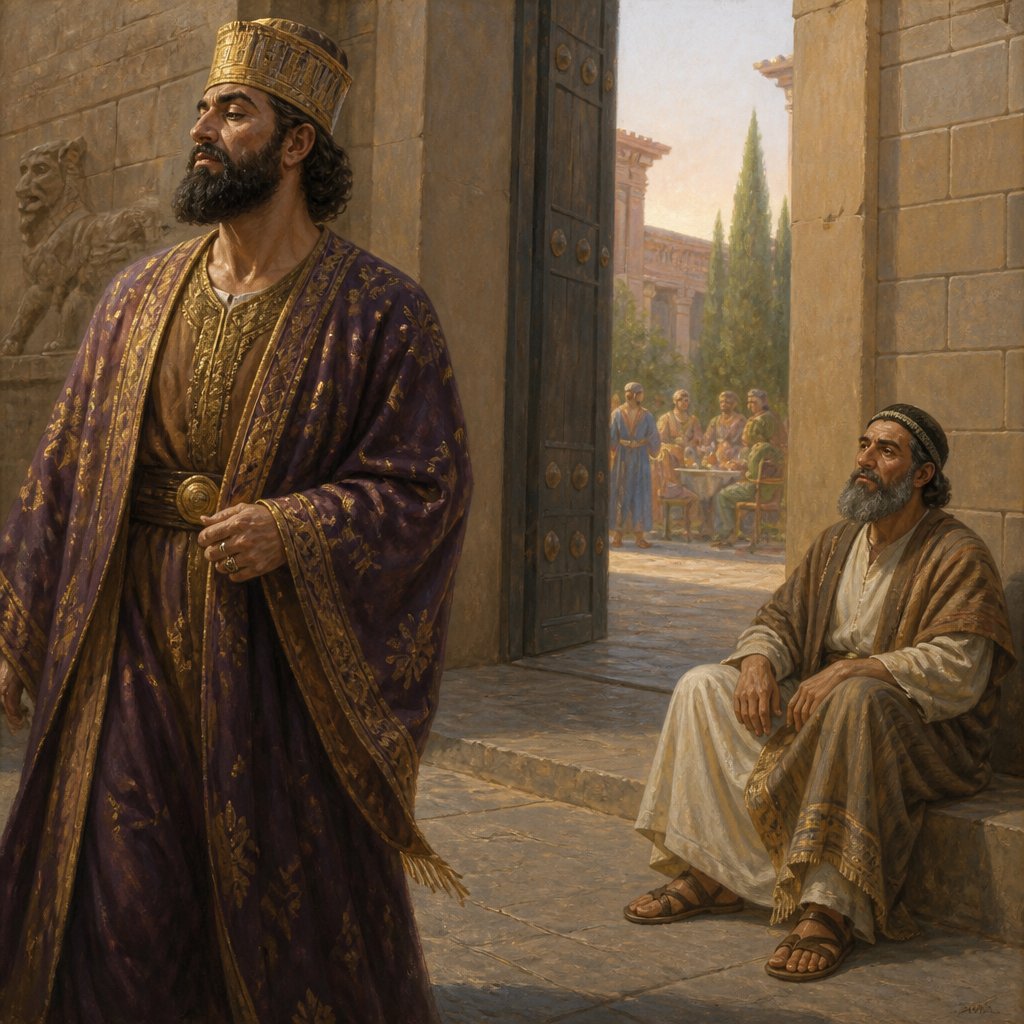
Esther 5:9-13 in the King James Version reads: "Then went Haman forth that day joyful and with a glad heart: but when Haman saw Mordecai in the king's gate, that he stood not up, nor moved for him, he was full of indignation against Mordecai. Nevertheless Haman refrained himself: and when he came home, he sent and called for his friends, and Zeresh his wife. And Haman told them of the glory of his riches, and the multitude of his children, and all the things wherein the king had promoted him, and how he had advanced him above the princes and servants of the king. Haman said moreover, Yea, Esther the queen did let no man come in with the king unto the banquet that she had prepared but myself; and to morrow am I invited unto her also with the king. Yet all this availeth me nothing, so long as I see Mordecai the Jew sitting at the king's gate."
The book of Esther is set during the Persian Empire. The story revolves around Esther, a Jewish woman who becomes the queen of King Xerxes (Ahasuerus). The antagonist of the story is Haman, a high-ranking official in the Persian government who seeks to exterminate the Jewish people. Esther, with the help of her cousin Mordecai, devises a plan to expose Haman's evil plot and save her people.
In this particular passage, Haman's pride and arrogance are on full display. Despite his elevated position and the favor of the king, Haman is consumed with resentment and jealousy towards Mordecai. He is depicted as a man who enjoys the trappings of power and wealth, but is ultimately unfulfilled because of his inability to command the respect and admiration of one individual - Mordecai.
The themes present in this passage are pride, envy, and the futility of material wealth and power. Haman's outward display of joy and contentment contrasts sharply with his inner turmoil and bitterness. His inability to find satisfaction in his riches, children, and elevated status reveals the emptiness of worldly success when fueled by pride and jealousy.
The context of this passage is crucial to understanding the significance of Haman's actions. The refusal of Mordecai to bow down to him stems from his loyalty to the Jewish faith and his refusal to compromise his beliefs. This refusal serves as a direct affront to Haman's ego and sense of self-importance, leading to his intense indignation and desire for revenge.
Symbolically, Haman represents the destructive power of pride and envy. His relentless pursuit of recognition and his desire to destroy those who defy him serve as cautionary tales of the dangers of unchecked ambition and arrogance. Additionally, the contrast between Haman's outward display of happiness and his inner turmoil serves as a reminder that true contentment cannot be found in earthly possessions or positions of power.
In conclusion, Esther 5:9-13 provides a profound commentary on the nature of pride, envy, and the pursuit of worldly success. Through the character of Haman, the passage serves as a powerful warning against the dangers of allowing these negative traits to dictate one's actions. It also emphasizes the importance of humility, contentment, and the pursuit of spiritual fulfillment over material wealth and power. The story of Esther continues to resonate as a timeless narrative that offers valuable lessons and insights into the human condition.
Get our apps


Artwork for Esther 5:9-13

Esther 5:9-13 - "Esther 5:9-13: Then Haman went out that day joyful and with a glad heart; but when Haman saw Mordecai in the king’s gate, and that he did not stand or tremble before him, he was filled with indignation against Mordecai. Nevertheless Haman restrained himself and went home, and he sent and called for his friends and his wife Zeresh. Then Haman told them of his great riches, the multitude of his children, everything in which the king had promoted him, and how he had advanced him above the officials and servants of the king. Moreover Haman said, “Besides, Queen Esther invited no one but me to come in with the king to the banquet that she prepared; and tomorrow I am again invited by her, along with the king. Yet all this avails me nothing, so long as I see Mordecai the Jew sitting at the king’s gate.”"
"Esther 5:9-13: Then Haman went out that day joyful and with a glad heart; but when Haman saw Mordecai in the king’s gate, and that he did not stand or tremble before him, he was filled with indignation against Mordecai. Nevertheless Haman restrained himself and went home, and he sent and called for his friends and his wife Zeresh. Then Haman told them of his great riches, the multitude of his children, everything in which the king had promoted him, and how he had advanced him above the officials and servants of the king. Moreover Haman said, “Besides, Queen Esther invited no one but me to come in with the king to the banquet that she prepared; and tomorrow I am again invited by her, along with the king. Yet all this avails me nothing, so long as I see Mordecai the Jew sitting at the king’s gate.”" - Esther 5:9-13

Esther 9:13 - "Then said Esther, If it please the king, let it be granted to the Jews which are in Shushan to do to morrow also according unto this day's decree, and let Haman's ten sons be hanged upon the gallows."

Esther 5:13 - "Yet all this availeth me nothing, so long as I see Mordecai the Jew sitting at the king's gate."

Esther 9:5 - "Thus the Jews smote all their enemies with the stroke of the sword, and slaughter, and destruction, and did what they would unto those that hated them."

Esther 5:5 - "Then the king said, Cause Haman to make haste, that he may do as Esther hath said. So the king and Haman came to the banquet that Esther had prepared."

Esther 4:9 - "And Hatach came and told Esther the words of Mordecai."

Esther 9:32 - "And the decree of Esther confirmed these matters of Purim; and it was written in the book."

Esther 5:7 - "Then answered Esther, and said, My petition and my request is;"

Esther 9:9 - "And Parmashta, and Arisai, and Aridai, and Vajezatha,"

Esther 5:2

Esther 5:2 - "And it was so, when the king saw Esther the queen standing in the court, that she obtained favour in his sight: and the king held out to Esther the golden sceptre that was in his hand. So Esther drew near, and touched the top of the sceptre."

Esther 9:29 - "Then Esther the queen, the daughter of Abihail, and Mordecai the Jew, wrote with all authority, to confirm this second letter of Purim."

Esther 5:9 - "¶ Then went Haman forth that day joyful and with a glad heart: but when Haman saw Mordecai in the king's gate, that he stood not up, nor moved for him, he was full of indignation against Mordecai."

Esther 5:2

Esther 5:2

Esther 4:13 - "Then Mordecai commanded to answer Esther, Think not with thyself that thou shalt escape in the king's house, more than all the Jews."

"And Hatach came and told Esther the words of Mordecai." - Esther 4:9

Esther 9:8 - "And Poratha, and Adalia, and Aridatha,"

Esther 9:7 - "And Parshandatha, and Dalphon, and Aspatha,"

"And the decree of Esther confirmed these matters of Purim; and it was written in the book." - Esther 9:32
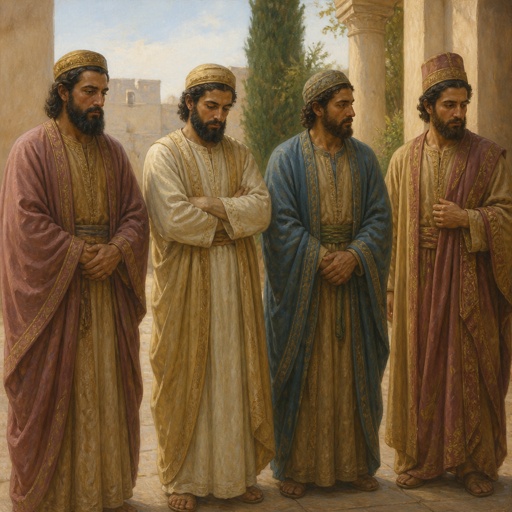
"And Parmashta, and Arisai, and Aridai, and Vajezatha," - Esther 9:9

Esther 5:4 - "And Esther answered, If it seem good unto the king, let the king and Haman come this day unto the banquet that I have prepared for him."
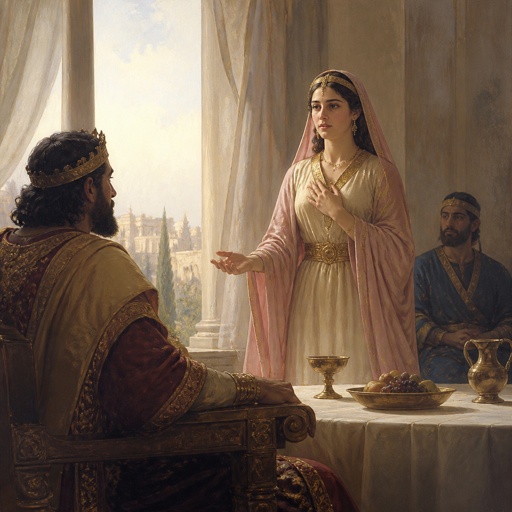
"Then answered Esther, and said, My petition and my request is;" - Esther 5:7
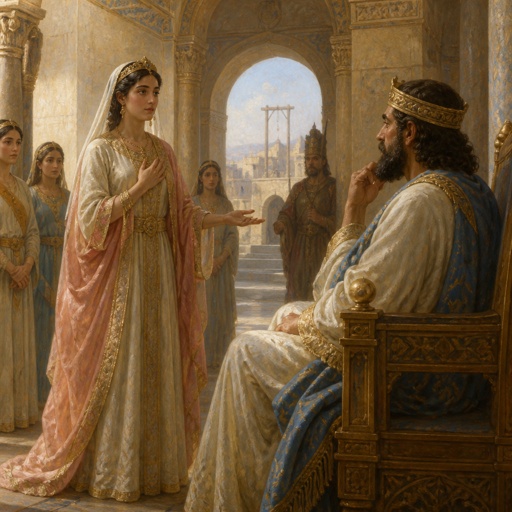
"Then said Esther, If it please the king, let it be granted to the Jews which are in Shushan to do to morrow also according unto this day's decree, and let Haman's ten sons be hanged upon the gallows." - Esther 9:13

Esther 5:3 - "Then said the king unto her, What wilt thou, queen Esther? and what is thy request? it shall be even given thee to the half of the kingdom."

Esther 7:5 - "¶ Then the king Ahasuerus answered and said unto Esther the queen, Who is he, and where is he, that durst presume in his heart to do so?"

Esther 5:2 - "And it was so, when the king saw Esther the queen standing in the court, that she obtained favour in his sight: and the king held out to Esther the golden sceptre that was in his hand. So Esther drew near, and touched the top of the sceptre."
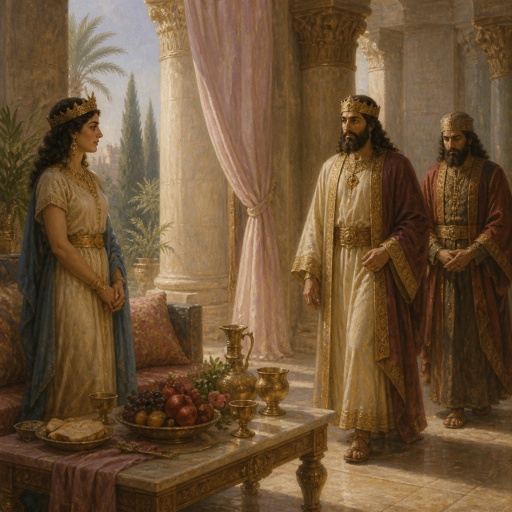
"Then the king said, Cause Haman to make haste, that he may do as Esther hath said. So the king and Haman came to the banquet that Esther had prepared." - Esther 5:5

Esther 4:5 - "Then called Esther for Hatach, one of the king's chamberlains, whom he had appointed to attend upon her, and gave him a commandment to Mordecai, to know what it was, and why it was."