From Adversary to Honoring The Servant: Lessons from Esther 6:10
“Then the king said to Haman, Make haste, and take the apparel and the horse, as thou hast said, and do even so to Mordecai the Jew, that sitteth at the king’s gate: let nothing fail of all that thou hast spoken.” — Esther 6:10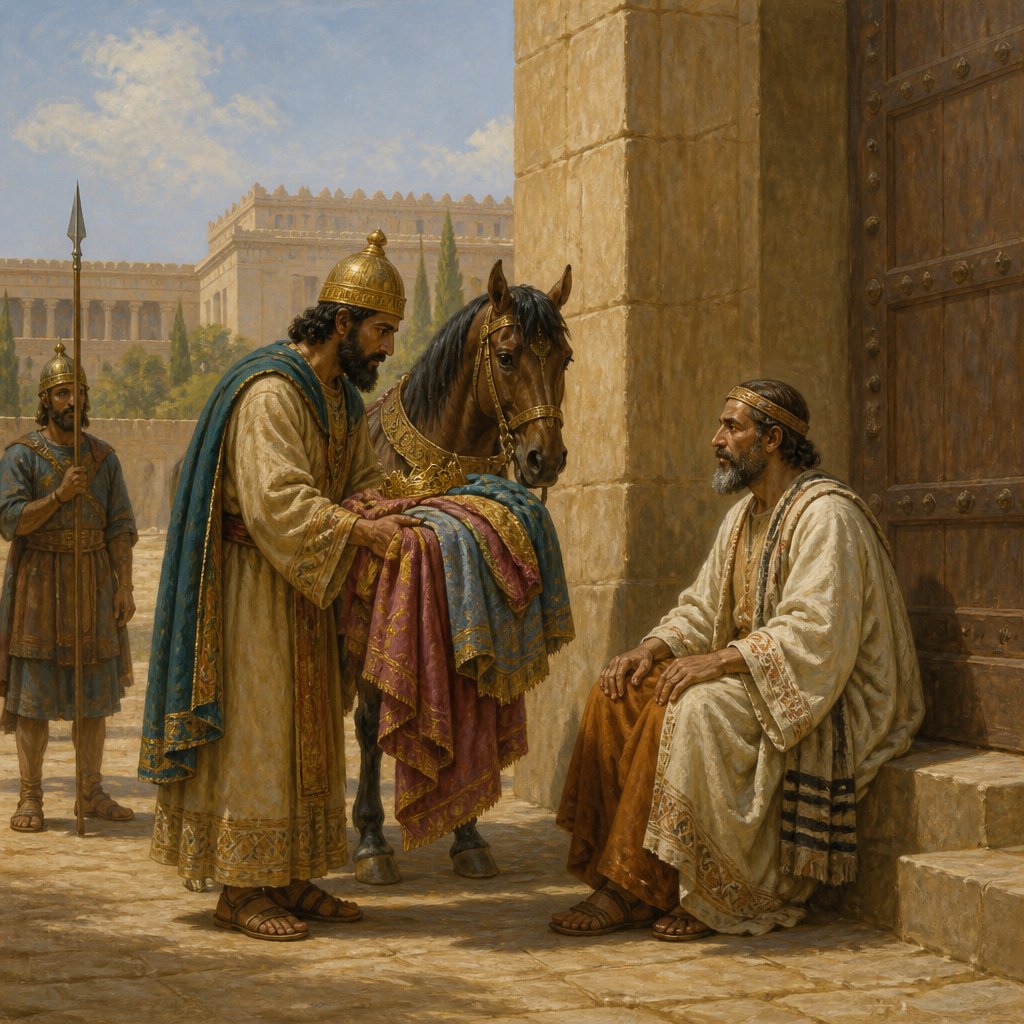
The story of Esther is one of divine providence, courage, and a remarkable twist of fate that reminds us of God’s sovereignty in our lives. As we delve into Esther 6:10, we find ourselves at a pivotal moment in the narrative where God’s plan intersects with human actions in an astonishing way. The verse states: "Then the king said to Haman, Make haste, and take the apparel and the horse, as thou hast said, and do even so to Mordecai the Jew, that sitteth at the king's gate: let nothing fail of all that thou hast spoken."
At first glance, this scene may seem merely dramatic, but when we study the surrounding context, we uncover layers of meaning that resonate deeply within the framework of our faith. Mordecai, a humble Jew, is brought into the spotlight unexpectedly. Just days before, he was a topic of disdain for Haman, the king's trusted advisor. Haman had plotted to destroy him due to Mordecai’s refusal to bow down to him. With intrigue and manipulation, Haman arranged for Mordecai to meet an untimely death. Yet, in an unexpected turn of events, the king, unable to sleep, found a record of Mordecai's previous loyalty when he uncovered a plot against the king’s life.
Here lies one of the first lessons from Esther 6:10: **God remembers the acts of righteousness**. Mordecai had kept the king’s secret safe, acting faithfully without any expectation of reward. Likewise, in our lives, we may sometimes feel overlooked or even mistreated when we strive to do what is good and right. But God does not forget. He sees our struggles and knows our hearts. The timing of His intervention, however, often surpasses our understanding. Mordecai found himself rewarded at the very moment when doom seemed imminent, illustrating that God is always working behind the scenes.
Next, we need to understand the role of Haman in this narrative. He is a mirror reflecting the darkness that can consume the hearts of men when pride and ambition go unchecked. Imagine Haman’s feelings as he was tasked with honoring the very man he despised. Imagine the irony and humiliation he must have felt as he leads the king’s horse bearing the man he sought to kill. Here we learn that **God has the power to humble the proud and to exalt the humble**. Haman’s downfall, rooted in his arrogance, serves as cautionary wisdom for us. Pride can easily lead us astray, corrupting our motives and leading to significant spiritual consequences.
Importantly, the phrase "let nothing fail of all that thou hast spoken" reminds us of the **fullness of God’s promise and justice**. Every word Haman had spoken in conceit now becomes a command to fulfill the very honor he sought for himself for Mordecai instead. It reminds us that God’s justice is precise and perfectly timed. Though it may appear that evil sometimes triumphs in the world, God ensures that righteousness will ultimately prevail. This scripture emphasizes the principle that God will use our enemies as instruments of His purpose, and that He possesses an uncanny ability to turn dark plots into bright opportunities for His glory.
As we reflect on Esther 6:10 today, let us meditate on the character of Mordecai, who did not seek revenge against Haman but waited patiently for God’s deliverance. We, too, are called to live honorably, loving our enemies, and trusting in God’s perfect timing. Moreover, we can take heart in knowing that our faithfulness will not go unnoticed. In times of trial, let us keep encouraging one another with the hope that God is in control, capable of turning our situations around magnificently. We can stand firm in the assurance that **God’s purposes will be fulfilled**; He upholds justice and honors the faithful servant. Let us cling to this truth and look for ways in our own lives where God is working for His glory, even through adversity.
Get our apps


Artwork for Esther 6:10

Esther 6:10 - "Then the king said to Haman, Make haste, and take the apparel and the horse, as thou hast said, and do even so to Mordecai the Jew, that sitteth at the king's gate: let nothing fail of all that thou hast spoken."

Est 6:10-11 ESV (10) Then the king said to Haman, “Hurry; take the robes and the horse, as you have said, and do so to Mordecai the Jew, who sits at the king's gate. Leave out nothing that you have mentioned.” (11) So Haman took the robes and the horse, and he dressed Mordecai and led him through the square of the city, proclaiming before him, “Thus shall it be done to the man whom the king delights to honor.”
"Then the king said to Haman, Make haste, and take the apparel and the horse, as thou hast said, and do even so to Mordecai the Jew, that sitteth at the king's gate: let nothing fail of all that thou hast spoken." - Esther 6:10

Esther 4:10 - "¶ Again Esther spake unto Hatach, and gave him commandment unto Mordecai;"

Esther 7:6 - "And Esther said, The adversary and enemy is this wicked Haman. Then Haman was afraid before the king and the queen."

Esther 1:6

Esther 2:10 - "Esther had not shewed her people nor her kindred: for Mordecai had charged her that she should not shew it."

Esther 6:14 - "And while they were yet talking with him, came the king's chamberlains, and hasted to bring Haman unto the banquet that Esther had prepared."
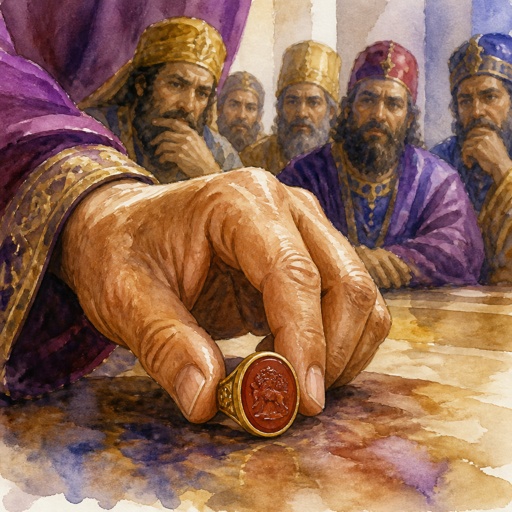
Esther 3:10 focus on ring

Esther 5:6 - "¶ And the king said unto Esther at the banquet of wine, What is thy petition? and it shall be granted thee: and what is thy request? even to the half of the kingdom it shall be performed."
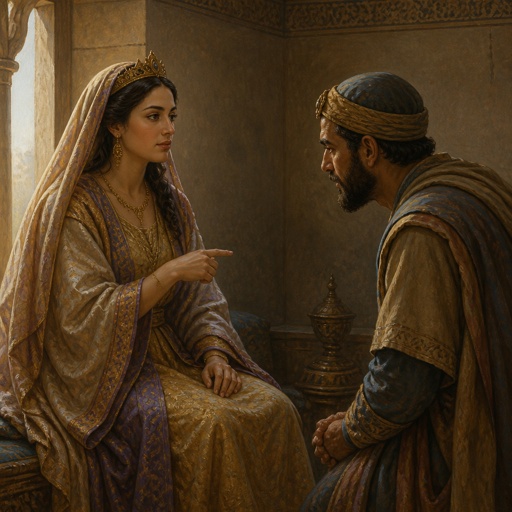
"¶ Again Esther spake unto Hatach, and gave him commandment unto Mordecai;" - Esther 4:10

Esther 10:1 - "And the king Ahasuerus laid a tribute upon the land, and upon the isles of the sea."

Esther 6:7 - "And Haman answered the king, For the man whom the king delighteth to honour,"

Esther 9:6 - "And in Shushan the palace the Jews slew and destroyed five hundred men."

"And Esther said, The adversary and enemy is this wicked Haman. Then Haman was afraid before the king and the queen." - Esther 7:6

Esther 9:10 - "The ten sons of Haman the son of Hammedatha, the enemy of the Jews, slew they; but on the spoil laid they not their hand."

Esther 7:10 - "So they hanged Haman on the gallows that he had prepared for Mordecai. Then was the king's wrath pacified."

Esther 4:6 - "So Hatach went forth to Mordecai unto the street of the city, which was before the king's gate."

Esther 6:1 - "On that night could not the king sleep, and he commanded to bring the book of records of the chronicles; and they were read before the king."

Esther 6:5 - "And the king's servants said unto him, Behold, Haman standeth in the court. And the king said, Let him come in."

Esther 6:12 - "¶ And Mordecai came again to the king's gate. But Haman hasted to his house mourning, and having his head covered."

"Esther had not shewed her people nor her kindred: for Mordecai had charged her that she should not shew it." - Esther 2:10

"And while they were yet talking with him, came the king's chamberlains, and hasted to bring Haman unto the banquet that Esther had prepared." - Esther 6:14

Esther 5:10 - "Nevertheless Haman refrained himself: and when he came home, he sent and called for his friends, and Zeresh his wife."

Esther 3:10 - "And the king took his ring from his hand, and gave it unto Haman the son of Hammedatha the Agagite, the Jews' enemy."

Esther 8:10 - "And he wrote in the king Ahasuerus' name, and sealed it with the king's ring, and sent letters by posts on horseback, and riders on mules, camels, and young dromedaries:"

"And Haman answered the king, For the man whom the king delighteth to honour," - Esther 6:7

Esther 10:2 - "And all the acts of his power and of his might, and the declaration of the greatness of Mordecai, whereunto the king advanced him, are they not written in the book of the chronicles of the kings of Media and Persia?"

"And in Shushan the palace the Jews slew and destroyed five hundred men." - Esther 9:6

Esther 8:6 - "For how can I endure to see the evil that shall come unto my people? or how can I endure to see the destruction of my kindred?"