Victory in the Shadows: Understanding God’s Justice through Esther 9:14
“And the king commanded it so to be done: and the decree was given at Shushan; and they hanged Haman’s ten sons.” — Esther 9:14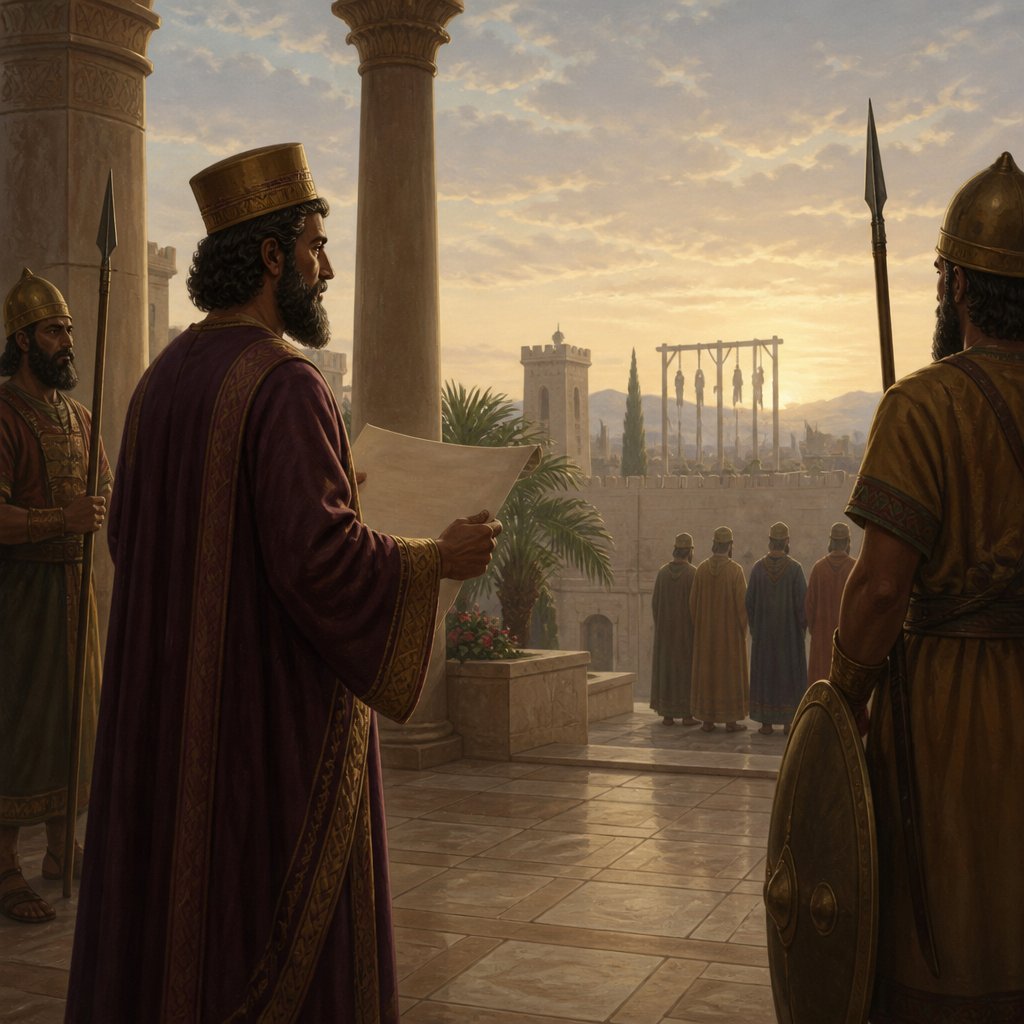
The book of Esther unfolds a miraculous story of providence, courage, and divine justice, culminating in Esther 9:14, where we find the striking narrative of the downfall of Haman and the execution of his ten sons. “And the king commanded it so to be done: and the decree was given at Shushan; and they hanged Haman's ten sons.” This moment reverberates with themes of justice, the consequences of pride, and the vindication of the faithful, calling us to reflect deeply on God’s governance in our lives.
Haman, the prime minister of the Persian Empire, exemplifies the ultimate antagonist driven by jealousy, anger, and hatred, particularly towards the Jewish people, as embodied in Mordecai. The story of Esther serves not just as a historical narrative but as a profound illustration of how God’s hand orchestrates events even in the most chaotic of circumstances. Haman's plot to annihilate the Jews was diabolical; his anger and arrogance led him to a downfall unforeseen, highlighting one of the most significant principles in Scripture: pride cometh before a fall. In this account, God’s providence is evident. Despite the danger and despair, God’s people are not forsaken.
In Esther 9:14, the hanging of Haman’s sons is not just a tragic end for a family caught in the web of their father’s sin; it acts as a visceral reminder of the principle of divine justice. It resonates strongly with the biblical premise that "the wages of sin is death" (Romans 6:23). The biblical narrative consistently leads us to understand that those who sow discord and evil inevitably reap their consequences. Haman sought to extinguish the light of God’s people but ended up lighting the fires of divine judgment upon himself and his household.
Our hearts may wrestle with this verse as we grapple with concepts of justice and forgiveness. Some may ask, why such harsh punishment? What does this tell us about God? Here we need to approach the Scripture humbly, with an understanding that God's justice is rooted in a profound love for righteousness. This act of judgment against Haman's sons signifies the end of an era of oppression and violence against the Jews. It embodies the hope and triumph of the faithful. Throughout history, the faithful have often been oppressed, yet God’s promises remain steadfast. The narrative challenges us to trust in God’s justice, reminding us that while evil may seem to succeed for a time, God ultimately prevails.
Moreover, as believers, we are reminded to observe and reflect upon the chains of iniquity that often ensnare individuals and entire families. Haman's transgressions did not die with him; the weight of his actions fell upon his children, echoing the biblical teaching that sin often has generational consequences. We are invited to examine our own hearts: what legacy are we leaving behind? Are we sowing seeds of faith, love, and justice, or are we, like Haman, setting up roadblocks for our descendants?
Esther 9:14 requires us to turn to God with a spirit of intercession and prayer for ourselves and our families. It motivates us to sow seeds of righteousness rather than vice, ensuring that the legacy we leave is one of godliness. In times of struggle, we should remember like Esther and Mordecai that God hears our prayers and sees our plight. The hanging of Haman’s sons serves as a powerful reminder that God’s justice is a part of His character and a promise that He stands against evil, seeking to protect His people.
Ultimately, Esther 9:14 carries us to a deeper understanding of hope amidst turmoil, peace amidst chaos, and the assurance of divine justice. As we meditate on this verse, let us resolve to be instruments of His peace, choosing to fight our battles not with malice or vengeance but with love, faith, and the knowledge that God rules over all! We serve a God who will not let the scales of justice hang unbalanced. His perfect will shall prevail, for every stitch in the narrative of our lives serves a purpose, ultimately woven into His greater tapestry of redemption.
Get our apps


Artwork for Esther 9:14

Esther 9:14 - "And the king commanded it so to be done: and the decree was given at Shushan; and they hanged Haman's ten sons."
"And the king commanded it so to be done: and the decree was given at Shushan; and they hanged Haman's ten sons." - Esther 9:14

Esther 4:9 - "And Hatach came and told Esther the words of Mordecai."

Esther 9:32 - "And the decree of Esther confirmed these matters of Purim; and it was written in the book."

Esther 9:9 - "And Parmashta, and Arisai, and Aridai, and Vajezatha,"

Esther 9:29 - "Then Esther the queen, the daughter of Abihail, and Mordecai the Jew, wrote with all authority, to confirm this second letter of Purim."

Esther 6:14 - "And while they were yet talking with him, came the king's chamberlains, and hasted to bring Haman unto the banquet that Esther had prepared."

"And Hatach came and told Esther the words of Mordecai." - Esther 4:9

Esther 9:8 - "And Poratha, and Adalia, and Aridatha,"

Esther 9:7 - "And Parshandatha, and Dalphon, and Aspatha,"

"And the decree of Esther confirmed these matters of Purim; and it was written in the book." - Esther 9:32
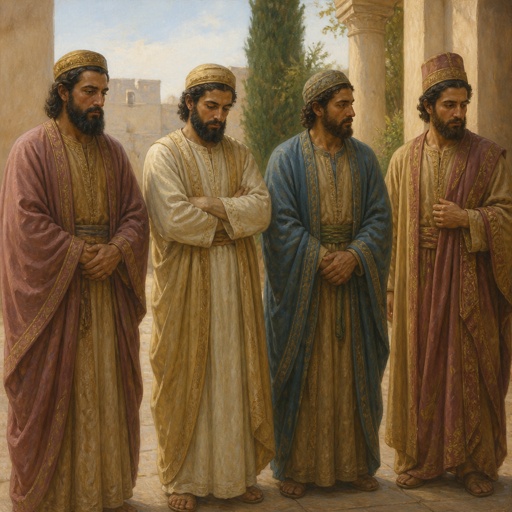
"And Parmashta, and Arisai, and Aridai, and Vajezatha," - Esther 9:9

Esther 9:31 - "To confirm these days of Purim in their times appointed, according as Mordecai the Jew and Esther the queen had enjoined them, and as they had decreed for themselves and for their seed, the matters of the fastings and their cry."

Esther 9:13 - "Then said Esther, If it please the king, let it be granted to the Jews which are in Shushan to do to morrow also according unto this day's decree, and let Haman's ten sons be hanged upon the gallows."

"And Parshandatha, and Dalphon, and Aspatha," - Esther 9:7
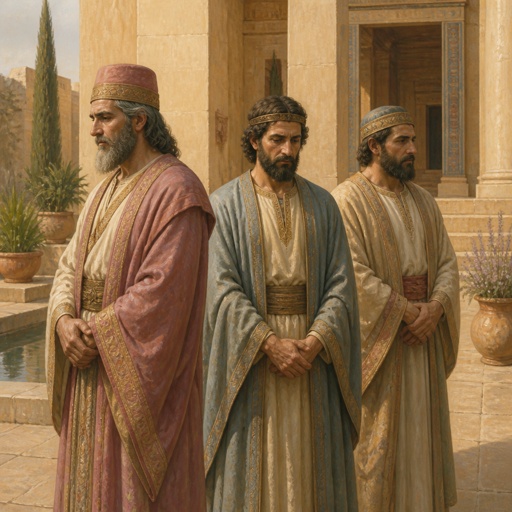
"And Poratha, and Adalia, and Aridatha," - Esther 9:8

Esther 9:6 - "And in Shushan the palace the Jews slew and destroyed five hundred men."

Esther 9:25 - "But when Esther came before the king, he commanded by letters that his wicked device, which he devised against the Jews, should return upon his own head, and that he and his sons should be hanged on the gallows."

Esther 9:10 - "The ten sons of Haman the son of Hammedatha, the enemy of the Jews, slew they; but on the spoil laid they not their hand."

Esther 9:11 - "On that day the number of those that were slain in Shushan the palace was brought before the king."

Esther 9:23 - "And the Jews undertook to do as they had begun, and as Mordecai had written unto them;"
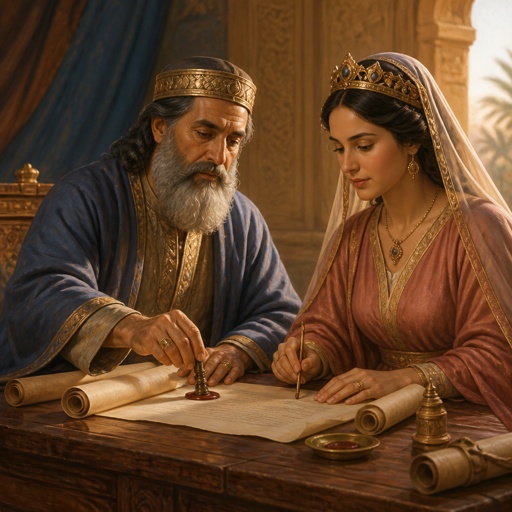
"Then Esther the queen, the daughter of Abihail, and Mordecai the Jew, wrote with all authority, to confirm this second letter of Purim." - Esther 9:29

Esther 9:17 - "On the thirteenth day of the month Adar; and on the fourteenth day of the same rested they, and made it a day of feasting and gladness."

Esther 1:9 - "Also Vashti the queen made a feast for the women in the royal house which belonged to king Ahasuerus."

Esther 3:14 - "The copy of the writing for a commandment to be given in every province was published unto all people, that they should be ready against that day."

Esther 9:21 - "To stablish this among them, that they should keep the fourteenth day of the month Adar, and the fifteenth day of the same, yearly,"

"And while they were yet talking with him, came the king's chamberlains, and hasted to bring Haman unto the banquet that Esther had prepared." - Esther 6:14

Esther 9:3 - "And all the rulers of the provinces, and the lieutenants, and the deputies, and officers of the king, helped the Jews; because the fear of Mordecai fell upon them."

Esther 9:30 - "And he sent the letters unto all the Jews, to the hundred twenty and seven provinces of the kingdom of Ahasuerus, with words of peace and truth,"

Esther 9:12 - "¶ And the king said unto Esther the queen, The Jews have slain and destroyed five hundred men in Shushan the palace, and the ten sons of Haman; what have they done in the rest of the king's provinces? now what is thy petition? and it shall be granted thee: or what is thy request further? and it shall be done."