The Mercy Seat: Where Judgment Meets Grace
“And thou shalt put the mercy seat above upon the ark; and in the ark thou shalt put the testimony that I shall give thee.” — Exodus 25:21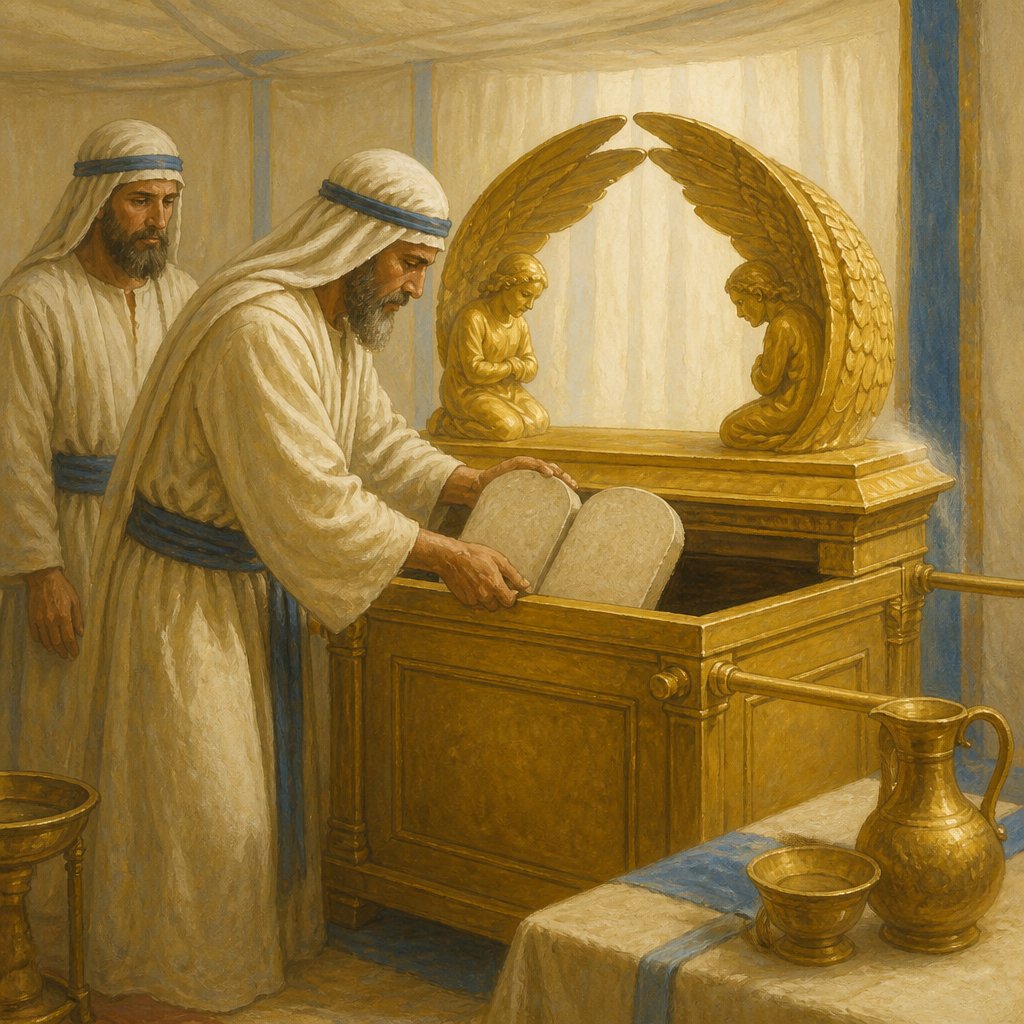
In Exodus 25:21, we find a profound instruction given by God to Moses regarding the construction of the Ark of the Covenant. The verse states, "And thou shalt put the mercy seat above upon the ark; and in the ark thou shalt put the testimony that I shall give thee." This instruction not only provides insight into the physical aspects of the Ark but also illustrates deep spiritual truths that resonate throughout Scripture.
The Ark of the Covenant represented the presence of God among His people, a sacred object that held the tablets of the Ten Commandments, the law that defined the covenant relationship between God and Israel. However, it is the mercy seat—the cover of the Ark—that commands our attention this day. Positioned above the Ark, it symbolizes the critical meeting point between God’s holiness and humanity’s need for mercy.
### Judgment and Mercy
In our human experience, we often find ourselves caught in the tension between judgment and grace. The Ten Commandments, housed within the Ark, represent the standards of God’s holiness and the moral code that we are called to uphold. Yet, as we examine our lives amid these divine principles, we quickly recognize our inadequacies and failures. We fall short of His glory, and the judgment of God is a reality that we must face. Yet, the mercy seat provides a remedy to our predicament.
The phrase "mercy seat" in the Hebrew language is related to the word "kaphar," which means to atone or cover. It is here that we understand that while the law shows us the holiness of God, the mercy seat unveils His heart—a heart that desires to forgive and redeem. The high priest would sprinkle the blood of sacrifices on the mercy seat once a year during Yom Kippur, indicating that mercy triumphs over judgment. How profound it is to realize that each time God looks down from the mercy seat, He sees the blood, representing the ultimate sacrifice that points to Christ Jesus, our eternal High Priest.
### A Place of Encounter
The mercy seat serves as a place of divine encounter, where God meets with His people. In Hebrews 4:16, we are encouraged to "come boldly unto the throne of grace, that we may obtain mercy, and find grace to help in time of need." The mercy seat reminds us that we can approach God not with fear, but with confidence, knowing that Jesus is our advocate. When we confess our sins and shortcomings, we find forgiveness that cleanses us and restores our relationship with Him. It is here, under the shadow of His wings, that we discover peace and safety in our struggles.
### The Testimony Within
The second part of Exodus 25:21 instructs, "and in the ark thou shalt put the testimony that I shall give thee." The testimony signifies the words, commandments, and eternal truths of God that guide us in righteousness. It is fitting that the mercy seat is placed above this testimony. The law reminds us of our need for redemption, while the mercy seat assures us of God’s willingness to forgive. Together, they encapsulate the story of the Gospel—the truth that we were created to dwell in relationship with God but are lost without His grace.
### Conclusion
As we reflect on the significance of the mercy seat, let us remember that it stands as a testament to God’s love, grace, and desire for fellowship with humanity. Just as God commanded Moses to place the mercy seat above the law in the Ark, He calls us to bring our burdens and sins before Him, trusting in His merciful nature. The mercy seat, therefore, becomes not only a historical artifact but also the heart of our faith—a constant reminder of how grace meets our failures and how God’s mercy triumphs over judgment. Let us approach the mercy seat in our daily lives, fully assured that mercy is available for all who seek it.
Get our apps


Artwork for Exodus 25:21

Exodus 25:21 - "And thou shalt put the mercy seat above upon the ark; and in the ark thou shalt put the testimony that I shall give thee."

"And thou shalt put the mercy seat above upon the ark; and in the ark thou shalt put the testimony that I shall give thee." - Exodus 25:21

Exodus 21:25 - "Burning for burning, wound for wound, stripe for stripe."

"Burning for burning, wound for wound, stripe for stripe." - Exodus 21:25

Exodus 25:16

Exodus 25:31

Exodus 25:16

Exodus 25:8

Exodus 25:16

Matthew 25:21

Matthew 25:21

Genesis 21-25

Genesis 21:25

Exodus 25:10-22

John 21:25

Genesis 21:25

Matthew 21:25

Exodus 14: 21

Exodus 14: 21

Exodus 15:21

Exodus 25:1 - "And the LORD spake unto Moses, saying,"

Exodus 21:21 - "Notwithstanding, if he continue a day or two, he shall not be punished: for he is his money."

Exodus 25:7 - "Onyx stones, and stones to be set in the ephod, and in the breastplate."

Jeremiah 25:21 - "Edom, and Moab, and the children of Ammon,"

Exodus 25:38 - "And the tongs thereof, and the snuffdishes thereof, shall be of pure gold."

Exodus 25:4 - "And blue, and purple, and scarlet, and fine linen, and goats' hair,"

Exodus 25:6 - "Oil for the light, spices for anointing oil, and for sweet incense,"

Exodus 25:25 - "And thou shalt make unto it a border of an hand breadth round about, and thou shalt make a golden crown to the border thereof round about."

Exodus 27:19-21

Exodus 25:15 - "The staves shall be in the rings of the ark: they shall not be taken from it."