What does Exodus 25:21 mean?
“And thou shalt put the mercy seat above upon the ark; and in the ark thou shalt put the testimony that I shall give thee.” — Exodus 25:21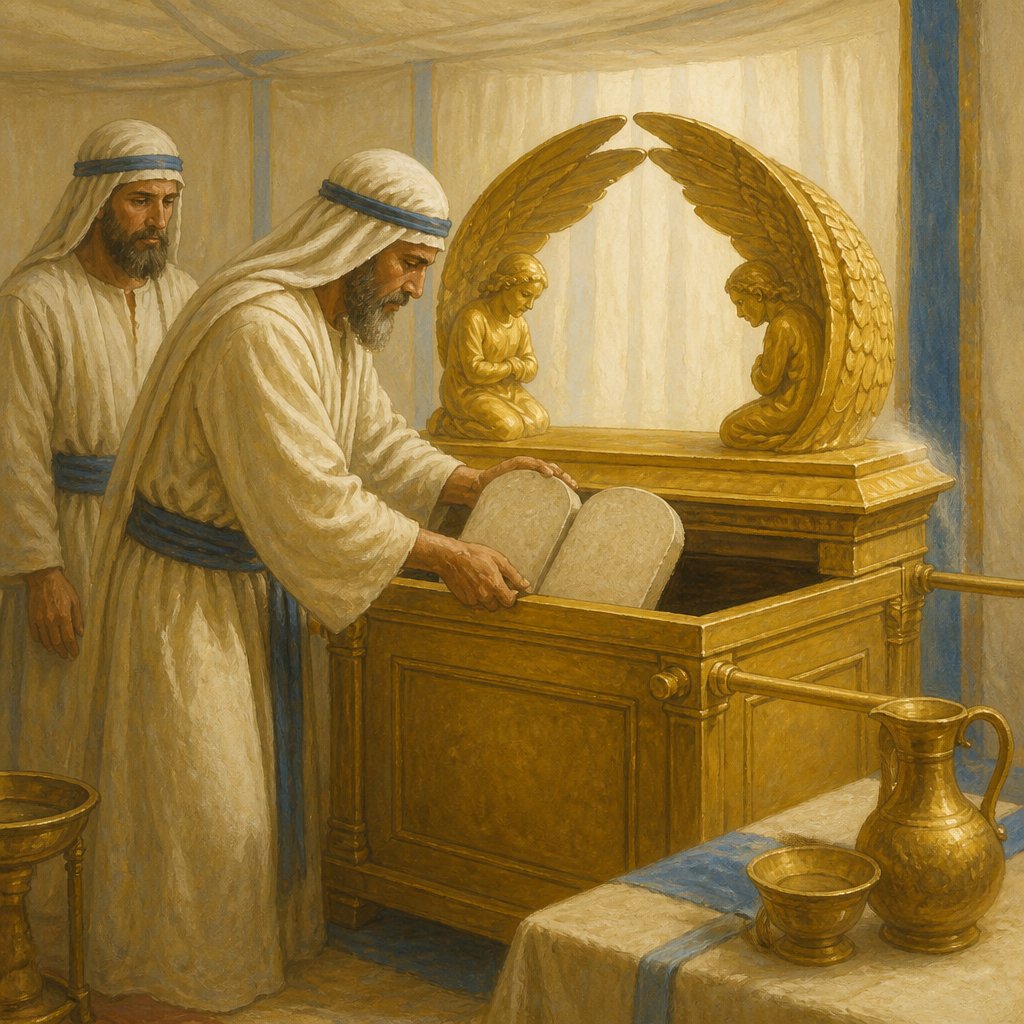
Exodus 25:21 (KJV) in the Bible states, "And thou shalt put the mercy seat above upon the ark; and in the ark thou shalt put the testimony that I shall give thee." This verse is a part of the instructions given by God to Moses for the construction of the Ark of the Covenant, which was to be placed in the Tabernacle.
The Ark of the Covenant held immense significance for the Israelites, as it was believed to be the dwelling place of God. It was a physical representation of the covenant between God and His people, and it served as a symbol of His presence and authority among them. The mercy seat, which was to be placed above the ark, was a solid gold cover with two cherubim on top, facing each other with their wings spread, and it was here that God's presence was said to reside.
The mercy seat was also where atonement for sins was made on the Day of Atonement. It served as a symbol of God's mercy and forgiveness, and it represented the place where the sins of the people were covered by the blood of the sacrificial animal. This act of atonement was a crucial part of the Israelites' relationship with God, as it allowed for the forgiveness of sins and the restoration of their connection with Him.
The placement of the testimony within the ark further emphasizes the significance of the Ark of the Covenant. The testimony referred to the tablets of the Ten Commandments, which were given to Moses by God on Mount Sinai. These commandments were the foundation of the Mosaic Law, and they outlined the ethical and moral principles that the Israelites were expected to follow. By placing the testimony within the ark, God was symbolizing His presence and authority over the law, and He was reinforcing the importance of obedience and reverence for His commandments.
In a broader context, Exodus 25:21 reflects the themes of divine presence, mercy, and obedience that are prevalent throughout the Old Testament. The Ark of the Covenant and the mercy seat exemplify the Israelites' understanding of God as a powerful and authoritative presence, as well as a merciful and forgiving Father. The act of atonement and the placement of the testimony within the ark underscore the importance of repentance, forgiveness, and the adherence to God's laws in maintaining a harmonious relationship with Him.
The symbolism of the mercy seat and the testimony within the ark also foreshadows the coming of Jesus Christ in the New Testament. In Christian theology, Jesus is seen as the ultimate mercy seat, the mediator between God and humanity, whose sacrificial death atones for the sins of the world. Additionally, the Ten Commandments are fulfilled in the teachings of Jesus, who emphasizes love, compassion, and obedience to God's will.
Overall, Exodus 25:21 serves as a poignant reminder of the Israelites' covenant with God and the importance of His presence, mercy, and guidance in their lives. It also points towards the redemptive work of Jesus Christ and the grace and forgiveness that He offers to all who believe in Him. As such, this verse continues to hold profound significance for Christians and serves as a source of inspiration and reflection on the mercy and presence of God in their lives.
Get our apps


Artwork for Exodus 25:21

Exodus 25:21 - "And thou shalt put the mercy seat above upon the ark; and in the ark thou shalt put the testimony that I shall give thee."

"And thou shalt put the mercy seat above upon the ark; and in the ark thou shalt put the testimony that I shall give thee." - Exodus 25:21

Exodus 21:25 - "Burning for burning, wound for wound, stripe for stripe."

"Burning for burning, wound for wound, stripe for stripe." - Exodus 21:25

Exodus 25:16

Exodus 25:31

Exodus 25:16

Exodus 25:8

Exodus 25:16

Matthew 25:21

Matthew 25:21

Genesis 21-25

Genesis 21:25

Exodus 25:10-22

John 21:25

Genesis 21:25

Matthew 21:25

Exodus 14: 21

Exodus 14: 21

Exodus 15:21

Exodus 25:1 - "And the LORD spake unto Moses, saying,"

Exodus 21:21 - "Notwithstanding, if he continue a day or two, he shall not be punished: for he is his money."

Exodus 25:7 - "Onyx stones, and stones to be set in the ephod, and in the breastplate."

Jeremiah 25:21 - "Edom, and Moab, and the children of Ammon,"

Exodus 25:38 - "And the tongs thereof, and the snuffdishes thereof, shall be of pure gold."

Exodus 25:4 - "And blue, and purple, and scarlet, and fine linen, and goats' hair,"

Exodus 25:6 - "Oil for the light, spices for anointing oil, and for sweet incense,"

Exodus 25:25 - "And thou shalt make unto it a border of an hand breadth round about, and thou shalt make a golden crown to the border thereof round about."

Exodus 27:19-21

Exodus 25:15 - "The staves shall be in the rings of the ark: they shall not be taken from it."