The Cost of Compromise: A Call to Purity in Our Walk with God
“All these had taken strange wives: and some of them had wives by whom they had children.” — Ezra 10:44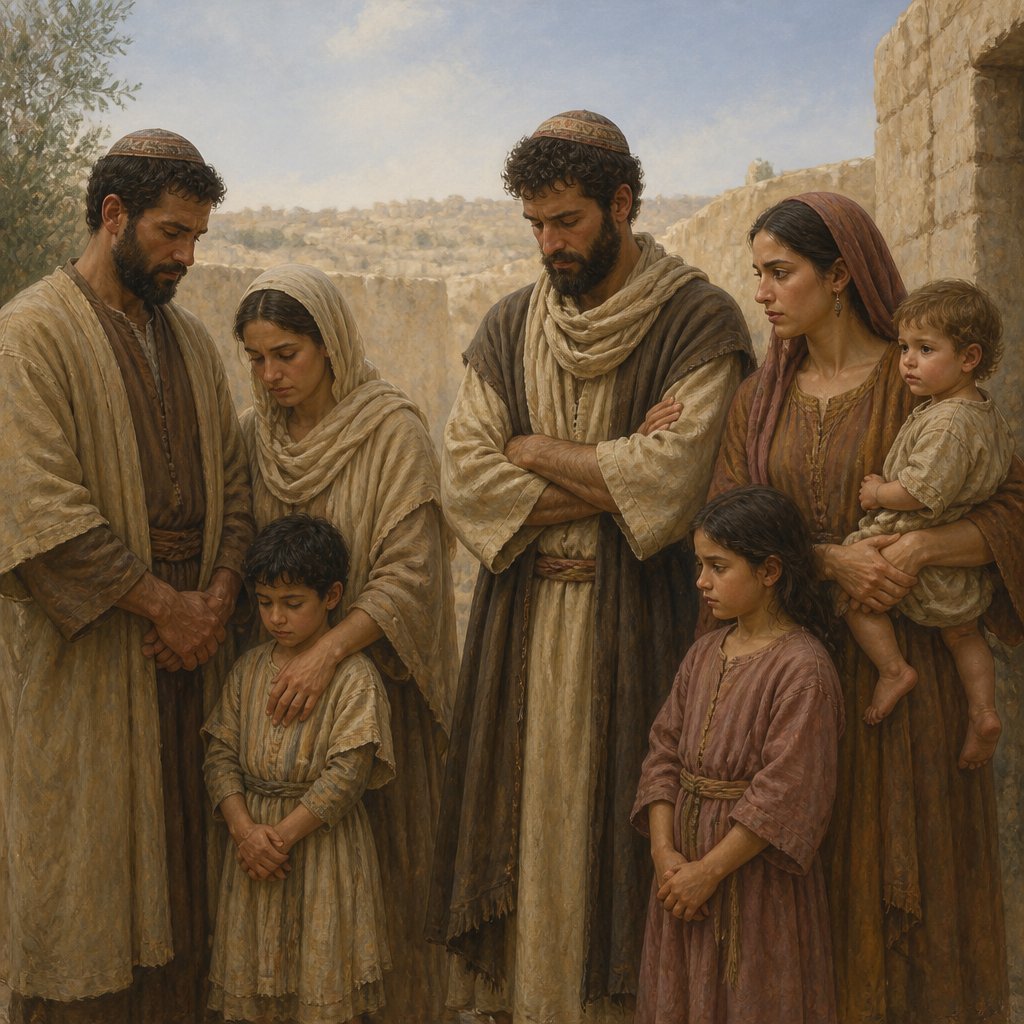
The narrative surrounding Ezra 10:44 serves as a poignant reminder of the spiritual dangers that can arise from compromising our faith. The verse states, "All these had taken strange wives: and some of them had wives by whom they had children." At first glance, this passage might seem culturally distant, depicting a historical issue from ancient Israel. However, upon a deeper investigation, we find that it speaks volumes about our relationships and commitments today, especially as they pertain to our fidelity to God.
In this chapter of Ezra, we witness the Israelites confronted with the consequences of intermarriage with foreign nations, a practice that had been strictly forbidden under the Mosaic Law. The allure of foreign women could not be understated; they represented not only different cultures but also tantalizing religious practices that often stood in stark contrast to the monotheistic belief central to Israelite identity. This verse is steeped in the realities of spiritual compromise where God's people diluted their faith by forging connections with those who did not share their covenant relationship with Him.
When we delve into the phrase "strange wives," we uncover the gravity of the situation. The term 'strange' does not merely refer to the ethnicity or origin of these women; it signifies the alien nature of their beliefs and practices. It reflects a choice - one that the Israelites made knowingly - to ignore God's commandments in favor of personal desires and societal pressures. It is easy to dismiss such choices as outdated or irrelevant, yet our contemporary world mirrors this struggle. Our "strange wives" might not be literal spouses, but they can represent any relationship, attachment, or influence that leads us away from our divine commitments.
As we reflect on this scripture, we are called to examine our own lives: Are there areas where we have allowed the values and practices of the world to infiltrate our faith? Have we made concessions in our relationships that compromise our dedication to God? The Israelites in Ezra's time bore children with these foreign wives, symbolizing the lasting impact of their compromises. Their choices not only affected them personally but also shaped the spiritual legacy they would pass down.
The emotional weight behind this decision is profound. Love, desire, and family intertwine with spirituality. In a world where societal acceptance and personal fulfillment often dictate our choices, we must earnestly contemplate what God desires for us. Are we willing to risk the fidelity of our relationship with Him for transient pleasures? The consequences of such decisions are far-reaching, extending beyond individual lives to influence future generations.
In our pursuit of purity in relationships, we can look to Ezra for inspiration. Ezra did not shy away from confronting uncomfortable truths, nor did he allow the fear of discomfort to deter him from God's commandments. He modeled a life centered on holiness, and it is this conviction that urges us to follow suit.
We must actively seek to cultivate relationships and surround ourselves with individuals who challenge and uplift our spiritual walks as opposed to leading us astray. These choices are profoundly important because they reflect our deepest values and our commitment to God’s holiness. Being in the world doesn’t mean we have to adopt its values; rather, we are called to be salt and light, shining in the darkness without being tainted by it.
In conclusion, this verse from Ezra prompts a critical self-examination of our relationships and commitments. We are invited to reflect on who influences us and how we influence others. As we endeavor to remain faithful to God, may we choose wisely in our associations and strive toward a life of purity, honoring our covenant with the Lord above all else. Let us pray for discernment and strength to uphold our faith in every relationship we engage in, fostering connections that honor God and reflect His glory.
Get our apps


Artwork for Ezra 10:44

Ezra 10:44 - "All these had taken strange wives: and some of them had wives by whom they had children."

"All these had taken strange wives: and some of them had wives by whom they had children." - Ezra 10:44

Ezra 2:44 - "The children of Keros, the children of Siaha, the children of Padon,"
"The children of Keros, the children of Siaha, the children of Padon," - Ezra 2:44

Ezra 10:10-12

Ezra 10:10 - "And Ezra the priest stood up, and said unto them, Ye have transgressed, and have taken strange wives, to increase the trespass of Israel."

Ezra 10:3

Ezra 3:10

Ezra 10:3

Ezra 10:5 - "Then arose Ezra, and made the chief priests, the Levites, and all Israel, to swear that they should do according to this word. And they sware."

Ezra 7:10 - "For Ezra had prepared his heart to seek the law of the LORD, and to do it, and to teach in Israel statutes and judgments."

Ezra 10:38 - "And Bani, and Binnui, Shimei,"

Ezra 10:37 - "Mattaniah, Mattenai, and Jaasau,"

Ezra 10:40 - "Machnadebai, Shashai, Sharai,"

Ezra 10:32 - "Benjamin, Malluch, and Shemariah."

acts 10:44-46

Ezra 10:36 - "Vaniah, Meremoth, Eliashib,"

Ezra 10:35 - "Benaiah, Bedeiah, Chelluh,"

Ezra 10:42 - "Shallum, Amariah, and Joseph."

Ezra 10:41 - "Azareel, and Shelemiah, Shemariah,"

Ezra 10:39 - "And Shelemiah, and Nathan, and Adaiah,"

Ezra 10:20 - "And of the sons of Immer; Hanani, and Zebadiah."

Ezra 10:34 - "Of the sons of Bani; Maadai, Amram, and Uel,"

Mark 10:44 - "And whosoever of you will be the chiefest, shall be servant of all."

Ezra 2:10 - "The children of Bani, six hundred forty and two."

Ezra 10:21 - "And of the sons of Harim; Maaseiah, and Elijah, and Shemaiah, and Jehiel, and Uzziah."

Ezra 10:24 - "Of the singers also; Eliashib: and of the porters; Shallum, and Telem, and Uri."

Ezra 10:28 - "Of the sons also of Bebai; Jehohanan, Hananiah, Zabbai, and Athlai."

Ezra 10:31 - "And of the sons of Harim; Eliezer, Ishijah, Malchiah, Shemaiah, Shimeon,"

"Azareel, and Shelemiah, Shemariah," - Ezra 10:41