What does Ezra 10:44 mean?
“All these had taken strange wives: and some of them had wives by whom they had children.” — Ezra 10:44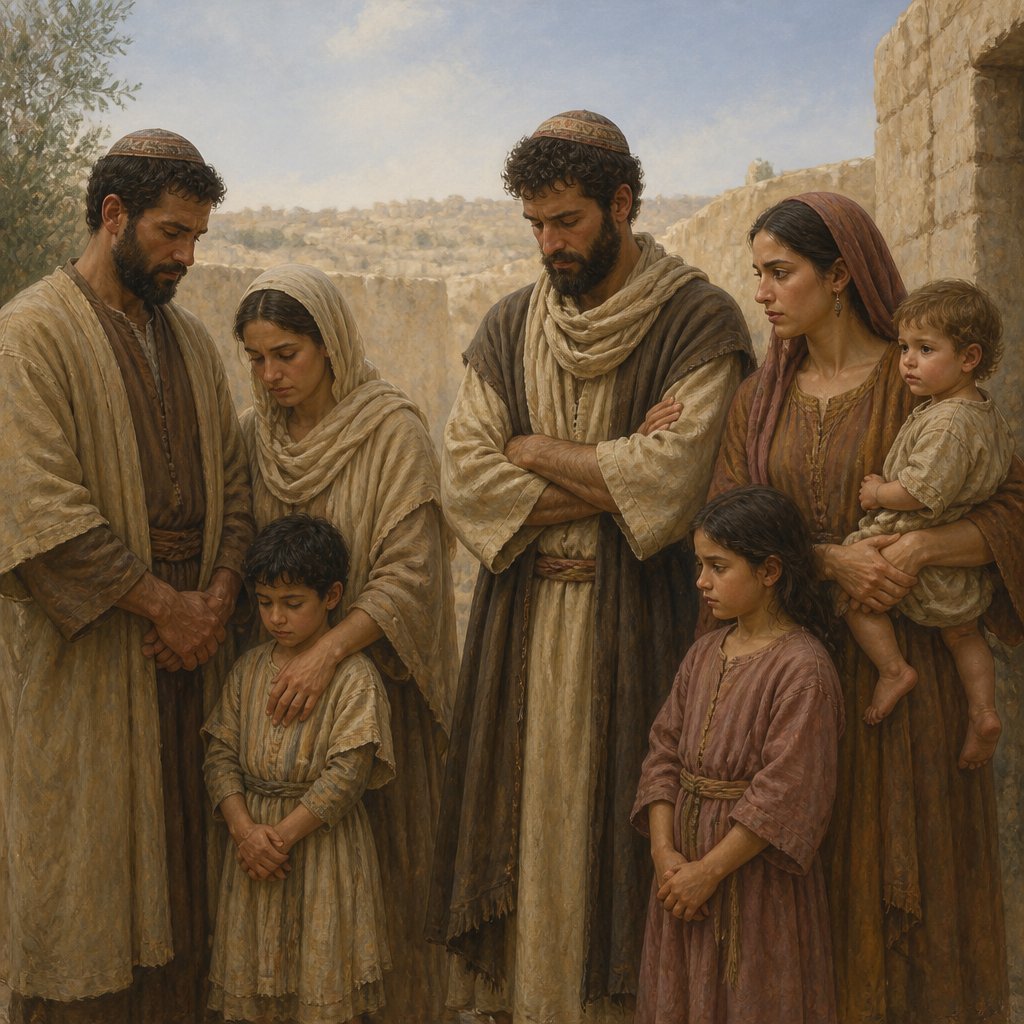
Ezra 10:44 in the King James Version (KJV) states: "All these had taken strange wives: and some of them had wives by whom they had children."
The book of Ezra is a historical account of the Jewish people's return from exile in Babylon to Jerusalem, and their efforts to rebuild the temple and re-establish their religious practices. In Ezra 10, the leaders of the Israelites confront the issue of intermarriage with foreign women, which was considered a violation of God's law.
The verse Ezra 10:44 comes at the end of a list of the names of those who had taken foreign wives. The reference to "strange wives" refers to women from pagan nations, who worshiped gods other than the God of Israel. The verse also acknowledges that some of these men had children with their foreign wives.
The context of this verse is significant, as it reflects the importance of maintaining the purity of the Jewish people and their worship of God. Interactions with pagan nations were seen as a threat to the spiritual fidelity of the Israelites, as foreign wives were likely to lead their husbands and children astray into idolatry.
The theme of separation and holiness is evident in this verse, as the Israelites are called to maintain their distinct identity as the people of God. The concept of remaining separate from the surrounding nations is emphasized throughout the Old Testament, as a means of preserving the covenant relationship with God and avoiding the influence of pagan practices.
The symbolism in this verse is multi-faceted. Firstly, the foreign wives represent the allure of the surrounding culture and the temptation to compromise one's faith for the sake of worldly relationships. The children born from these unions symbolize the spiritual and moral compromise that can result from such partnerships.
Secondly, the verse serves as a reminder of the consequences of disobedience to God's commands. The intermarriage with foreign women was explicitly forbidden in the Mosaic law, as seen in Exodus 34:16 and Deuteronomy 7:3-4. The failure to adhere to this command resulted in a weakening of the spiritual fabric of the community and a departure from God's intended plan for His people.
Additionally, the mention of children in this verse reflects the impact of our choices on future generations. The intermarriage and subsequent offspring illustrate the long-term consequences of straying from God's instructions, as the spiritual heritage of the Israelites was at risk of being diluted and corrupted.
This verse also highlights the significance of repentance and restoration. The entire chapter of Ezra 10 focuses on the people's acknowledgment of their sin and their commitment to rectify the situation by sending away their foreign wives and children. Despite the gravity of their offense, the Israelites took steps to cleanse themselves and reaffirm their covenant relationship with God.
In conclusion, Ezra 10:44 conveys powerful themes of separation, obedience to God's commands, the consequences of compromise, and the potential for repentance and restoration. The verse serves as a solemn reminder of the importance of maintaining spiritual purity and fidelity to God, as well as the responsibility to consider the impact of our choices on future generations.
Get our apps


Artwork for Ezra 10:44

Ezra 10:44 - "All these had taken strange wives: and some of them had wives by whom they had children."

"All these had taken strange wives: and some of them had wives by whom they had children." - Ezra 10:44

Ezra 2:44 - "The children of Keros, the children of Siaha, the children of Padon,"
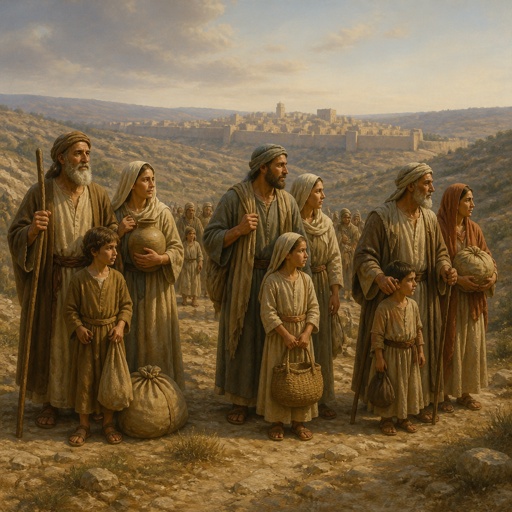
"The children of Keros, the children of Siaha, the children of Padon," - Ezra 2:44

Ezra 10:10-12

Ezra 10:10 - "And Ezra the priest stood up, and said unto them, Ye have transgressed, and have taken strange wives, to increase the trespass of Israel."

Ezra 10:3

Ezra 3:10

Ezra 10:3

Ezra 10:5 - "Then arose Ezra, and made the chief priests, the Levites, and all Israel, to swear that they should do according to this word. And they sware."

Ezra 7:10 - "For Ezra had prepared his heart to seek the law of the LORD, and to do it, and to teach in Israel statutes and judgments."

Ezra 10:38 - "And Bani, and Binnui, Shimei,"

Ezra 10:37 - "Mattaniah, Mattenai, and Jaasau,"

Ezra 10:40 - "Machnadebai, Shashai, Sharai,"

Ezra 10:32 - "Benjamin, Malluch, and Shemariah."

acts 10:44-46

Ezra 10:36 - "Vaniah, Meremoth, Eliashib,"

Ezra 10:35 - "Benaiah, Bedeiah, Chelluh,"

Ezra 10:42 - "Shallum, Amariah, and Joseph."

Ezra 10:41 - "Azareel, and Shelemiah, Shemariah,"

Ezra 10:39 - "And Shelemiah, and Nathan, and Adaiah,"

Ezra 10:20 - "And of the sons of Immer; Hanani, and Zebadiah."

Ezra 10:34 - "Of the sons of Bani; Maadai, Amram, and Uel,"

Mark 10:44 - "And whosoever of you will be the chiefest, shall be servant of all."

Ezra 2:10 - "The children of Bani, six hundred forty and two."

Ezra 10:21 - "And of the sons of Harim; Maaseiah, and Elijah, and Shemaiah, and Jehiel, and Uzziah."

Ezra 10:24 - "Of the singers also; Eliashib: and of the porters; Shallum, and Telem, and Uri."

Ezra 10:28 - "Of the sons also of Bebai; Jehohanan, Hananiah, Zabbai, and Athlai."

Ezra 10:31 - "And of the sons of Harim; Eliezer, Ishijah, Malchiah, Shemaiah, Shimeon,"

"Azareel, and Shelemiah, Shemariah," - Ezra 10:41