The Journey of Restoration: Lessons from Ezra 2:3
“The children of Parosh, two thousand an hundred seventy and two.” — Ezra 2:3
In the book of Ezra, we encounter a remarkable moment of restoration and hope as the Israelites return to their homeland after years of Babylonian captivity. Ezra 2:3 states, "The children of Parosh, two thousand an hundred seventy and two." This seemingly simple verse carries profound significance, offering insights into the nature of God's faithfulness and the importance of community in the journey of spiritual renewal.
At first glance, one might overlook the significance of a census of returning exiles delineated by family names and numbers. Yet, what we find in the Scripture is not merely a record of numbers, but rather a powerful reminder of the faithfulness of God to His people. It underscores the reality that God sees us in our individual and collective identities. In this particular reference, the children of Parosh are specifically mentioned, reflecting their unique story and contribution to the greater narrative of Israel's restoration.
The name “Parosh” translates to “a flea” or signifies a sense of bubbling over in joy or excitement. It symbolizes a group that may have felt insignificant in their exile yet found joy in returning to their ancestral land. This is a reminder for us that no matter how small or overlooked we may feel, God values us immensely. Each life is significant, and each individual's return contributes to the larger picture of God's redemptive purpose.
In this era of exile, the Israelites faced displacement and loss. They experienced the pain of separation from their land, temple, and heritage. Yet upon their return, God orchestrated a detailed plan for restoration, counting each person and recognizing each family as they came together. God’s attention to detail shows His intimate involvement in our lives and His desire for us to be counted in His kingdom.
As we consider the gathered community of the Israelites, we are reminded that spiritual journeys are seldom solitary. The returning exiles did not make the journey alone; they came together as families, tribes, and communities. Their collective identity played a crucial role in rebuilding their homeland and re-establishing their faith. They served as a reminder of the strength and support found in community. In today’s world, we too must remember that we are called to be part of something greater than ourselves. Together, we serve and uplift each other, sharing in the burdens and joys of our faith journeys.
Moreover, the number mentioned, "two thousand an hundred seventy and two," serves as an invitation for us to reflect on our own individual contributions to our communities, churches, and families. Every number represents a life, a story, and a purpose. It is essential for us to embrace who we are and recognize that each of us plays a vital role in the body of Christ. Just as the children of Parosh were counted among their peers in the journey home, we must step forward, knowing that we too matter in the tapestry of God’s creation.
In a world where we often feel divided and isolated, Ezra 2:3 speaks to the heart of God's intentions for unity and communion. Our God is a God of restoration—He calls us back to Him and encourages us to stand together. Each of us should look upon this verse as an affirmation of our importance, promoting a spirit of collaboration and encouragement in our shared journey of faith.
As we reflect upon the children of Parosh, let us ask ourselves: Are we contributing to the community of faith? Are we acknowledging the vital roles that others play in our lives? May we embrace our identity in Christ and actively partake in the work of His Kingdom, knowing that every life matters and every person counts in God’s eyes. The journey of restoration for us as individuals and as a community begins when we honor our shared stories and the loving, grace-filled God who calls us each by name.
Get our apps


Artwork for Ezra 2:3

Ezra 2:3 - "The children of Parosh, two thousand an hundred seventy and two."

"The children of Parosh, two thousand an hundred seventy and two." - Ezra 2:3

Ezra 3:2

Ezra 3:2

Ezra 3:2

Ezra 3:2

Ezra 3:2

Ezra 10:3

Ezra 3:10

Ezra 3:9

Ezra 9:3

Ezra 10:3

Zerubbabel in Ezra chapter 3

Altar rebuilt in Jerusalem. Ezra 3:1-3

Ezra 7:3 - "The son of Amariah, the son of Azariah, the son of Meraioth,"

Ezra 3:2 - "Then stood up Jeshua the son of Jozadak, and his brethren the priests, and Zerubbabel the son of Shealtiel, and his brethren, and builded the altar of the God of Israel, to offer burnt offerings thereon, as it is written in the law of Moses the man of God."

Ezra 9:1-2

Zerubbabel in Ezra chapter 2

Pagan women leave with their children ezra 10:3

Ezra 2:22 - "The men of Netophah, fifty and six."
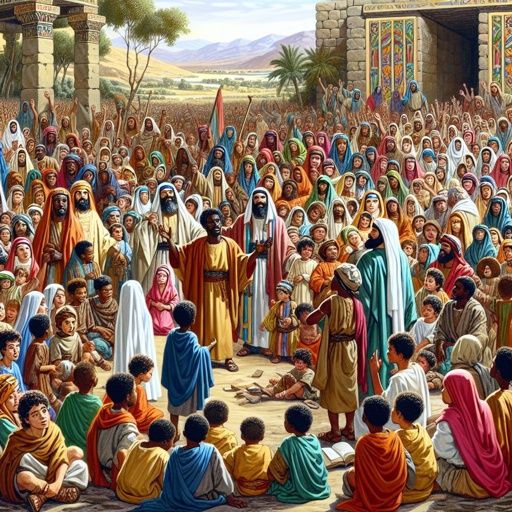
Ezra 2:18 - "The children of Jorah, an hundred and twelve."

Ezra 2:54 - "The children of Neziah, the children of Hatipha."

Ezra 2:20 - "The children of Gibbar, ninety and five."

Ezra 2:24 - "The children of Azmaveth, forty and two."

Ezra 2:39 - "The children of Harim, a thousand and seventeen."

Pagan women leave with their children ezra 10:3

Ezra 9:1-2

Ezra 2:9 - "The children of Zaccai, seven hundred and threescore."

Ezra 2:27 - "The men of Michmas, an hundred twenty and two."

Ezra 2:29 - "The children of Nebo, fifty and two."