What does Ezra 2:3 mean?
“The children of Parosh, two thousand an hundred seventy and two.” — Ezra 2:3
Ezra 2:3 is a verse from the Old Testament book of Ezra, which describes the return of the exiled Jews from Babylon to Jerusalem. The verse, as mentioned in the King James Version (KJV), says, "The children of Parosh, two thousand an hundred seventy and two."
This verse is part of a larger list of families and their numbers that returned to Jerusalem with Ezra, the priest and scribe, after being in exile in Babylon. The significance of these numbers lies in the restoration of the Jewish community and the rebuilding of the temple in Jerusalem.
It is important to understand the historical and cultural context of the book of Ezra to fully grasp the meaning of this verse. After the Babylonian exile, King Cyrus of Persia allowed the Jews to return to Jerusalem and rebuild their temple. Ezra, a descendant of the high priest Aaron, was instrumental in leading this return and ensuring the spiritual and moral revival of the people.
The verse itself, listing the "children of Parosh," signifies the specific families and tribes of the Jewish community that made the journey back to Jerusalem. The specific number “two thousand a hundred seventy and two” emphasizes the meticulous record-keeping and the importance of each individual in the community. Each family and tribe played a crucial role in the restoration and rebuilding process.
The theme of restoration and revival is prevalent throughout the book of Ezra. It signifies the return of the exiled people to their homeland, the rebuilding of the temple, and the restoration of the Jewish community. This verse, in particular, highlights the significance of each family and individual in this restoration process. It is a testament to the faithfulness of God in preserving and restoring His people, as well as the unity and cooperation among the returning exiles.
Furthermore, the symbolism of numbers in the Bible also adds depth to the meaning of this verse. In biblical numerology, the number 2 represents witness, partnership, and union. The number 7 signifies completeness, perfection, and spiritual fulfillment. The combination of these numbers in the verse can be seen as a reminder of God's faithfulness and the unity of the Jewish community in their collective return to Jerusalem.
The book of Ezra also carries spiritual significance, as it emphasizes the importance of returning to God and His laws. As the exiled Jews return to Jerusalem, they are called to renew their commitment to God and His covenant. Through their return and the rebuilding of the temple, they are restoring their relationship with God and seeking spiritual revival.
In addition, the verse serves as a reminder of the faithfulness of God in preserving His people. Despite the exile and the hardships they faced, God remained faithful to His promise to restore them to their homeland. The detailed record of the families and their numbers also reflects God's attention to detail and the significance of each individual in His plan for restoration.
In conclusion, Ezra 2:3 holds a significant place in the broader narrative of the book of Ezra. It serves as a testament to the restoration and revival of the Jewish community, the faithfulness of God, and the importance of each individual in the restoration process. The verse emphasizes the unity and cooperation among the returning exiles, as well as the spiritual significance of their return to Jerusalem. It serves as a reminder of God's faithfulness, the renewal of the covenant, and the restoration of the Jewish community.
Get our apps


Artwork for Ezra 2:3

Ezra 2:3 - "The children of Parosh, two thousand an hundred seventy and two."

"The children of Parosh, two thousand an hundred seventy and two." - Ezra 2:3

Ezra 3:2

Ezra 3:2

Ezra 3:2

Ezra 3:2

Ezra 3:2

Ezra 10:3

Ezra 3:10

Ezra 3:9

Ezra 9:3

Ezra 10:3

Zerubbabel in Ezra chapter 3

Altar rebuilt in Jerusalem. Ezra 3:1-3

Ezra 7:3 - "The son of Amariah, the son of Azariah, the son of Meraioth,"

Ezra 3:2 - "Then stood up Jeshua the son of Jozadak, and his brethren the priests, and Zerubbabel the son of Shealtiel, and his brethren, and builded the altar of the God of Israel, to offer burnt offerings thereon, as it is written in the law of Moses the man of God."

Ezra 9:1-2

Zerubbabel in Ezra chapter 2

Pagan women leave with their children ezra 10:3

Ezra 2:22 - "The men of Netophah, fifty and six."
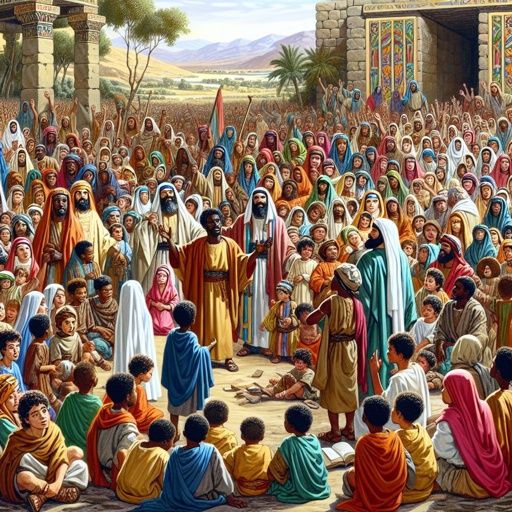
Ezra 2:18 - "The children of Jorah, an hundred and twelve."

Ezra 2:54 - "The children of Neziah, the children of Hatipha."

Ezra 2:20 - "The children of Gibbar, ninety and five."

Ezra 2:24 - "The children of Azmaveth, forty and two."

Ezra 2:39 - "The children of Harim, a thousand and seventeen."

Pagan women leave with their children ezra 10:3

Ezra 9:1-2

Ezra 2:9 - "The children of Zaccai, seven hundred and threescore."

Ezra 2:27 - "The men of Michmas, an hundred twenty and two."

Ezra 2:29 - "The children of Nebo, fifty and two."