Faithful Remnants: The Story of the Children of Harim
“The children of Harim, a thousand and seventeen.” — Ezra 2:39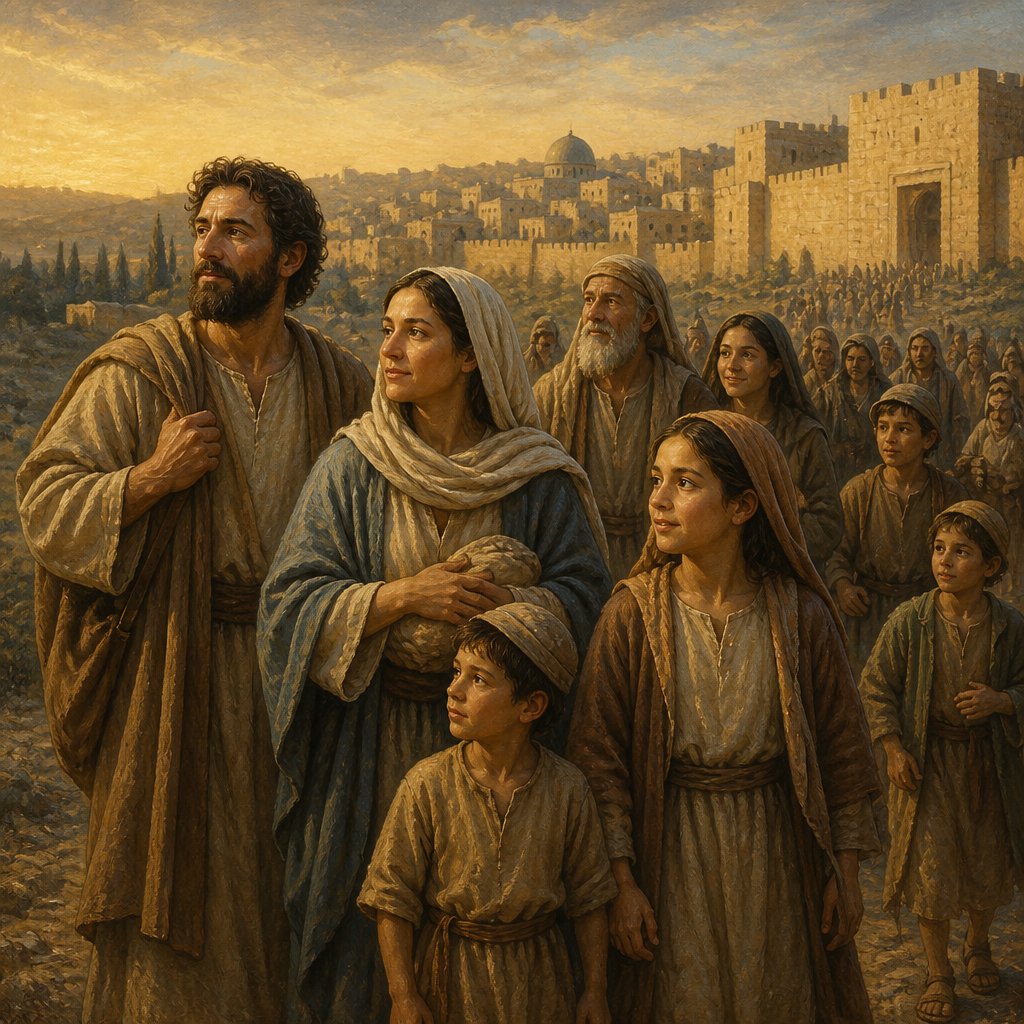
Ezra 2:39 states in the King James Version, “The children of Harim, a thousand and seventeen.” At a glance, this verse may appear as a mere statistic, a numerical reference among many that detail the returning exiles who came back to Jerusalem after the Babylonian captivity. However, within this simple count lies a profound message of faithfulness, identity, and God's merciful fulfillment of His promises.
As we delve deeper into the historical context, we encounter a pivotal moment in the lives of the Israelites. After decades of exile, the people of God were now returning to their homeland, journeying back to a place that held their history, their heritage, and their hopes. Among these returnees were the children of Harim, a family or clan that had been represented as deported but now revived in the census. This restoration signifies more than just the statistical gathering of numbers; it reflects God’s commitment to redeeming His people.
The mention of “a thousand and seventeen” suggests a sense of completeness and divine order. In biblical numerology, the number ten signifies completeness, while the number seven represents perfection. When combined, we see a representation of God’s overarching plan of redemption being activated: we are not merely returning as remnants, but as fully restored members of God's covenant people.
Consider the identity of these individuals: the children of Harim. The name Harim itself may evoke memories of past disobedience and failures among the Israelites. Yet, here we see that God's grace extends to those who were originally part of a people captured due to their unfaithfulness. The term “children” indicates life, continuation, and hope. These descendants carry forward both the inheritance of faith and the lessons of prior mistakes. They are not only returning physically; they are being called to restore their relationship with God and reclaim their identity as His people.
This passage compels us to reflect on our own lives. Who are the children of Harim in our communities today? These could be the families broken by sin, those estranged from God, or those who feel forgotten and uncounted in society. This verse reminds us that no one is truly beyond the reach of God's grace. Whether we come from a lineage filled with faith or one marked by disobedience, God's love transcends our past failures.
As the people returned to Jerusalem, they were not merely rebuilding physical walls but were also engaged in the reconstruction of their spiritual lives. The somber reality remains that while the past can be fraught with pain and struggle, God is the architect of restoration. The children of Harim, along with their fellow returnees, bore the weight of their people's history but also the promise of God's redemptive plan.
Moreover, if we reflect on the implications of community in this passage, we note that the restoration was not solitary; it was collective. The journey back to Jerusalem was undertaken as a family and community effort. In our walk of faith, we too are called to embrace this community aspect. We are journeying together with fellow believers, encouraging one another as we arise from the ashes of our past, united by a common purpose and hope in Christ.
Ezra’s recounting of those returning exiles, including the children of Harim, reminds us to rejoice in God’s faithfulness. We serve a God who counts us all and recognizes our value and purpose—just like each individual counted in this historical passage. Therefore, let us celebrate our identity as children of God, aware of our past yet bold in faith as we step into the promises and purposes He has for us. Like the children of Harim, we too can embrace the story of our lives as an ongoing narrative of God's redemptive love.
Get our apps


Artwork for Ezra 2:39

Ezra 2:39 - "The children of Harim, a thousand and seventeen."

"The children of Harim, a thousand and seventeen." - Ezra 2:39

Ezra 10:39 - "And Shelemiah, and Nathan, and Adaiah,"

"And Shelemiah, and Nathan, and Adaiah," - Ezra 10:39

Ezra 3:2

Ezra 3:2

Ezra 3:2

Ezra 3:2

Ezra 3:2

Ezra 9:1-2

Zerubbabel in Ezra chapter 2

Ezra 2:22 - "The men of Netophah, fifty and six."
Ezra 2:18 - "The children of Jorah, an hundred and twelve."

Ezra 2:54 - "The children of Neziah, the children of Hatipha."

Ezra 2:20 - "The children of Gibbar, ninety and five."

Ezra 2:24 - "The children of Azmaveth, forty and two."

Ezra 9:1-2

Ezra 2:9 - "The children of Zaccai, seven hundred and threescore."

Ezra 2:27 - "The men of Michmas, an hundred twenty and two."

Ezra 2:29 - "The children of Nebo, fifty and two."

Ezra 2:56 - "The children of Jaalah, the children of Darkon, the children of Giddel,"

Ezra 2:11 - "The children of Bebai, six hundred twenty and three."

Ezra 2:53 - "The children of Barkos, the children of Sisera, the children of Thamah,"

Ezra 2:45 - "The children of Lebanah, the children of Hagabah, the children of Akkub,"

Ezra 2:48 - "The children of Rezin, the children of Nekoda, the children of Gazzam,"

Ezra 2:15 - "The children of Adin, four hundred fifty and four."

Ezra 2:21 - "The children of Beth-lehem, an hundred twenty and three."

Ezra 2:51 - "The children of Bakbuk, the children of Hakupha, the children of Harhur,"

Ezra 2:49 - "The children of Uzza, the children of Paseah, the children of Besai,"

Ezra 7:2 - "The son of Shallum, the son of Zadok, the son of Ahitub,"