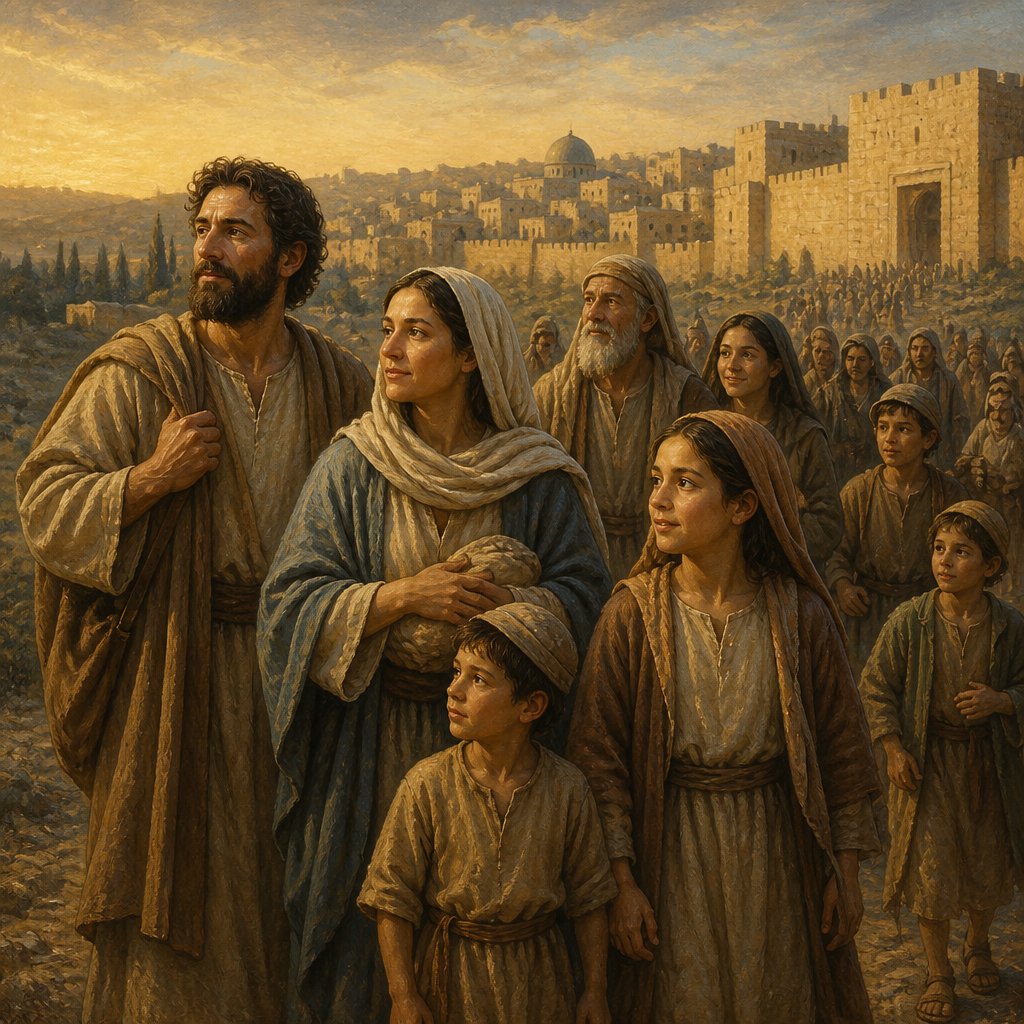
Ezra 2:39 (KJV) - "The children of Immer, a thousand fifty and two."
The book of Ezra is found in the Old Testament and tells the story of the Israelites who were allowed to return to Jerusalem from Babylonian captivity in order to rebuild the temple. The verse Ezra 2:39 records the number of people from the tribe of Immer who returned to Jerusalem, totaling one thousand fifty-two.
To fully understand the significance of this verse, it's important to consider the historical and biblical context. The return from Babylonian captivity was a pivotal moment in the history of the Israelites. It marked the end of their exile and the beginning of a new era in which they would seek to rebuild their nation and their faith.
The tribe of Immer was one of the many priestly families in Israel. They were responsible for serving in the temple and carrying out the rituals and sacrifices prescribed by the Mosaic Law. The fact that over a thousand members of the tribe of Immer returned to Jerusalem is a testament to their dedication to their faith and their commitment to the restoration of the temple.
The number "one thousand fifty-two" holds significance in the biblical context. In biblical numerology, certain numbers are believed to hold symbolic meanings. The number one signifies unity and the beginning of a new era, while the number five is associated with God's grace and redemption. When combined, the number fifty-two can be seen as a symbol of the restoration and renewal of the priestly lineage of the tribe of Immer. It also represents the divine grace and favor that allowed them to return to the promised land.
Furthermore, the return of the tribe of Immer to Jerusalem was not just about physical relocation. It was a spiritual homecoming as well. The rebuilding of the temple was not just a physical reconstruction, but a symbolic restoration of the Israelites' relationship with God. The presence of the tribe of Immer in Jerusalem signified the reinstatement of the priestly duties and the reestablishment of the sacrificial system, which was crucial to the spiritual life of the nation.
The verse also reflects the theme of restoration and renewal that is prevalent throughout the book of Ezra. The return from exile and the rebuilding of the temple symbolize the Israelites' hope for a fresh start and a renewed relationship with God. It serves as a reminder that no matter how far we may have strayed, God's grace is always available to bring us back into fellowship with Him.
In conclusion, Ezra 2:39 is more than just a record of numbers. It is a testament to the faithfulness of the tribe of Immer, the divine grace that enabled their return, and the symbolic significance of their presence in Jerusalem. It serves as a reminder of the themes of restoration, renewal, and divine favor that run throughout the entire biblical narrative. This verse encourages us to trust in God's faithfulness and to seek restoration and renewal in our own lives.
Get our apps


Artwork for Ezra 2:39

Ezra 2:39 - "The children of Harim, a thousand and seventeen."

"The children of Harim, a thousand and seventeen." - Ezra 2:39

Ezra 10:39 - "And Shelemiah, and Nathan, and Adaiah,"

"And Shelemiah, and Nathan, and Adaiah," - Ezra 10:39

Ezra 3:2

Ezra 3:2

Ezra 3:2

Ezra 3:2

Ezra 3:2

Ezra 9:1-2

Zerubbabel in Ezra chapter 2

Ezra 2:22 - "The men of Netophah, fifty and six."
Ezra 2:18 - "The children of Jorah, an hundred and twelve."

Ezra 2:54 - "The children of Neziah, the children of Hatipha."

Ezra 2:20 - "The children of Gibbar, ninety and five."

Ezra 2:24 - "The children of Azmaveth, forty and two."

Ezra 9:1-2

Ezra 2:9 - "The children of Zaccai, seven hundred and threescore."

Ezra 2:27 - "The men of Michmas, an hundred twenty and two."

Ezra 2:29 - "The children of Nebo, fifty and two."

Ezra 2:56 - "The children of Jaalah, the children of Darkon, the children of Giddel,"

Ezra 2:11 - "The children of Bebai, six hundred twenty and three."

Ezra 2:53 - "The children of Barkos, the children of Sisera, the children of Thamah,"

Ezra 2:45 - "The children of Lebanah, the children of Hagabah, the children of Akkub,"

Ezra 2:48 - "The children of Rezin, the children of Nekoda, the children of Gazzam,"

Ezra 2:15 - "The children of Adin, four hundred fifty and four."

Ezra 2:21 - "The children of Beth-lehem, an hundred twenty and three."

Ezra 2:51 - "The children of Bakbuk, the children of Hakupha, the children of Harhur,"

Ezra 2:49 - "The children of Uzza, the children of Paseah, the children of Besai,"

Ezra 7:2 - "The son of Shallum, the son of Zadok, the son of Ahitub,"