The Song of the Redeemed: A Reflection on Ezra 2:41
“The singers: the children of Asaph, an hundred twenty and eight.” — Ezra 2:41
In the heart of Ezra 2:41, we read a simple yet profound statement that speaks volumes about the community of faith and the role of worship in the life of God’s people: "The singers: the children of Asaph, an hundred twenty and eight." This verse, nestled among lists of returning exiles, unearths the foundational importance of worship and the artistic expression of praise in our spiritual journey.
As we delve into the significance of the singers, particularly the lineage of Asaph, we see a rich heritage of worship that dates back to the days of King David. Asaph, a Levite, was appointed by David to lead the worship in the Temple, and his descendants were entrusted with the ministry of song and worship. "The children of Asaph" serves as a reminder that worship is not merely an individual act but a collective one—rooted in tradition and sustained through generations.
The number that follows—"an hundred twenty and eight"—offers us a glimpse into the community aspect of worship. These were not just isolated voices but a harmonious choir contributing to the spiritual atmosphere of Israel. The returning exiles, after decades of living in Babylonian captivity, were filled with emotions ranging from elation to trepidation as they returned to their homeland. In such times, the ministry of music and devotion becomes even more critical, serving to unify and encourage the heart of God’s people.
Worship, particularly through singing, played a distinctive role in the life of Israel. The psalms sung by Asaph and his descendants often captured the heart's cry of the nation. For example, psalms attributed to Asaph reflect themes of national lament, praise, and awe before God. In a similar vein, we are reminded that song is powerful; it transcends barriers and guides us into a deeper understanding of God and ourselves.
The image of a collective of singers invites us to reflect on our role in the body of Christ today. Does our worship reflect the values we hold dear as a community? Are we nurturing an environment where the voices of many can rise together in unison, echoing both praises and prayers? In our congregations, there may be tensions, personalities, and various musical preferences, yet Ezra 2:41 challenges us to remember that our differences can harmonize into a beautiful song of worship that honors the Lord.
As we consider the significance of the children of Asaph carrying the spirit of worship, we must acknowledge that they were not just performing; they were declaring truth and identity. For the people of Israel, returning home, this was not merely about re-establishing themselves physically in Jerusalem but reclaiming their identity as God’s chosen people. Their songs were a declaration of faith, resilience, and hope against the backdrop of their challenging circumstances. Thus, as we gather in our communities today, our worship should echo this kind of passion and purpose—a vibrant testament to the God who redeems and restores.
Moreover, let us not overlook the intentional legacy passed down by Asaph’s lineage. In today’s world, where secular voices and distractions abound, it is our duty to offer our children and future generations a robust tapestry where worship weaves seamlessly into the fabric of their lives. We do this by fostering environments that cultivate their gifts and encourage them to participate actively in God's story through song and praise.
In closing, as we meditate on Ezra 2:41, let us embrace our identity as the children of God, called to be singers of His grace. Let us lift our voices, not just during church on Sunday, but throughout our daily lives—singing of His faithfulness, declaring His promises, and spreading His love through the melodious testimonies of our lives. Indeed, may our lives be a relentless song of worship, echoing the legacy of faith entrusted to us.
Get our apps


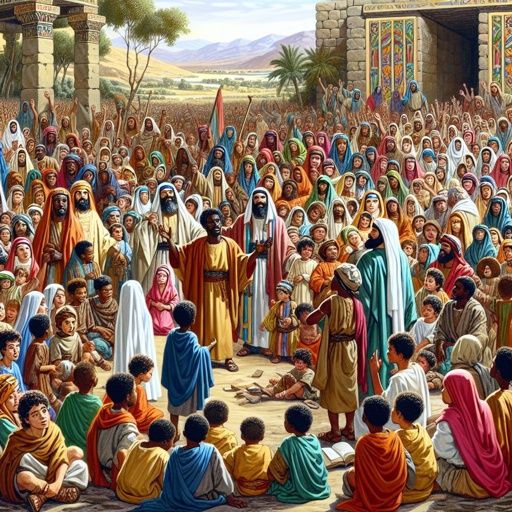
Artwork for Ezra 2:41

Ezra 2:41 - "¶ The singers: the children of Asaph, an hundred twenty and eight."

"¶ The singers: the children of Asaph, an hundred twenty and eight." - Ezra 2:41

Ezra 10:41 - "Azareel, and Shelemiah, Shemariah,"

"Azareel, and Shelemiah, Shemariah," - Ezra 10:41

Ezra 3:2

Ezra 3:2

Ezra 3:2

Ezra 3:2

Ezra 3:2

Ezra 9:1-2

Zerubbabel in Ezra chapter 2

Acts 2:41

Ezra 2:22 - "The men of Netophah, fifty and six."
Ezra 2:18 - "The children of Jorah, an hundred and twelve."

Ezra 2:54 - "The children of Neziah, the children of Hatipha."

Ezra 2:20 - "The children of Gibbar, ninety and five."

Ezra 2:24 - "The children of Azmaveth, forty and two."

Ezra 2:39 - "The children of Harim, a thousand and seventeen."

Ezra 9:1-2

Ezra 2:9 - "The children of Zaccai, seven hundred and threescore."

Ezra 2:27 - "The men of Michmas, an hundred twenty and two."

Ezra 2:29 - "The children of Nebo, fifty and two."

Acts 2:41-42

Acts 2:41-42

Acts 2:41-42

Acts 2:41-42

Acts 2:41-42

Acts 2:41-42

Acts 2:41-42

Acts 2:41-42