United in Purpose: A Reflection on Ezra 3:1
“And when the seventh month was come, and the children of Israel were in the cities, the people gathered themselves together as one man to Jerusalem.” — Ezra 3:1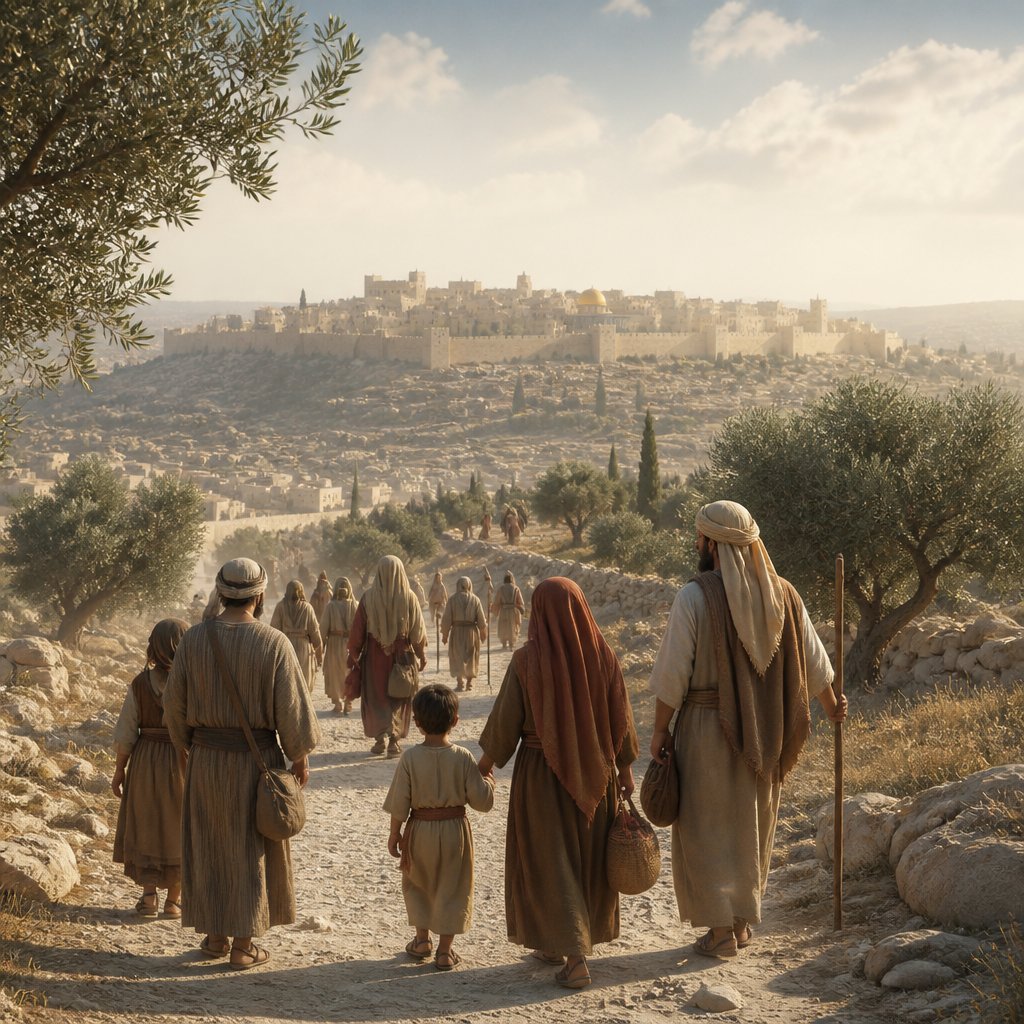
As we dive into Ezra 3:1—"And when the seventh month was come, and the children of Israel were in the cities, the people gathered themselves together as one man to Jerusalem"—we explore themes of unity, purpose, and the sacredness of coming together in communal worship.
The context of this verse is crucial for understanding its significance. The children of Israel had been in exile, and many had returned to Jerusalem to rebuild what had been lost during their time away. They were well aware of the physical and spiritual ruins that dotted their homeland, and the challenges ahead were daunting. However, a divine call prompted them—a desire to restore the temple of God, the very heart of their worship and community life.
The timing, noted as the seventh month, is loaded with spiritual symbolism. In the Jewish calendar, the seventh month is tied to significant holy days: Rosh Hashanah, the Jewish New Year, and Yom Kippur, the Day of Atonement. This month represented a time of reflection, renewal, and restoration. It was a time when intentions were realigned, and hearts focused on community and worship. The people’s decision to gather during such a pivotal moment highlights the deep recognition of their covenant with God and their commitment to re-establish the rituals that had sustained them through generations.
A particular phrase stands out from this verse: "gathered themselves together as one man.” This unity signifies an extraordinary level of commitment and collaboration. The economy and social fabric of life had been disrupted by exile, yet when it came to gathering in Jerusalem, these people set aside their individual concerns and desires. They came together with a oneness of purpose. In a world that often champions individualism over communal identity, this verse challenges us to reconsider our own understanding of togetherness. What does it mean to gather together as one?
Gathering as a community is essential. In the New Testament, we see echoes of this longing for unity among believers. The church is called the Body of Christ, emphasizing that no one part is more significant than the other, yet each part is essential. As the early church gathered in Acts 2, they devoted themselves to the apostles' teachings, fellowship, breaking of bread, and prayer. They exemplified the truths that we find in Ezra's time—their unity empowered them to face challenges together, to worship collectively, and to support one another in the pursuit of God’s mission.
However, unity does not simply occur by happenstance. It requires intentionality. The Israelites needed to choose to overcome their differences and perceived divisions. There were varying opinions, experiences, and expectations; yet they focused on what brought them together rather than what set them apart. We must also ask ourselves: what biases or preconceived notions do we hold that can hinder our ability to gather in unity? More importantly, how can we lay those aside to come together as one in Christ?
In reflecting on Ezra 3:1, we are reminded of the power and necessity of gathering. Whether it's in our local churches, our small groups, or even just within our families, we are called to come together, seeking God collectively. When we offer our worship, our prayers, and our voices in unity, we create a powerful vehicle through which God's presence can manifest.
In conclusion, Ezra 3:1 is not just a historical account; it’s an invitation. An invitation to gather as one, to restore what has been lost, and to reaffirm our collective identity as God’s people. May we pursue such unity today, intentionally gathering not only in spirit but in action, reflecting the heart of God’s desire for His people. Let us come together, just as the children of Israel did, to build the foundations of our faith and worship anew.
Get our apps


Artwork for Ezra 3:1

Altar rebuilt in Jerusalem. Ezra 3:1-3

Ezra 3:1 - "And when the seventh month was come, and the children of Israel were in the cities, the people gathered themselves together as one man to Jerusalem."
"And when the seventh month was come, and the children of Israel were in the cities, the people gathered themselves together as one man to Jerusalem." - Ezra 3:1

Ezra 3:2

Ezra 10:3

Ezra 3:2

Ezra 3:10

Ezra 3:9

Ezra 3:2

Ezra 9:3

Ezra 3:2

Ezra 3:2

Ezra 10:3

Zerubbabel in Ezra chapter 3

Ezra 1:1

Ezra 1:1

Ezra 7:3 - "The son of Amariah, the son of Azariah, the son of Meraioth,"

Ezra 1:3 - "Who is there among you of all his people? his God be with him, and let him go up to Jerusalem, which is in Judah, and build the house of the LORD God of Israel, (he is the God,) which is in Jerusalem."

Ezra 2:3 - "The children of Parosh, two thousand an hundred seventy and two."

Pagan women leave with their children ezra 10:3

Ezra 7:1 - "Now after these things, in the reign of Artaxerxes king of Persia, Ezra the son of Seraiah, the son of Azariah, the son of Hilkiah,"

Ezra 9:1

Ezra 9:1

Ezra 9:1

Pagan women leave with their children ezra 10:3

Ezra 1:1 king Cyrus

Ezra 9:1-2

Ezra 6:1-12

Ezra 8:3 - "Of the sons of Shechaniah, of the sons of Pharosh; Zechariah: and with him were reckoned by genealogy of the males an hundred and fifty."

Ezra 3:11 – "With praise and thanksgiving they sang to the Lord: 'He is good; his love toward Israel endures forever.'"