What does Ezra 3:1 mean?
“And when the seventh month was come, and the children of Israel were in the cities, the people gathered themselves together as one man to Jerusalem.” — Ezra 3:1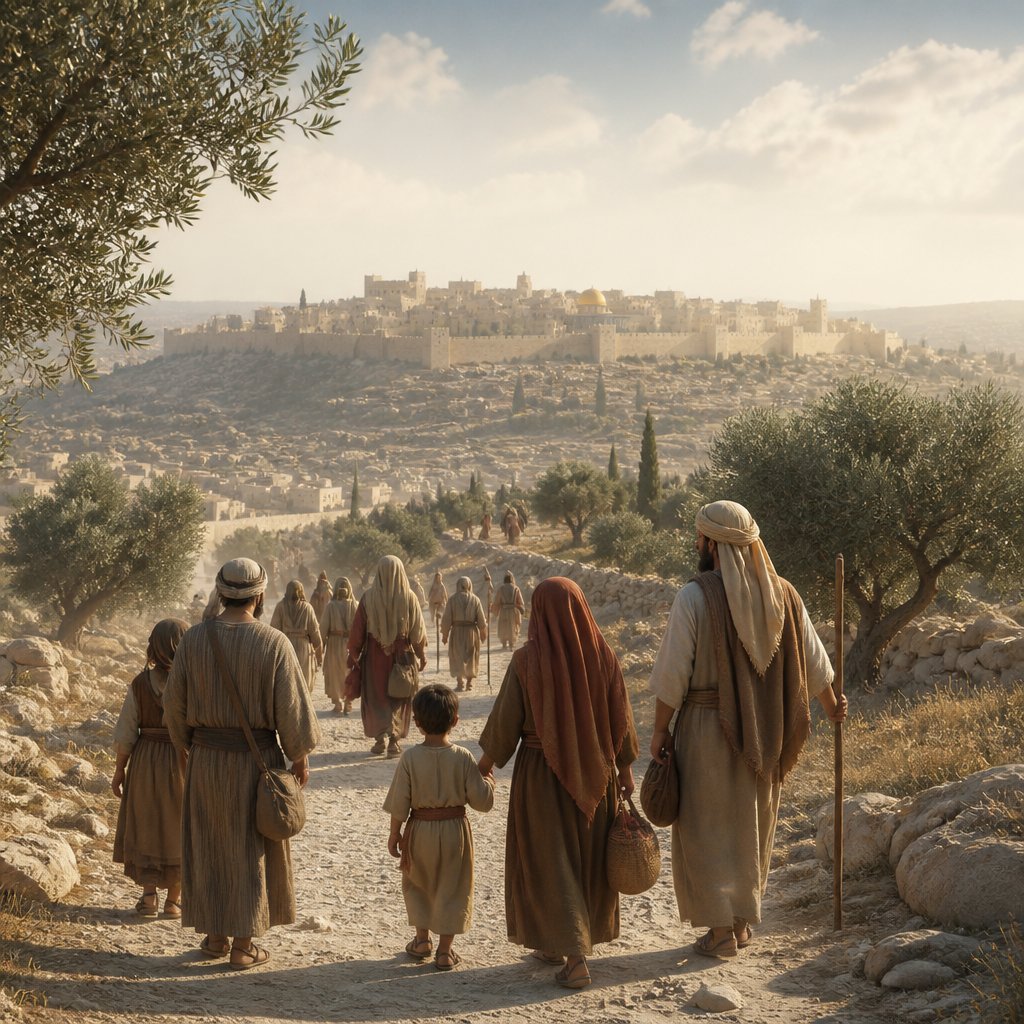
Ezra 3:1 in the King James Version of the Bible reads: "And when the seventh month was come, and the children of Israel were in the cities, the people gathered themselves together as one man to Jerusalem."
This verse comes from the book of Ezra in the Old Testament. It marks the beginning of a significant event in the history of Israel - the rebuilding of the temple in Jerusalem after the Babylonian exile.
To fully understand the context and significance of this verse, we must go back to the history of the Israelites. The Babylonian exile was a pivotal moment in their history when the Babylonians, led by King Nebuchadnezzar, conquered Jerusalem, destroyed the temple, and exiled the Israelites to Babylon. This was a traumatic event for the people of Israel, as it shattered their identity and connection to their land and their God.
However, after 70 years of exile, the Persian king Cyrus the Great issued a decree allowing the Israelites to return to their homeland and rebuild their temple. This set the stage for the events described in Ezra 3:1.
The verse starts by noting that it was the seventh month, a significant time in the religious calendar of the Israelites. The seventh month was the month of Tishrei, which included the important festivals of Rosh Hashanah (the Jewish New Year) and Yom Kippur (the Day of Atonement). These festivals held deep religious and cultural significance for the Israelites, and the fact that the events of Ezra 3 begin in this month is significant.
The verse also mentions that the children of Israel were in the cities, indicating that they had returned to their ancestral lands. This was a fulfillment of the prophecy of Jeremiah, who had foretold that after 70 years, the Israelites would return to their homeland (Jeremiah 25:11-12, 29:10).
What is perhaps most striking about this verse is the unity expressed by the people. It says, "the people gathered themselves together as one man to Jerusalem." This unity was essential for the rebuilding of the temple, as it required collective effort, resources, and dedication. The unity of the people was a powerful symbol of their commitment and desire to restore their relationship with God and re-establish their identity as a nation.
The rebuilding of the temple in Jerusalem was not just a physical reconstruction but also a spiritual and symbolic one. The temple was the focal point of Israelite worship and the dwelling place of God among his people. Its destruction had symbolized the rupture in the relationship between God and Israel. Therefore, the rebuilding of the temple was a sign of restoration and renewal.
The themes of restoration, unity, and renewal are central to this verse and the events that follow in the book of Ezra. They reflect the profound spiritual journey of the Israelites as they sought to reclaim their identity, their faith, and their relationship with God.
In a broader sense, this verse also offers a message of hope and redemption. It speaks to the possibility of rebuilding and restoring what has been broken, both individually and collectively. It emphasizes the power of unity and collective action in overcoming adversity and achieving meaningful goals.
In conclusion, Ezra 3:1 is a pivotal verse in the story of the Israelites' return from exile and the rebuilding of the temple. It encapsulates themes of restoration, unity, and renewal and offers a powerful message of hope and redemption. It serves as a reminder of the enduring faith and resilience of God's people and the possibility of rebuilding what has been broken.
Get our apps


Artwork for Ezra 3:1

Altar rebuilt in Jerusalem. Ezra 3:1-3

Ezra 3:1 - "And when the seventh month was come, and the children of Israel were in the cities, the people gathered themselves together as one man to Jerusalem."
"And when the seventh month was come, and the children of Israel were in the cities, the people gathered themselves together as one man to Jerusalem." - Ezra 3:1

Ezra 3:2

Ezra 10:3

Ezra 3:2

Ezra 3:10

Ezra 3:9

Ezra 3:2

Ezra 9:3

Ezra 3:2

Ezra 3:2

Ezra 10:3

Zerubbabel in Ezra chapter 3

Ezra 1:1

Ezra 1:1

Ezra 7:3 - "The son of Amariah, the son of Azariah, the son of Meraioth,"

Ezra 1:3 - "Who is there among you of all his people? his God be with him, and let him go up to Jerusalem, which is in Judah, and build the house of the LORD God of Israel, (he is the God,) which is in Jerusalem."

Ezra 2:3 - "The children of Parosh, two thousand an hundred seventy and two."

Pagan women leave with their children ezra 10:3

Ezra 7:1 - "Now after these things, in the reign of Artaxerxes king of Persia, Ezra the son of Seraiah, the son of Azariah, the son of Hilkiah,"

Ezra 9:1

Ezra 9:1

Ezra 9:1

Pagan women leave with their children ezra 10:3

Ezra 1:1 king Cyrus

Ezra 9:1-2

Ezra 6:1-12

Ezra 8:3 - "Of the sons of Shechaniah, of the sons of Pharosh; Zechariah: and with him were reckoned by genealogy of the males an hundred and fifty."

Ezra 3:11 – "With praise and thanksgiving they sang to the Lord: 'He is good; his love toward Israel endures forever.'"