The Weight of Consequences: Lessons from Ezra 5:12
“But after that our fathers had provoked the God of heaven unto wrath, he gave them into the hand of Nebuchadnezzar the king of Babylon, the Chaldean, who destroyed this house, and carried the people away into Babylon.” — Ezra 5:12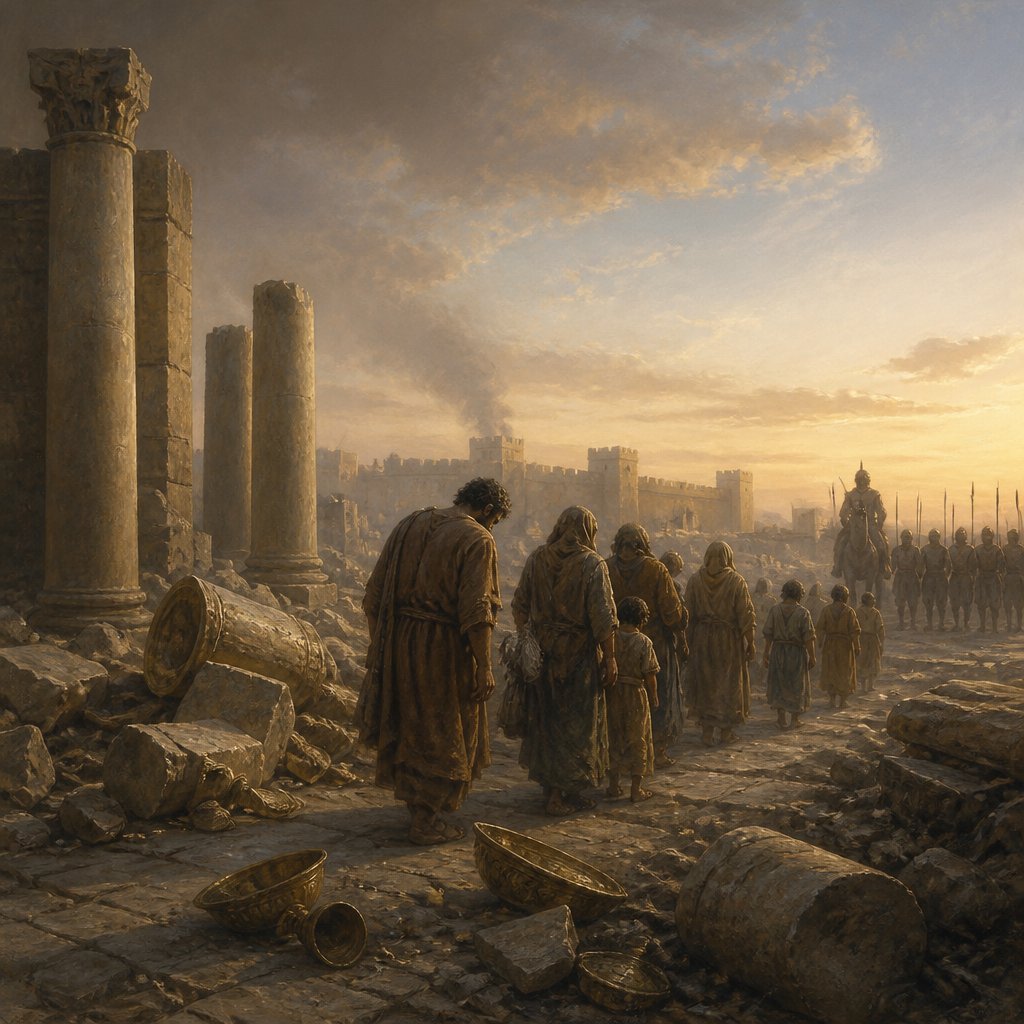
In Ezra 5:12 we find a profound and sobering truth that resonates through generations: "But after that our fathers had provoked the God of heaven unto wrath, he gave them into the hand of Nebuchadnezzar the king of Babylon, the Chaldean, who destroyed this house, and carried the people away into Babylon." This potent verse serves as a stark reminder of the consequences of turning away from God and the importance of understanding His holiness and justice.
To fully grasp the weight of this verse, we must consider the historical context. The Israelites had repeatedly disobeyed God's commands, indulging in idolatry and corrupt practices. Despite His numerous warnings and calls to repentance, they turned their backs on Him. Therefore, God allowed them to face the consequences of their actions. Nebuchadnezzar's conquest was not merely a moment of military might but rather a divine judgment—in a sense, a necessary end for a persistent rebellion against the covenant they had with the Almighty.
God’s wrath, as depicted in this verse, is not whimsical but rather a holy response to sin. His holiness cannot coexist with unrighteousness; hence, when His people provoke Him, they essentially set themselves up for correction through the painful but transformative means of discipline. We are reminded of Hebrews 12:6 (KJV), "For whom the Lord loveth he chasteneth, and scourgeth every son whom he receiveth." Here, we see that God's discipline, although harsh, comes from His love and desire for us to return to Him.
The destruction of the temple, referenced as "this house," signifies not just physical devastation but also a spiritual and communal rupture. The temple was the very heart and identity of Israelite worship; it represented God's dwelling with His people. To have it destroyed was to experience a profound loss that went beyond bricks and mortar; it was a loss of God's immediate presence. This serves as an analogy for our relationship with God: when we turn away from Him through sin, we risk losing our sense of His presence and guidance in our lives.
In our modern context, we must introspect and ask ourselves: how do we provoke God’s wrath? While we may not engage in blatant idolatry or worship false gods, we subtly replace God with lesser things—ambitions, relationships, or possessions. When we allow these substitutes to take precedence over our relationship with God, we risk distancing ourselves from His presence.
Moreover, Ezra’s proclamation serves as a pivotal lesson on corporate responsibility. The sins of the fathers led to collective consequences. As members of our families, communities, and church bodies, our actions have ramifications beyond ourselves. This reminds us of the importance of living out our faith authentically, not just as individuals but as a part of a greater body of believers. We must lead by example, instilling in future generations the importance of remaining faithful and honoring God.
Yet, there is hope even amid judgment. The very act of God allowing His people to be exiled served to refine and purify them. They returned from Babylon with renewed devotion, rebuilding the temple and restoring the covenant relationship with God. Similarly, our periods of discipline can lead to restoration and awakening. God desires for us to turn back to Him wholeheartedly. As we delve into our own lives, let us not view hardship solely as punishment but also as a pivotal opportunity for growth and renewal.
As we meditate on Ezra 5:12, let us be prompted to align our hearts with God’s holiness, recognizing the weight of our actions while embracing His boundless grace and mercy. May we choose to honor Him in all our ways, learning from the past while eagerly pursuing a future that glorifies Him.
Get our apps


Artwork for Ezra 5:12

Ezra 5:12 - "But after that our fathers had provoked the God of heaven unto wrath, he gave them into the hand of Nebuchadnezzar the king of Babylon, the Chaldean, who destroyed this house, and carried the people away into Babylon."
"But after that our fathers had provoked the God of heaven unto wrath, he gave them into the hand of Nebuchadnezzar the king of Babylon, the Chaldean, who destroyed this house, and carried the people away into Babylon." - Ezra 5:12

Ezra 7:12 - "Artaxerxes, king of kings, unto Ezra the priest, a scribe of the law of the God of heaven, perfect peace, and at such a time."

Ezra 10:5 - "Then arose Ezra, and made the chief priests, the Levites, and all Israel, to swear that they should do according to this word. And they sware."

Ezra 10:10-12

Ezra 6:1-12

Nehemiah 12:33 - "And Azariah, Ezra, and Meshullam,"

Zerubbabel in Ezra chapter 5

Nehemiah 12:13 - "Of Ezra, Meshullam; of Amariah, Jehohanan;"

"And Azariah, Ezra, and Meshullam," - Nehemiah 12:33

Ezra 2:12 - "The children of Azgad, a thousand two hundred twenty and two."

Ezra 2:5 - "The children of Arah, seven hundred seventy and five."

Ezra 8:12 - "And of the sons of Azgad; Johanan the son of Hakkatan, and with him an hundred and ten males."

"Of Ezra, Meshullam; of Amariah, Jehohanan;" - Nehemiah 12:13

Zerubbabel in Ezra chapter 5 but zerubbabel is not a priest

Ezra 8:5 - "Of the sons of Shechaniah; the son of Jahaziel, and with him three hundred males."

Ezra 7:5 - "The son of Abishua, the son of Phinehas, the son of Eleazar, the son of Aaron the chief priest:"

Ezra 5:5 - "But the eye of their God was upon the elders of the Jews, that they could not cause them to cease, till the matter came to Darius: and then they returned answer by letter concerning this matter."

Nehemiah 12:1 - "Now these are the priests and the Levites that went up with Zerubbabel the son of Shealtiel, and Jeshua: Seraiah, Jeremiah, Ezra,"

"Artaxerxes, king of kings, unto Ezra the priest, a scribe of the law of the God of heaven, perfect peace, and at such a time." - Ezra 7:12

Ezra 5:4 - "Then said we unto them after this manner, What are the names of the men that make this building?"

Nehemiah 12:26 - "These were in the days of Joiakim the son of Jeshua, the son of Jozadak, and in the days of Nehemiah the governor, and of Ezra the priest, the scribe."

Ezra 10:12 - "Then all the congregation answered and said with a loud voice, As thou hast said, so must we do."

Ezra 5:13 - "But in the first year of Cyrus the king of Babylon the same king Cyrus made a decree to build this house of God."

"Then arose Ezra, and made the chief priests, the Levites, and all Israel, to swear that they should do according to this word. And they sware." - Ezra 10:5

Ezra 5:7 - "They sent a letter unto him, wherein was written thus; Unto Darius the king, all peace."

Ezra 5:10 - "We asked their names also, to certify thee, that we might write the names of the men that were the chief of them."

"The children of Arah, seven hundred seventy and five." - Ezra 2:5

"The children of Azgad, a thousand two hundred twenty and two." - Ezra 2:12

Ezra 5:9 - "Then asked we those elders, and said unto them thus, Who commanded you to build this house, and to make up these walls?"