What does Ezra 5:12 mean?
“But after that our fathers had provoked the God of heaven unto wrath, he gave them into the hand of Nebuchadnezzar the king of Babylon, the Chaldean, who destroyed this house, and carried the people away into Babylon.” — Ezra 5:12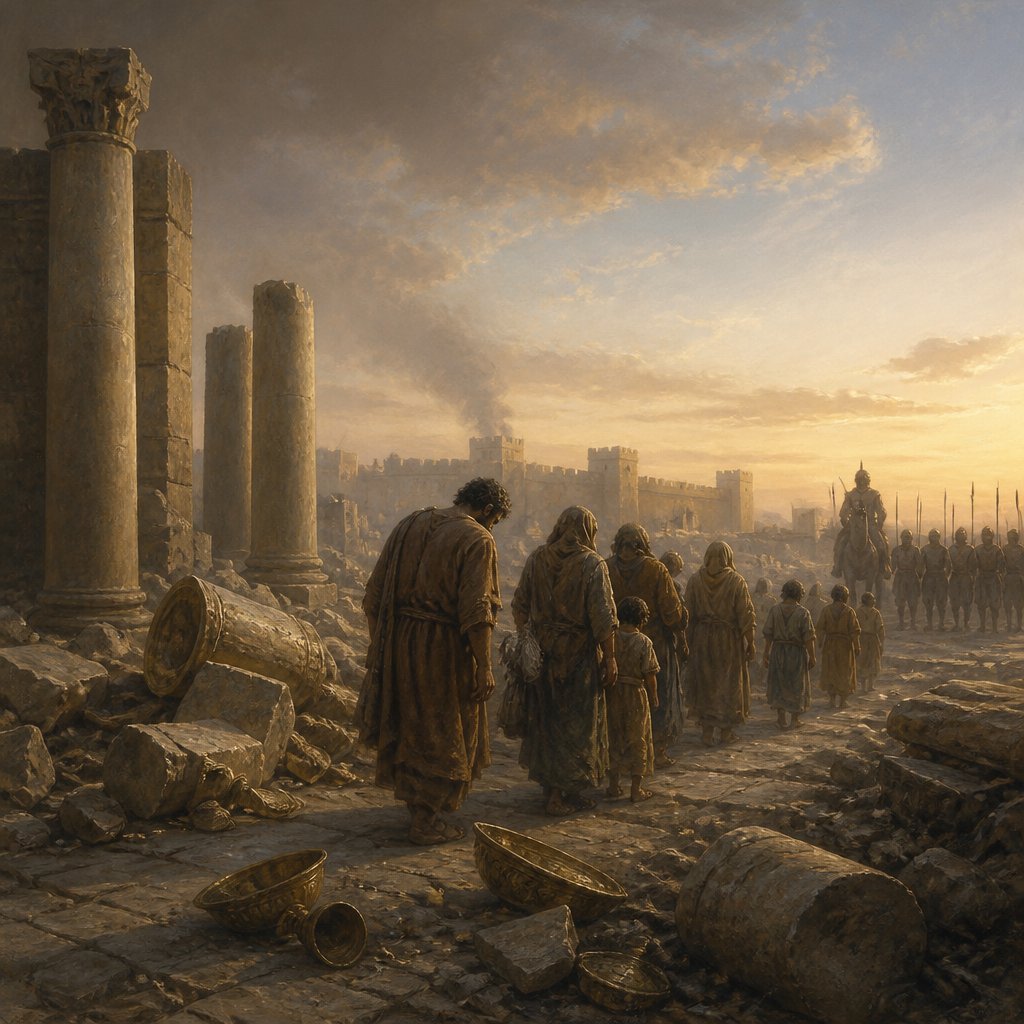
Ezra 5:12 (KJV) states: "But after that our fathers had provoked the God of heaven unto wrath, he gave them into the hand of Nebuchadnezzar the king of Babylon, the Chaldean, who destroyed this house, and carried the people away into Babylon."
This verse is part of the book of Ezra in the Old Testament of the Bible and it is situated in the historical context of the Israelites' return from exile in Babylon after the fall of Jerusalem in 586 BC. The verse specifically refers to the period of the Babylonian exile and the destruction of the temple in Jerusalem.
In this verse, the Israelites are reflecting on the consequences of their forefathers' actions which ultimately led to their downfall. They acknowledge that it was their own disobedience and rebellion against God that led to the destruction of the temple and their subsequent exile in Babylon. This is a recurring theme in the Old Testament, where the Israelites' history is often marked by cycles of faithfulness and unfaithfulness, and the resulting consequences of their actions.
The verse also mentions Nebuchadnezzar, the king of Babylon, as the instrument of God's judgment upon the Israelites. The Babylonian invasion and the destruction of the temple is seen as a direct result of the Israelites' betrayal of God and their disregard for His commandments. This serves as a solemn reminder of the importance of obedience to God's word and the severity of His judgment when His people turn away from Him.
The reference to the destruction of the temple holds deep symbolic significance for the Israelites. The temple was not only a physical structure but also the spiritual center of their faith, the place where they worshipped and encountered God. Its destruction represented the severing of their connection to God and the loss of their identity as a chosen people. However, the verse also points to the hope of restoration and a return to God's favor, as the Israelites reflect on their past and seek reconciliation with Him.
Furthermore, the verse underscores the concept of God's sovereignty and His ultimate control over the destinies of nations and individuals. Despite the Israelites' failure, God is still at work in their history, orchestrating events and using even their disobedience to fulfill His purposes. This serves as a reminder of God's faithfulness and His ability to bring about redemption and restoration, even in the midst of judgment and exile.
Overall, Ezra 5:12 is a poignant reflection on the Israelites' history and their relationship with God. It highlights the themes of obedience and disobedience, judgment and restoration, and the sovereignty of God. The verse serves as a sobering reminder of the consequences of turning away from God, as well as a message of hope for reconciliation and renewal. It is a powerful testament to the enduring faithfulness of God and His redemptive plan for His people.
Get our apps


Artwork for Ezra 5:12

Ezra 5:12 - "But after that our fathers had provoked the God of heaven unto wrath, he gave them into the hand of Nebuchadnezzar the king of Babylon, the Chaldean, who destroyed this house, and carried the people away into Babylon."
"But after that our fathers had provoked the God of heaven unto wrath, he gave them into the hand of Nebuchadnezzar the king of Babylon, the Chaldean, who destroyed this house, and carried the people away into Babylon." - Ezra 5:12

Ezra 7:12 - "Artaxerxes, king of kings, unto Ezra the priest, a scribe of the law of the God of heaven, perfect peace, and at such a time."

Ezra 10:5 - "Then arose Ezra, and made the chief priests, the Levites, and all Israel, to swear that they should do according to this word. And they sware."

Ezra 10:10-12

Ezra 6:1-12

Nehemiah 12:33 - "And Azariah, Ezra, and Meshullam,"

Zerubbabel in Ezra chapter 5

Nehemiah 12:13 - "Of Ezra, Meshullam; of Amariah, Jehohanan;"

"And Azariah, Ezra, and Meshullam," - Nehemiah 12:33

Ezra 2:12 - "The children of Azgad, a thousand two hundred twenty and two."

Ezra 2:5 - "The children of Arah, seven hundred seventy and five."

Ezra 8:12 - "And of the sons of Azgad; Johanan the son of Hakkatan, and with him an hundred and ten males."

"Of Ezra, Meshullam; of Amariah, Jehohanan;" - Nehemiah 12:13

Zerubbabel in Ezra chapter 5 but zerubbabel is not a priest

Ezra 8:5 - "Of the sons of Shechaniah; the son of Jahaziel, and with him three hundred males."

Ezra 7:5 - "The son of Abishua, the son of Phinehas, the son of Eleazar, the son of Aaron the chief priest:"

Ezra 5:5 - "But the eye of their God was upon the elders of the Jews, that they could not cause them to cease, till the matter came to Darius: and then they returned answer by letter concerning this matter."

Nehemiah 12:1 - "Now these are the priests and the Levites that went up with Zerubbabel the son of Shealtiel, and Jeshua: Seraiah, Jeremiah, Ezra,"

"Artaxerxes, king of kings, unto Ezra the priest, a scribe of the law of the God of heaven, perfect peace, and at such a time." - Ezra 7:12

Ezra 5:4 - "Then said we unto them after this manner, What are the names of the men that make this building?"

Nehemiah 12:26 - "These were in the days of Joiakim the son of Jeshua, the son of Jozadak, and in the days of Nehemiah the governor, and of Ezra the priest, the scribe."

Ezra 10:12 - "Then all the congregation answered and said with a loud voice, As thou hast said, so must we do."

Ezra 5:13 - "But in the first year of Cyrus the king of Babylon the same king Cyrus made a decree to build this house of God."

"Then arose Ezra, and made the chief priests, the Levites, and all Israel, to swear that they should do according to this word. And they sware." - Ezra 10:5

Ezra 5:7 - "They sent a letter unto him, wherein was written thus; Unto Darius the king, all peace."

Ezra 5:10 - "We asked their names also, to certify thee, that we might write the names of the men that were the chief of them."

"The children of Arah, seven hundred seventy and five." - Ezra 2:5

"The children of Azgad, a thousand two hundred twenty and two." - Ezra 2:12

Ezra 5:9 - "Then asked we those elders, and said unto them thus, Who commanded you to build this house, and to make up these walls?"