The Legacy of Terah: A Reflection on Life’s Journeys
“And the days of Terah were two hundred and five years: and Terah died in Haran.” — Genesis 11:32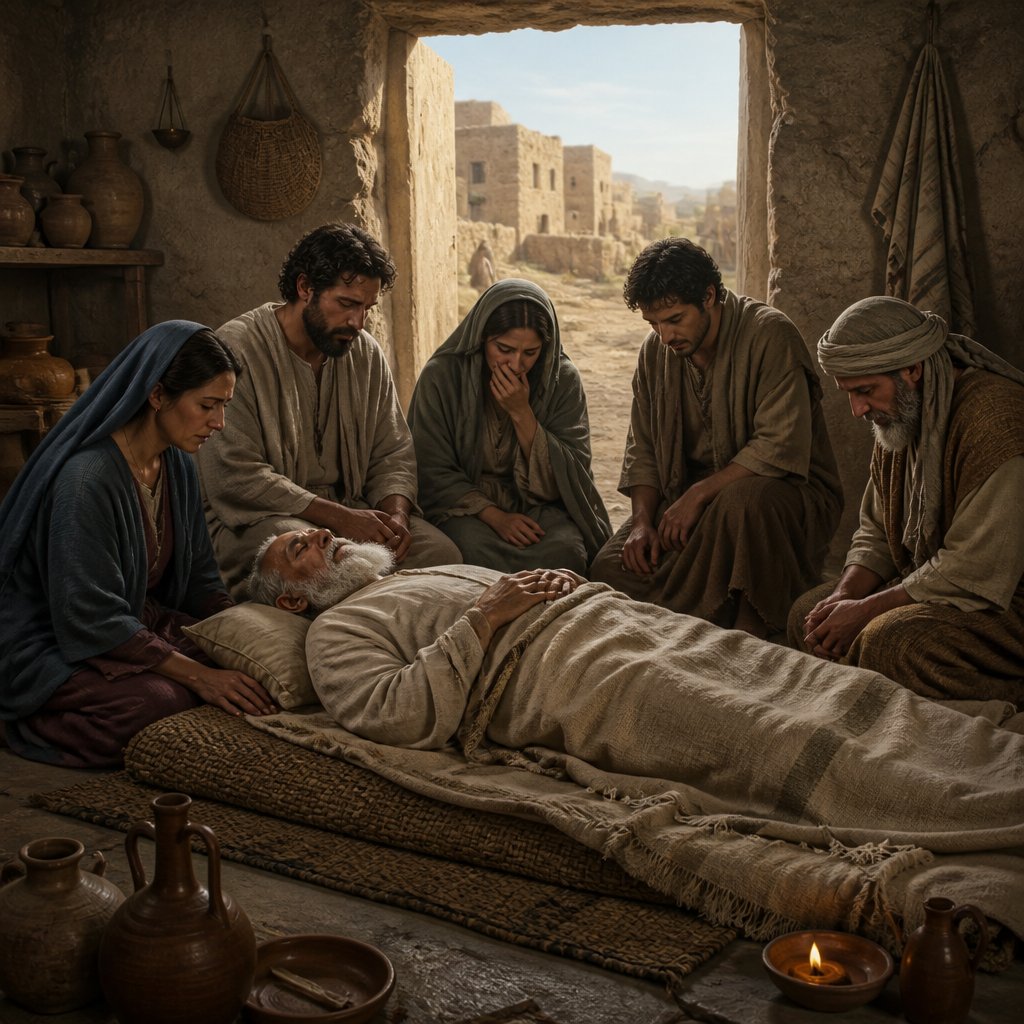
As we delve into the life of Terah, the father of Abram (later called Abraham), we find a man who, though not a central figure in the biblical narrative, played a crucial role in the unfolding story of redemption and faith. Genesis 11:32 states, "And the days of Terah were two hundred and five years: and Terah died in Haran." This short verse encapsulates the life of a man who lived for over two centuries and yet departed from the pages of Scripture without the spotlight of faith directly upon him.
At first glance, Terah’s story may seem unremarkable. He was a resident of Ur of the Chaldees, a place that was steeped in idol worship and worldly practices. It was in this environment that Terah chose to raise his family, which included his son Abram. The mere mention of Terah evokes a lingering question: What legacy did he leave behind?
In considering Terah's life, we might reflect on the societal influences that surrounded him. Ur was a thriving city known for prosperity and various gods, presenting vast distractions from the true and living God. Terah’s decision to remain entrenched in such a culture could symbolize the struggles that many face on their spiritual journeys. Despite living for over two centuries, it appears Terah did not fully embrace the covenantal relationship that God sought to establish with his family, particularly with Abram.
Many of us find ourselves reflecting on our environments, the values we hold, and the nuances of our upbringing. Like Terah, we must ask ourselves: What are we modeling for the generations to come? What spiritual inheritance are we leaving behind? Terah’s eventual death in Haran, a place of somewhat stagnant spiritual journey, serves as a poignant reminder of the importance of actively pursuing God's calling.
Abram, Terah's son, is famously known for answering God’s call—"Get thee out of thy country, and from thy kindred, and from thy father's house, unto a land that I will shew thee" (Genesis 12:1, KJV). Here, we witness a critical divergence: where Terah remained in Haran, Abram stepped out in faith. This difference illustrates a profound truth—we can influence our loved ones even if we come up short in our own faith journeys.
Consider what it means to live within the context of one's family. Terah’s legacy, though perhaps lacking in the drama of faith, nonetheless set the stage for Abram’s remarkable journey. There are times when our life decisions might not have the click-and-whirr of faith, yet they may cultivate an environment from which others can bloom. This cannot be overlooked. Even in our stagnation, God can use our life for His purposes, perhaps allowing our children or those around us to catalyze a movement of faith that we could not fully own ourselves.
As we reflect on Terah's life, we are presented with opportunities for repentance and renewal. Does our focus tilt more towards the comforts and distractions of earthly life, reminiscent of Terah's time in Ur and Haran? Are we modeling a faithfully obedient life for those we influence? God could have chosen to include many accounts about Terah, yet His message was that even amidst a life that seemed fraught with missed opportunities, there remained the unfailing promise for those who would respond in faith.
In conclusion, the life of Terah teaches us not just about the consequences of indirection but also about the hope of legacy. Let us strive to reflect on our own lives—the decisions we make, the influences we wield, and the paths we choose. May we dare to step out in faith, encouraging others along their journeys as they pursue what God has called them to be.
Get our apps


Artwork for Genesis 11:32

Genesis 11:32 - "And the days of Terah were two hundred and five years: and Terah died in Haran."
"And the days of Terah were two hundred and five years: and Terah died in Haran." - Genesis 11:32

Genesis 32:11 - "Deliver me, I pray thee, from the hand of my brother, from the hand of Esau: for I fear him, lest he will come and smite me, and the mother with the children."

Genesis 19-32

Genesis 27:32

Genesis 25-32

Genesis 18-32

Genesis 24-32
Genesis 21-32

Nehemiah 11:32 - "And at Anathoth, Nob, Ananiah,"

Romans 11:25-32

Luke 15:11-32

Genesis 49:32 - "The purchase of the field and of the cave that is therein was from the children of Heth."

Genesis 32:1 - "And Jacob went on his way, and the angels of God met him."

1 Kings 11:29-32

Genesis 32:32 - "Therefore the children of Israel eat not of the sinew which shrank, which is upon the hollow of the thigh, unto this day: because he touched the hollow of Jacob's thigh in the sinew that shrank."

1 Chronicles 11:32 - "Hurai of the brooks of Gaash, Abiel the Arbathite,"

Genesis 36:32 - "And Bela the son of Beor reigned in Edom: and the name of his city was Dinhabah."

Genesis 32:24 - "¶ And Jacob was left alone; and there wrestled a man with him until the breaking of the day."

Genesis 32:27 - "And he said unto him, What is thy name? And he said, Jacob."

Genesis 5:32 - "And Noah was five hundred years old: and Noah begat Shem, Ham, and Japheth."

Genesis 32:21 - "So went the present over before him: and himself lodged that night in the company."

"And at Anathoth, Nob, Ananiah," - Nehemiah 11:32

Genesis 32:23 - "And he took them, and sent them over the brook, and sent over that he had."

Genesis 32:14 - "Two hundred she goats, and twenty he goats, two hundred ewes, and twenty rams,"

Genesis 10:32 - "These are the families of the sons of Noah, after their generations, in their nations: and by these were the nations divided in the earth after the flood."

Genesis 32:8 - "And said, If Esau come to the one company, and smite it, then the other company which is left shall escape."

Genesis 41:32 - "And for that the dream was doubled unto Pharaoh twice; it is because the thing is established by God, and God will shortly bring it to pass."

Genesis 25:32 - "And Esau said, Behold, I am at the point to die: and what profit shall this birthright do to me?"

Genesis 32:13 - "¶ And he lodged there that same night; and took of that which came to his hand a present for Esau his brother;"