What does Genesis 11:32 mean?
“And the days of Terah were two hundred and five years: and Terah died in Haran.” — Genesis 11:32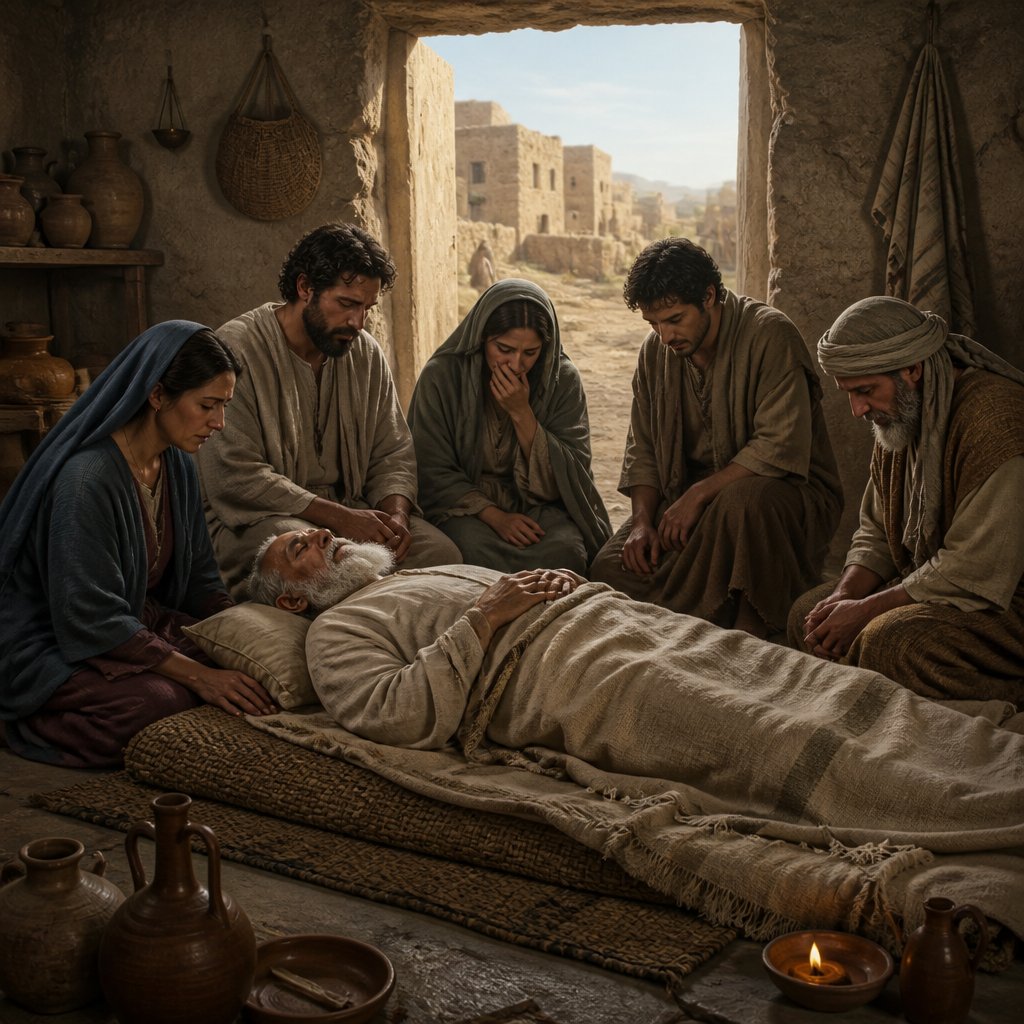
Genesis 11:32 (KJV) states, "And the days of Terah were two hundred and five years: and Terah died in Haran." This seemingly simple verse actually carries with it a significant amount of meaning and can be interpreted in various ways.
Firstly, it is important to understand the context in which this verse is situated. The Book of Genesis is the first book of the Bible and is often referred to as the "Book of Beginnings" as it chronicles the origins of the world, humanity, sin, and God's covenant with His people. In the specific chapter of Genesis 11, we find the genealogy of Terah and his descendants, including his son Abram (who later becomes Abraham), and the story of the Tower of Babel. This particular verse references the end of Terah's life and contributes to the broader narrative of the book.
At a surface level, the verse simply states the age at which Terah died - two hundred and five years - and the place of his death - Haran. However, when we dig deeper, we can uncover some significant themes and symbolism that are present in this verse.
One possible interpretation of this verse is that it serves as a reminder of the fleeting nature of human life. The brevity of Terah's life is a reflection of the mortality of all human beings. It emphasizes the transient and temporary nature of existence, urging us to contemplate the brevity of life and the inevitability of death. This theme of mortality is consistent with the broader biblical message of the impermanence of human life and the need for spiritual preparation for the afterlife.
Furthermore, the reference to Haran as the place of Terah's death is significant in its own right. In the Bible, place names often carry symbolic meaning and can be representative of broader themes. Haran is not only a physical location but can also be seen as a metaphorical representation of a place of transition or a crossroads in one's spiritual journey. Terah's death in Haran can be seen as a poignant reminder of the reality that all people will face death, and it serves as a call to consider the state of one's soul and the need for spiritual preparedness.
Additionally, the verse can also be interpreted within the broader context of the overall narrative of the Book of Genesis. Terah's death marks a significant turning point in the story as it ultimately paves the way for the continuation of God's plan through his son Abram. This transition from one generation to the next underscores the continuity of God's covenant and the fulfillment of His promises to His people. Thus, Terah's death can be seen as not only a personal event but as a critical moment in the unfolding of God's divine plan for humanity.
In conclusion, Genesis 11:32 may seem like a relatively simple and straightforward verse, but it carries profound significance within the larger context of the Bible. It speaks to the brevity of human life, the need for spiritual preparedness, and the continuity of God's plan for His people. By delving into the themes and symbolism present in this verse, we can gain a deeper understanding of its spiritual and theological implications and apply its timeless truths to our own lives.
Get our apps


Artwork for Genesis 11:32

Genesis 11:32 - "And the days of Terah were two hundred and five years: and Terah died in Haran."
"And the days of Terah were two hundred and five years: and Terah died in Haran." - Genesis 11:32
Genesis 32:11 - "Deliver me, I pray thee, from the hand of my brother, from the hand of Esau: for I fear him, lest he will come and smite me, and the mother with the children."

Genesis 19-32

Genesis 27:32

Genesis 25-32

Genesis 18-32

Genesis 24-32
Genesis 21-32

Nehemiah 11:32 - "And at Anathoth, Nob, Ananiah,"

Romans 11:25-32

Luke 15:11-32

Genesis 49:32 - "The purchase of the field and of the cave that is therein was from the children of Heth."

Genesis 32:1 - "And Jacob went on his way, and the angels of God met him."

1 Kings 11:29-32

Genesis 32:32 - "Therefore the children of Israel eat not of the sinew which shrank, which is upon the hollow of the thigh, unto this day: because he touched the hollow of Jacob's thigh in the sinew that shrank."

1 Chronicles 11:32 - "Hurai of the brooks of Gaash, Abiel the Arbathite,"

Genesis 36:32 - "And Bela the son of Beor reigned in Edom: and the name of his city was Dinhabah."

Genesis 32:24 - "¶ And Jacob was left alone; and there wrestled a man with him until the breaking of the day."

Genesis 32:27 - "And he said unto him, What is thy name? And he said, Jacob."

Genesis 5:32 - "And Noah was five hundred years old: and Noah begat Shem, Ham, and Japheth."

Genesis 32:21 - "So went the present over before him: and himself lodged that night in the company."

"And at Anathoth, Nob, Ananiah," - Nehemiah 11:32

Genesis 32:23 - "And he took them, and sent them over the brook, and sent over that he had."

Genesis 32:14 - "Two hundred she goats, and twenty he goats, two hundred ewes, and twenty rams,"

Genesis 10:32 - "These are the families of the sons of Noah, after their generations, in their nations: and by these were the nations divided in the earth after the flood."

Genesis 32:8 - "And said, If Esau come to the one company, and smite it, then the other company which is left shall escape."

Genesis 41:32 - "And for that the dream was doubled unto Pharaoh twice; it is because the thing is established by God, and God will shortly bring it to pass."

Genesis 25:32 - "And Esau said, Behold, I am at the point to die: and what profit shall this birthright do to me?"

Genesis 32:13 - "¶ And he lodged there that same night; and took of that which came to his hand a present for Esau his brother;"