Trusting God's Timing: Lessons from Sarai's Choice
“And Sarai said unto Abram, Behold now, the LORD hath restrained me from bearing: I pray thee, go in unto my maid; it may be that I may obtain children by her. And Abram hearkened to the voice of Sarai.” — Genesis 16:2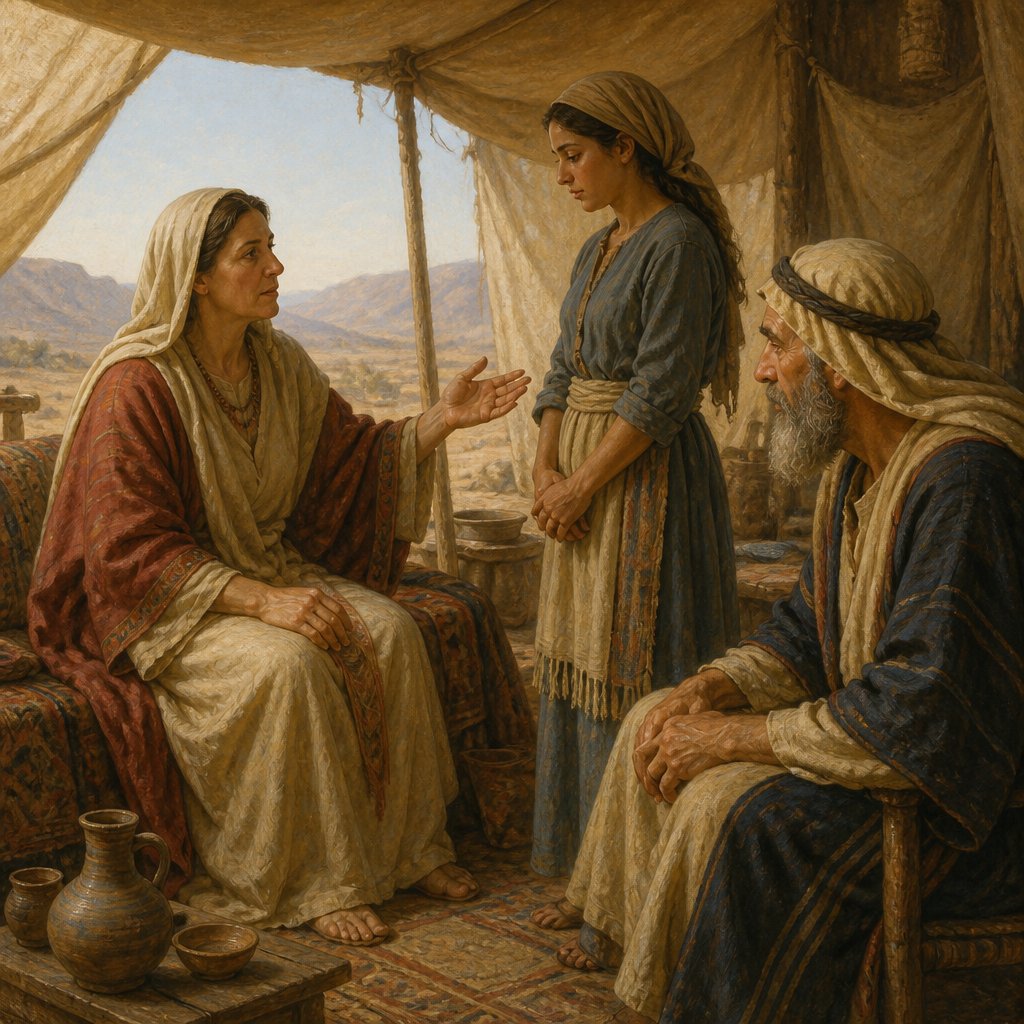
In the book of Genesis, we encounter a profound narrative filled with human emotion, struggle, and the yearning for fulfillment. Genesis 16:2 states, "And Sarai said unto Abram, Behold now, the LORD hath restrained me from bearing: I pray thee, go in unto my maid; it may be that I may obtain children by her. And Abram hearkened to the voice of Sarai." In this moment, we observe Sarai’s deep frustration and desperation; her journey mirrors many of our own struggles as we grapple with waiting on God.
Sarai's anguish is palpable as she recognizes a divine restraint on her life. The longing for children is universal, and for Sarai, it became a source of immense conflict and distress. In ancient cultures, barrenness was often equated with shame and failure, especially for women. Sarai’s culture derived a woman’s worth in part from her ability to conceive, and thus her emotions reflect not merely personal sorrow arising from her situation but societal pressures to conform to expectations.
In her desperation, Sarai suggested a path that would change their lives forever: that Abram take her maid, Hagar, as a surrogate. The rationale seems practical; if God had withheld children from her, perhaps a different solution would yield the desired outcomes. Herein lies one of the pivotal lessons in this scripture — the temptation to take matters into our own hands when we perceive God’s promises as delayed.
This moment in Sarai’s life teaches us about the heart of humanity; we often attempt to manipulate circumstances when we feel God’s promises are not materializing in our timeline. It’s easy to allow our insecurities and fears to inform our decisions rather than resting in faith. How often do we find ourselves trying to engineer a solution, seeking to take control when we feel abandoned or neglected by God? In submitting to Sarai's urging, Abram made a critical choice to listen to his wife rather than wait on the Lord’s instruction. The implications of this decision were far-reaching, leading to conflict that resonates through history.
In reflecting on this context, we must ask ourselves: How do we respond when God’s timing seems off? Do we remain patient, trusting in His towards our lives, or do we actively seek to fast-track our desires? Sarai’s decision, although driven by a deep yearning, initiated a complex web of consequences that ultimately led to tension within her household. Hagar bore Abram’s child, and that child, Ishmael, would become a source of conflict between two nations — a tangible reminder of what happens when we act in haste without seeking God’s guidance.
Trust is intricately wrapped in waiting. When we choose to wait on the Lord, we affirm our belief in His sovereignty and perfect timing. God’s plans for us are often greater than we can ask or imagine, yet they demand our faithfulness in periods of waiting. Such waiting is seldom easy, but it is crucial for spiritual growth and the deepening of our character. Like a sculptor working on a piece of marble, there are times when God chisels away the rough edges of our lives, preparing us for the grand masterpiece He intends.
As we meditate on this passage, let us consider the ways we can lean into God’s timing rather than our own understanding. How can we find peace in the pauses as we await His perfect will? Are there areas in our lives where we are tempted to rush God’s hand? Let this verse encourage us to surrender to divine timing, trusting that, though we may encounter setbacks and delays, God is unfolding a narrative that will ultimately reflect His glory.
May we learn to embrace the waiting, understanding that each moment draws us closer to the heart of God. Let us pray for the strength to wait patiently and the wisdom to seek God’s voice first, as we navigate through the anxious seasons of our lives.
Get our apps


Artwork for Genesis 16:2

Genesis 16:2

Genesis 16:2 - "And Sarai said unto Abram, Behold now, the LORD hath restrained me from bearing: I pray thee, go in unto my maid; it may be that I may obtain children by her. And Abram hearkened to the voice of Sarai."
"And Sarai said unto Abram, Behold now, the LORD hath restrained me from bearing: I pray thee, go in unto my maid; it may be that I may obtain children by her. And Abram hearkened to the voice of Sarai." - Genesis 16:2

Genesis 2:16 - "And the LORD God commanded the man, saying, Of every tree of the garden thou mayest freely eat:"

Genesis 16:16

Genesis 16:3

Genesis 16:14

Genesis 16:6

Genesis 1:16

Genesis 15:16

Genesis 16:8

Genesis 16:12

Genesis 25-16

Genesis 16:1

Genesis 18-16

Genesis 16:11

Genesis 3:16

Genesis 17-16

Genesis 16:4

Genesis 16:7

Genesis 23-16

Genesis 16:9

Genesis 16:5

Genesis 20-16

Genesis 28-16

Genesis 22-16

Genesis 16:15

Genesis 16:10

Genesis 16:3

Genesis 24-16