In the Shadows of Despair: Lessons from Sarai's Struggle
“And Sarai said unto Abram, My wrong be upon thee: I have given my maid into thy bosom; and when she saw that she had conceived, I was despised in her eyes: the LORD judge between me and thee.” — Genesis 16:5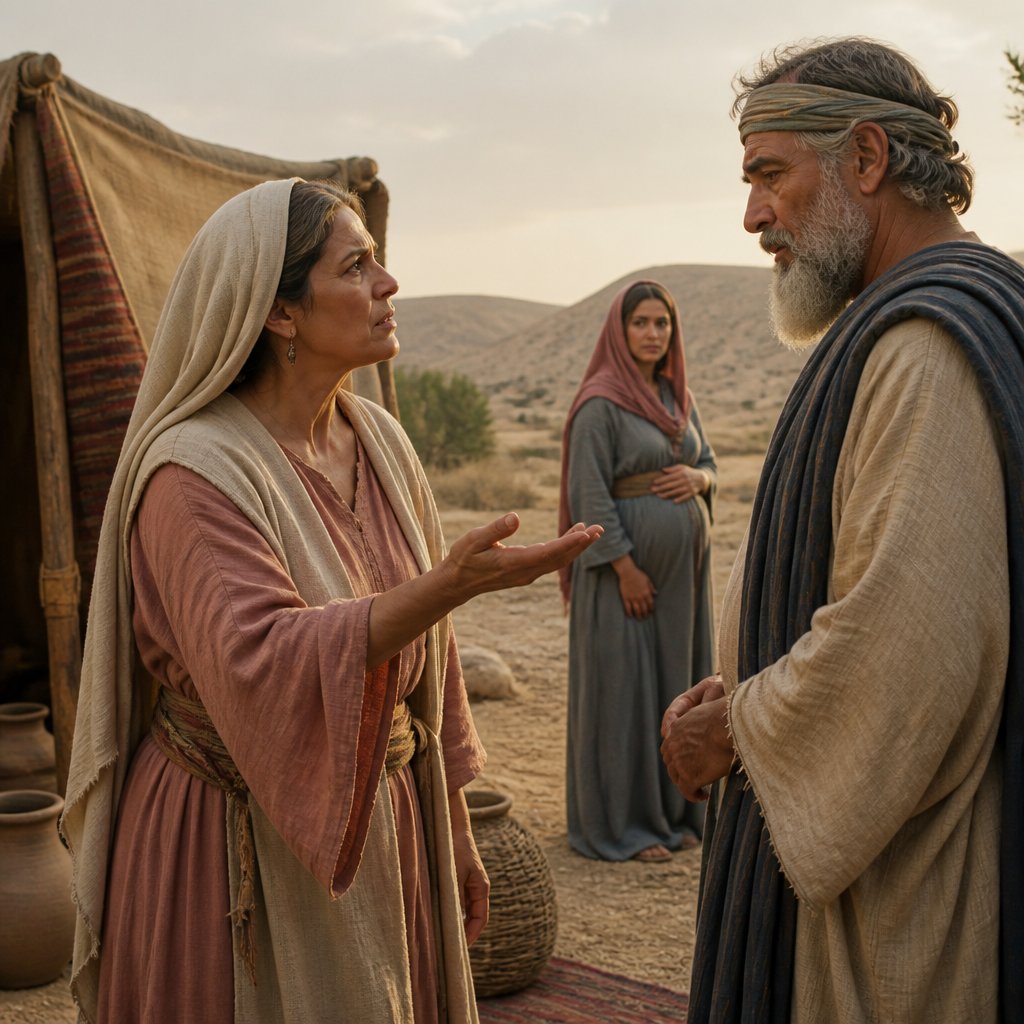
In Genesis 16:5 (KJV), we encounter a moment laden with tension and human emotion: “And Sarai said unto Abram, My wrong be upon thee: I have given my maid into thy bosom; and when she saw that she had conceived, I was despised in her eyes: the LORD judge between me and thee.” This poignant verse reflects the depth of the struggles faced by Sarai, and, through her story, we can glean invaluable lessons about the complexity of human relationships, the perils of taking matters into our own hands, and the unwavering justice of God.
At this point in the narrative, Sarai, who later becomes Sarah, has been barren for years. God had promised Abram (later Abraham) descendants as numerous as the stars, yet as time passes without fulfillment, Sarai grows impatient. Driven by despair and a desire for control over a seemingly hopeless situation, she devises a plan to have a child through her maidservant, Hagar. The implications of her choices ripple through their lives, complicating their relationships in ways that she could not foresee.
Sarai’s declaration in verse 5 encapsulates her feelings of regret and blame. "My wrong be upon thee," she says, indicating the difficulty she experiences after the initial surge of hope that Hagar’s pregnancy represents. What once seemed like a solution to her barrenness has now become an arena of conflict. Hagar, now pregnant, begins to look down upon Sarai, sowing seeds of discord in their household. Sarai’s anguish becomes apparent as she expresses, "I was despised in her eyes."
This moment offers us profound insights into human nature. How often do we, like Sarai, hastily make decisions from a place of desperation? When faced with seemingly insurmountable challenges, it can be tempting to forge our own paths, trusting our wisdom rather than the divine directions of God. Sarai’s misstep is a cautionary tale about the consequences of using worldly means to fulfill divine promises. Her desperation leads her to blame Abram and establishes a divide not just between her and Hagar but also between her and God’s intended plan for her life.
Yet, in the midst of this turmoil, we are invited to reflect on God’s faithfulness and justice. Sarai declares, "the LORD judge between me and thee." Here, she appeals to God's judgment, acknowledging that ultimately, it is He who sees and knows all. In expressing her distress, she recognizes that only God can adjudicate their situation. This is an important turning point—when we reach out for divine intervention instead of human justification, we open ourselves to the possibility of healing and understanding.
As we process Sarai’s plight, we must also ask ourselves: Do we trust God’s timing? Are we willing to wait for His promises to unfold? Sarai’s encounter not only teaches us about the dangers of acting in haste but also invites us into deeper trust and reliance on God.
Furthermore, the implications of this story are still felt today. The discord between Sarai and Hagar gives birth to a legacy of strife, a reminder that our choices can impact future generations. Therefore, our walk with God is not solitary; it affects those around us. We must approach our decisions with the awareness that they bear weight beyond our immediate context. It leads us to consider the importance of patience, prayer, and seeking God’s guidance in every circumstance.
Ultimately, as we reflect on Sarai's journey, we find hope in the God who redeems our mistakes. Though she struggled with impatience and insecurity, God had not abandoned her or His promises. In time, He brought forth Isaac, the child of promise. In our moments of distress and conflict, let us remember that God not only sees our anguish but also stands ready to bring healing, renewal, and restoration through our faithfulness and trust in Him.
Get our apps


Artwork for Genesis 16:5

Genesis 16:5

Genesis 16:5 - "And Sarai said unto Abram, My wrong be upon thee: I have given my maid into thy bosom; and when she saw that she had conceived, I was despised in her eyes: the LORD judge between me and thee."
"And Sarai said unto Abram, My wrong be upon thee: I have given my maid into thy bosom; and when she saw that she had conceived, I was despised in her eyes: the LORD judge between me and thee." - Genesis 16:5

Genesis 5:16 - "And Mahalaleel lived after he begat Jared eight hundred and thirty years, and begat sons and daughters:"

Genesis 16:16
"And Mahalaleel lived after he begat Jared eight hundred and thirty years, and begat sons and daughters:" - Genesis 5:16

Genesis 16:3

Genesis 16:14

Genesis 16:2

Genesis 16:6

Genesis 1:16

Genesis 15:16

Genesis 16:8

Genesis 16:12

Genesis 25-16

Genesis 16:1

Genesis 18-16

Genesis 16:11

Genesis 3:16

Genesis 17-16

Genesis 16:4

Genesis 16:7

Genesis 23-16

Genesis 16:9

Genesis 20-16

Genesis 28-16

Genesis 22-16

Genesis 16:15

Genesis 16:10

Genesis 16:3