The Perils of Immediate Gratification
“And Esau said to Jacob, Feed me, I pray thee, with that same red pottage; for I am faint: therefore was his name called Edom.” — Genesis 25:30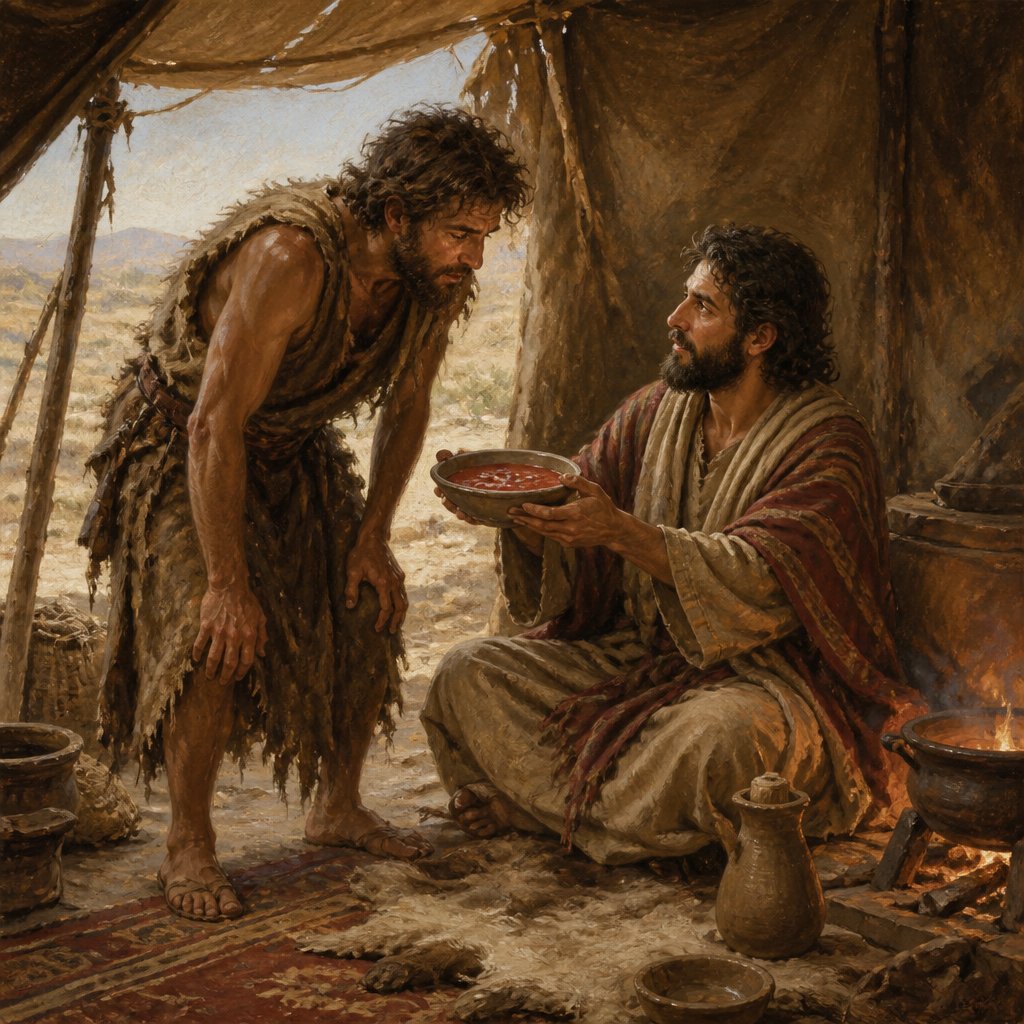
In the expansive narrative of Genesis, amidst the family dynamics of Isaac and Rebekah, we encounter a striking dialogue between twin brothers: Esau and Jacob. Genesis 25:30 presents a critical moment in the unfolding story, where Esau, wearied from the hunt, utters the plea, "Feed me, I pray thee, with that same red pottage; for I am faint: therefore was his name called Edom." Herein lies a profound lesson about immediate gratification, impulse control, and the long-lasting consequences of our choices.
Esau's hunger was real, a physical manifestation of fatigue after a day's labor, akin to the struggles we face in the wilderness of our own lives. He approached Jacob, not as a brother but as a desperate man seeking relief from his discomfort. This moment is pivotal; it encapsulates human nature’s tendency to prioritize immediate needs over long-term consequences. In this craving for sustenance, Esau symbolizes the all-too-common temptation to fulfill our instant desires, often at the expense of our future.
The phrase "I am faint" carries significant weight. It is a desperate cry that resonates with how we sometimes approach our spiritual needs. In the busyness and demands of life, we can become spiritually faint, pressed to the brink by challenges or wearied by adversity. Like Esau, we may find ourselves grappling with momentary desires that cloud our judgment—whether they manifest as the pursuit of fleeting pleasures, unhealthy relationships, or choices that compromise our values.
Esau's insistence that Jacob feed him red pottage is a stark reminder of how quickly we can sway towards immediate satisfaction. The world constantly clamors for our attention, offering instant solutions that often lead to regret. How many times have we surrendered to our cravings—be it food, habits, or other distractions—only to realize they have led us away from God's best for us? Esau's moment of weakness birthed a consequence he couldn't foresee: the long-term loss of his birthright. His immediate craving overshadowed the importance of his inheritance, illustrating an eternal truth: our choices today shape our tomorrow.
Interestingly, Esau's request also signals a deeper metaphor of spiritual hunger. Jesus, referring to Himself as the Bread of Life (John 6:35), beckons us to seek sustenance that satisfies our souls. When we allow our spiritual appetite to be influenced by the world, we risk diminishing our hunger for what truly nourishes us—God’s Word, community, and prayer. Unlike pottage that can satisfy a hunger for a moment, God's promises feed us eternally.
Furthermore, the name Edom, given to Esau due to this exchange, serves as a haunting reminder of his choices. We must ask ourselves: what names are we creating for ourselves based on our actions? Are we known as seekers of momentary pleasure or followers of Christ who prioritize God’s calling and direction? The ripple effect of our decisions will define us in life and in the spiritual legacy we leave behind.
In reflecting on Genesis 25:30, let us consider the importance of discernment in our own lives. When faced with pressures that urge us to choose immediate gratification, let us pause and seek wisdom. Isaiah 40:31 reminds us, "But they that wait upon the Lord shall renew their strength; they shall mount up with wings as eagles; they shall run, and not be weary; and they shall walk, and not faint." In waiting, we find strength; in seeking God’s will over our immediate desires, we glean wisdom that leads to a rich and fulfilling life.
As we go about our day, let us be vigilant to guard against the fleeting moments that promise satisfaction but deliver disappointment. May we strive to be individuals who hunger for righteousness, choosing wisely and valuing the enduring blessings of God. Let us recognize that true fulfillment comes from seeking that which is eternal over that which is merely temporal. In doing so, we can ensure our lives reflect a legacy of wisdom, resilience, and sanctified purpose.
Get our apps


Artwork for Genesis 25:30

Genesis 25:30 - "And Esau said to Jacob, Feed me, I pray thee, with that same red pottage; for I am faint: therefore was his name called Edom."
"And Esau said to Jacob, Feed me, I pray thee, with that same red pottage; for I am faint: therefore was his name called Edom." - Genesis 25:30
Genesis 30:25 - "¶ And it came to pass, when Rachel had born Joseph, that Jacob said unto Laban, Send me away, that I may go unto mine own place, and to my country."

Genesis 25:25

Genesis 19-30

Genesis 24-30

Genesis 18-30

Genesis 21-30

Proverbs 30:25 - "The ants are a people not strong, yet they prepare their meat in the summer;"

Genesis 1:1-25

Genesis 30:10-11

Genesis 1:1-25

Genesis 1:1-25

Genesis 29:15-30

Genesis 25-2

Genesis 25-18

Genesis 25-24

Genesis 25-7

Genesis 25-23

Genesis 25-14

Genesis 26:25

Genesis 50:25

Genesis 25:1

Genesis 21:25

Genesis 25-15

Genesis 25-26

Genesis 25-13

Genesis 50:25

Genesis 25-32

Genesis 25-6