What does Genesis 25:30 mean?
“And Esau said to Jacob, Feed me, I pray thee, with that same red pottage; for I am faint: therefore was his name called Edom.” — Genesis 25:30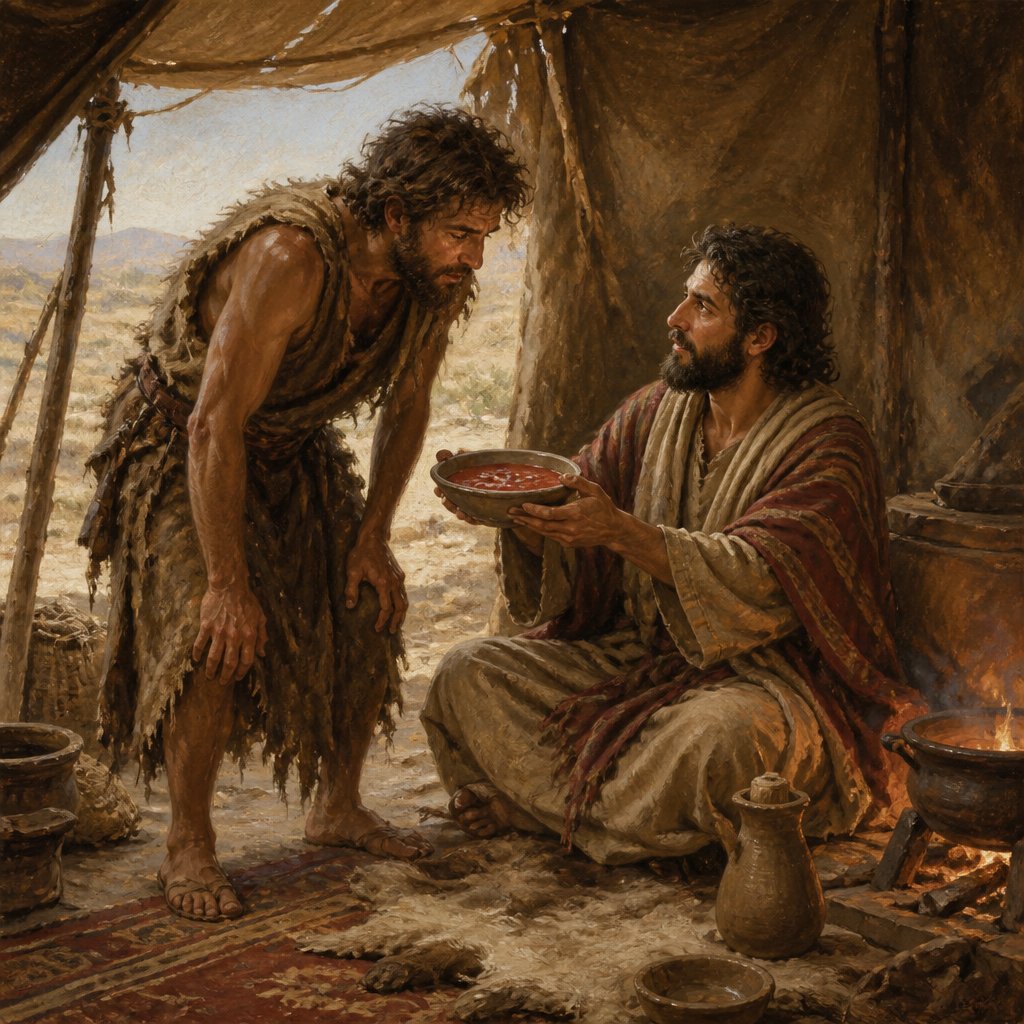
Genesis 25:30 (KJV) reads, "And Esau said to Jacob, Feed me, I pray thee, with that same red pottage; for I am faint: therefore was his name called Edom."
This verse is a significant moment in the biblical narrative, as it marks the beginning of a series of events that will have a lasting impact on the history of Israel and the formation of the nation of Edom. The story of Jacob and Esau is a powerful illustration of sibling rivalry, deceit, and the consequences of making impulsive decisions.
The context of this verse is crucial to understand its full significance. In the preceding verses, it is revealed that Jacob, the younger of the two twin brothers, has prepared a pot of lentil stew. Esau, the elder brother, returns from a hunt feeling famished, and he requests some of the stew that Jacob has made. Jacob seizes this opportunity to take advantage of his brother's vulnerable state and makes a deal with him: in exchange for the stew, Esau must give up his birthright as the firstborn son.
It is important to note that in ancient Near Eastern societies, the birthright held significant legal, social, and economic privileges. The firstborn son inherited a double portion of the father's estate and was recognized as the head of the family after the father's passing. In this cultural context, Esau's willingness to trade his birthright for a bowl of stew reveals his short-sightedness and lack of appreciation for the value of his position in the family.
When Esau asks Jacob to feed him with the red pottage (stew), he uses the Hebrew word "Adom," which means "red." This narrative detail provides a deeper layer of meaning and symbolism to the story. The color red is often associated with intense emotions, such as anger, passion, and blood. In this context, it symbolizes the impulsive and passionate nature of Esau, as well as the bloodline from which the nation of Edom will emerge.
Esau's words, "for I am faint," highlight his immediate physical need and the desperation he feels in that moment. This impulsive decision is a reflection of his focus on immediate gratification rather than considering the long-term consequences of his actions. The name "Edom" is derived from the same root as the word "Adom," reinforcing the connection between Esau's impulsive request and the identity of the nation that will descend from him.
The themes present in this verse include the ramifications of impulsive actions and the consequences of prioritizing temporary satisfaction over long-term vision. It also explores the complexities of sibling relationships, including rivalry, deceit, and the struggle for parental favor. The story serves as a cautionary tale about the importance of wisdom, discernment, and consideration of long-term consequences in decision-making.
Furthermore, this passage sets the stage for the ongoing conflict between the descendants of Jacob (Israel) and Esau (Edom), which is a recurring theme throughout the biblical narrative. The tension between these two nations will play a significant role in shaping the history of the region and the geopolitical landscape of the ancient Near East.
In conclusion, Genesis 25:30 is a pivotal moment in the biblical narrative that sets the stage for the unfolding story of Jacob and Esau, their descendants, and the complex web of relationships and conflicts that will define the history of Israel and Edom. It serves as a timeless reminder of the importance of wisdom, discernment, and consideration of long-term consequences in decision-making, and it offers valuable insights into the dynamics of sibling relationships and the complexities of human nature.
Get our apps


Artwork for Genesis 25:30

Genesis 25:30 - "And Esau said to Jacob, Feed me, I pray thee, with that same red pottage; for I am faint: therefore was his name called Edom."
"And Esau said to Jacob, Feed me, I pray thee, with that same red pottage; for I am faint: therefore was his name called Edom." - Genesis 25:30
Genesis 30:25 - "¶ And it came to pass, when Rachel had born Joseph, that Jacob said unto Laban, Send me away, that I may go unto mine own place, and to my country."

Genesis 25:25

Genesis 19-30

Genesis 24-30

Genesis 18-30

Genesis 21-30

Proverbs 30:25 - "The ants are a people not strong, yet they prepare their meat in the summer;"

Genesis 1:1-25

Genesis 30:10-11

Genesis 1:1-25

Genesis 1:1-25

Genesis 29:15-30

Genesis 25-2

Genesis 25-18

Genesis 25-24

Genesis 25-7

Genesis 25-23

Genesis 25-14

Genesis 26:25

Genesis 50:25

Genesis 25:1

Genesis 21:25

Genesis 25-15

Genesis 25-26

Genesis 25-13

Genesis 50:25

Genesis 25-32

Genesis 25-6