Faith in the Midst of Famine
“And there was a famine in the land, beside the first famine that was in the days of Abraham. And Isaac went unto Abimelech king of the Philistines unto Gerar.” — Genesis 26:1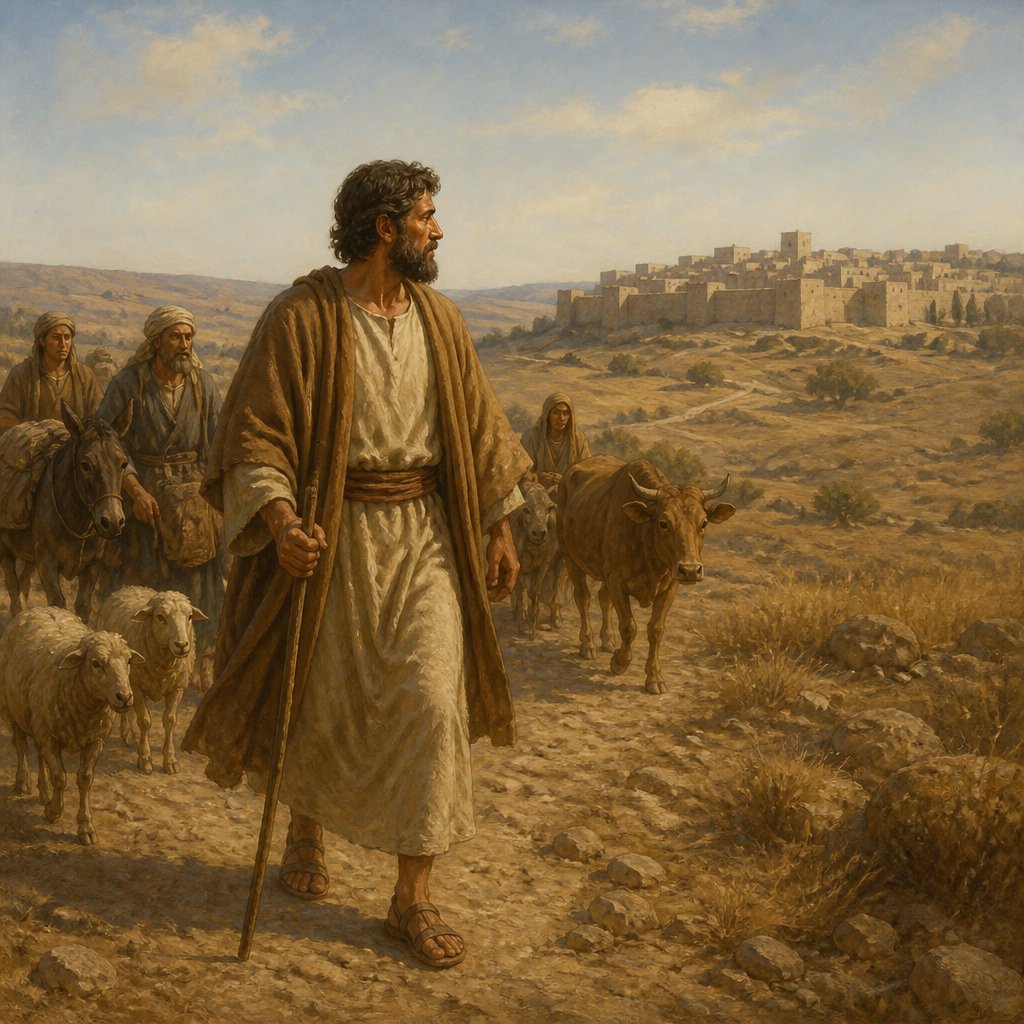
In Genesis 26:1, we read, "And there was a famine in the land, beside the first famine that was in the days of Abraham. And Isaac went unto Abimelech king of the Philistines unto Gerar." This verse introduces us to a moment in Isaac's life filled with challenges and uncertainty. It reflects not just a historical context but an opportunity to examine the nature of faith amid adversity.
Famine in the biblical narrative often signifies more than mere lack of food; it epitomizes a barren landscape for the human soul. Famines can represent spiritual drought, difficult seasons, or any time when God seems distant or circumstances feel overwhelming. In the case of Isaac, we observe a recurring challenge faced by those in the lineage of Abraham. Just as Abraham encountered famine, so too does Isaac. This familial struggle with famine suggests that trials can be a common part of our journey, even for those chosen and blessed by God.
When confronted with famine, Isaac’s natural response could have been to panic or to seek refuge in destructive behaviors. Instead, he chooses to seek out Abimelech, king of the Philistines. It is this decision that prompts us to reflect on our own responses to life’s challenges. Do we run toward the world’s solutions, or do we turn our hearts to God? In times of famine, it may be tempting to seek help and sustenance from those around us. However, this narrative encourages us to consider where we are placing our trust.
Isaac’s actions ground us in a vital truth: God calls us to navigate our challenges with integrity and faith. He was on a journey into the land of the Philistines, where he could have easily compromised his principles or made poor decisions due to the pressures he faced. Instead, Isaac modeled a faith that challenges us today. He drew on a legacy of faith established by his father Abraham. This reminds us that our faith is often strengthened not just by our individual experiences, but by the faith journeys of those who have gone before us.
The mention of Abimelech also indicates that sometimes, God places us in the midst of unfamiliar environments or even adversaries to test and refine our character. What does it look like for us to live faithfully in foreign lands or among those who may not share our beliefs? As Christians, our responses in these situations can deeply impact our witness to the world. We should strive to let our faith shine brightly in the darkness of uncertainty and fear.
Moreover, in biblical Hebrew tradition, famines served a divine purpose—a form of discipline leading God's people back to reliance on Him. Isaac stands as a profound example of faith in action. Divine provisions often arise unexpectedly; they require us to reexamine who or what we place our trust in. God may allow famine in our lives to provoke a deeper reliance on Him, prompting us to move into deeper communion with Him amid our hardships.
In our present-day context, what does it mean for us to experience famine? Perhaps we encounter spiritual drought or emotional famine. Maybe it manifests in lost relationships, financial struggles, or health crises. Remember, it is precisely in these famines that God reveals His faithfulness. He desires for us to look beyond our circumstances and lean into the assurance of His promises. As Isaac faced famine, he moved forward into the unknown, firmly rooted in God’s covenant and assurance.
In the face of famine, let us embrace the lessons of Isaac—to trust, to act with integrity, and to seek God earnestly. Let the famine in your land propel you toward the King of kings rather than away from Him. May our hearts resolve to fear not, for we are never alone; the Good Shepherd leads us even through the valleys. Amen.
Get our apps


Artwork for Genesis 26:1

Genesis 26 1 famine

genesis 26:1-35

Genesis 26:1 - "And there was a famine in the land, beside the first famine that was in the days of Abraham. And Isaac went unto Abimelech king of the Philistines unto Gerar."
"And there was a famine in the land, beside the first famine that was in the days of Abraham. And Isaac went unto Abimelech king of the Philistines unto Gerar." - Genesis 26:1

Genesis 1:26

Genesis 1:26

Genesis 1:26

Genesis 1:26

Genesis 24-26

Genesis 26:35

Genesis 50:26

Genesis 26:25

Genesis 21-26

Genesis 25-26

Genesis 50:26

Genesis 19-26

Genesis 26:29

Genesis 50:26

Genesis 18-26

Genesis 26:18

Genesis 50:26

Genesis 26:9

Genesis 17-26

Genesis 26:6 - "¶ And Isaac dwelt in Gerar:"

Genesis 26:26 - "¶ Then Abimelech went to him from Gerar, and Ahuzzath one of his friends, and Phichol the chief captain of his army."

Genesis 42:26 - "And they laded their asses with the corn, and departed thence."

Genesis 36:26 - "And these are the children of Dishon; Hemdan, and Eshban, and Ithran, and Cheran."

Genesis 10:26 - "And Joktan begat Almodad, and Sheleph, and Hazarmaveth, and Jerah,"

Genesis 26:23 - "And he went up from thence to Beer-sheba."

Genesis 24:26 - "And the man bowed down his head, and worshipped the LORD."