The Divine Dilemma: Understanding Humanity's Choice
“And the LORD God said, Behold, the man is become as one of us, to know good and evil: and now, lest he put forth his hand, and take also of the tree of life, and eat, and live for ever:” — Genesis 3:22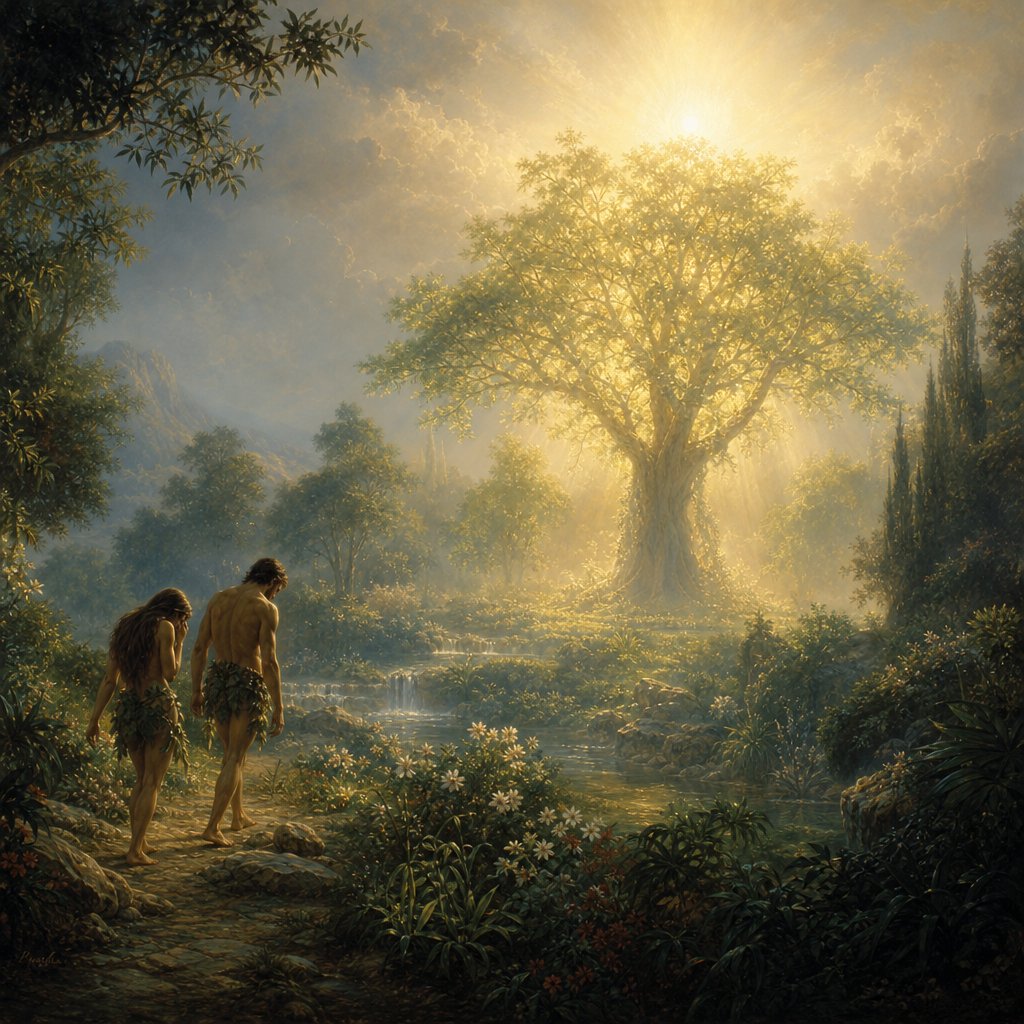
Genesis 3:22 (KJV) states: "And the LORD God said, Behold, the man is become as one of us, to know good and evil: and now, lest he put forth his hand, and take also of the tree of life, and eat, and live for ever."
This verse comes at a pivotal moment in the narrative of creation. Adam, the first man, having disobeyed God by eating from the tree of knowledge of good and evil, now stands at a crossroads. With this act, he has gained awareness, a consciousness that separates the divine from the human. The LORD acknowledges the seriousness of this new state of being—man has taken on an ability that parallels the divine understanding of good and evil. In this moment, we witness not only God's acknowledgment of man's new knowledge but also His protective instinct motivated by love.
The concept of knowledge in civil discourse often carries a positive connotation. However, in this biblical context, Adam's knowledge renders him aware of his nakedness—his vulnerability (Genesis 3:7). It introduces shame, fear, and the realization of a duality of existence—the knowledge of good and evil can lead to choices that bring suffering, alienation, and even death. This hard lesson foreshadows the human struggle throughout history as we continually grapple with our moral choices, understanding what is right yet often choosing the wrong path.
God's statement about man becoming like "one of us" highlights an astonishing truth about our creation. We are made in the image of God, which grants us not just the capacity for intimacy with the Creator but also for moral discernment. Yet, this gift is coupled with the weight of responsibility. Our free will allows us to choose obedience or rebellion, light or darkness, life or death. Humanity's choice to eat from the forbidden tree reflects our tendency to overreach, desiring to seize the role of arbiters of morality rather than just receivers of God's goodness.
Moreover, the latter part of the verse speaks to God's compassionate desire to protect Adam and Eve. The phrase, "lest he put forth his hand, and take also of the tree of life," reveals the gravity of Adam’s new condition. Should Adam eat from the tree of life after his disobedience, he would be doomed to live forever in a fallen state, perpetually separated from God. Thus, God's decision to bar access to the tree of life is not merely punitive but rather a grace-filled act meant to prevent endless suffering. In doing so, God is laying the groundwork for redemption—a protection not only from physical death but also from becoming eternally entrenched in sin.
As believers, this narrative invites us to approach our moral choices with profound humility. Just as Adam was granted the knowledge of good and evil, we too are confronted daily with moral discernment. Yet, we must remember that this knowledge is not simply for our autonomy; it is intended for our alignment with God's character and His will.
In the gospel, we find the embodiment of the tree of life in Jesus Christ, who came to restore us to a right relationship with God. In Him, we find both eternal life and wisdom. Just as Adam stood at the threshold of the tree of life, we now can freely approach the Source of Life, who empowers us to live righteously. When faced with choices, let us seek divine guidance, remembering that true wisdom lies not in our capacity to discern good and evil but in our submission to the loving wisdom of God.
In conclusion, Genesis 3:22 serves as a sobering reminder of our humanity’s frailty and the profound grace of God. God’s protective measures underline His love for us and our eternal need for redemption through Christ. May we strive to reflect on our choices through the lens of His everlasting love and grace, understanding how vital it is to remain close to the Source of life.
Get our apps


Artwork for Genesis 3:22

Genesis 3:22-24

Genesis 3:22 - "¶ And the LORD God said, Behold, the man is become as one of us, to know good and evil: and now, lest he put forth his hand, and take also of the tree of life, and eat, and live for ever:"
"¶ And the LORD God said, Behold, the man is become as one of us, to know good and evil: and now, lest he put forth his hand, and take also of the tree of life, and eat, and live for ever:" - Genesis 3:22

Genesis 22-3

Genesis 22-22

Genesis 22:22 - "And Chesed, and Hazo, and Pildash, and Jidlaph, and Bethuel."

Genesis 22

Genesis 22 14

Genesis 28-22

Genesis 18-22

Genesis 21:22

Genesis 22-8

Genesis 22-9

Genesis 22-12

Genesis 22:15

Genesis 22-10

Genesis 22-16

Genesis 22-14

Genesis 17-22

Genesis 22-23

Genesis 22-7

Genesis 22-21

Genesis 22-4

Genesis 19-22

Genesis 22-17

Genesis 22:1

Genesis 22-20

Genesis 24-22

Genesis 22:10

Genesis 22-2