The Altar of Recognition: Honoring the God Who Sees Us
“And he erected there an altar, and called it El-elohe-Israel.” — Genesis 33:20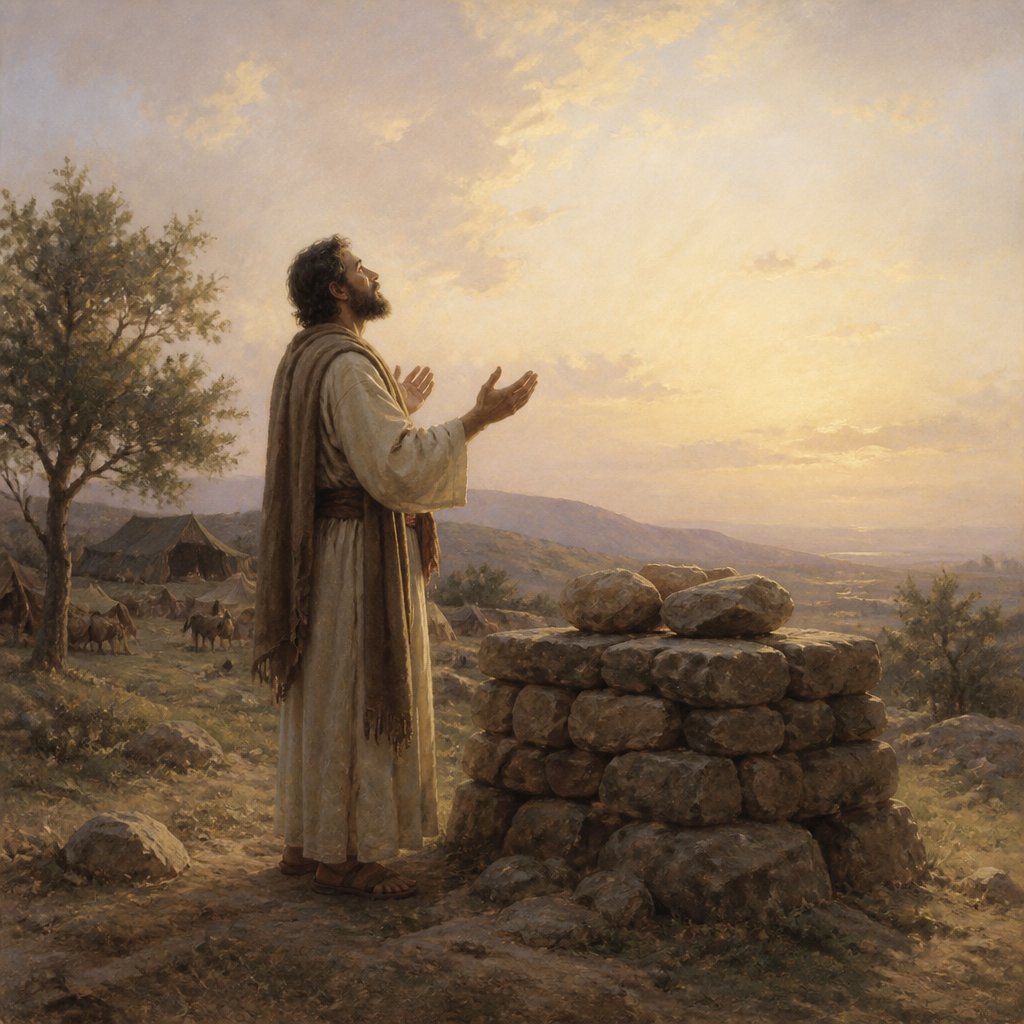
Genesis 33:20 (KJV) states, "And he erected there an altar, and called it El-elohe-Israel." This verse captures a significant moment in Jacob's journey — a journey rife with struggles, transformation, and ultimately, reconciliation with his brother Esau. In this single act of erecting an altar, Jacob implicitly acknowledges the sovereignty and faithfulness of God in his life, a powerful testament to his encounter with the divine.
### The Context of the Altar
To fully appreciate the essence of this verse, we must delve into the narrative leading up to it. Jacob had just endured a tumultuous confrontation with Esau, a brother he had deceived years earlier to acquire their father Isaac's blessing. Fearful of Esau's retribution, Jacob wrestled with the weight of his past misdeeds and the fear of impending judgment. However, upon meeting Esau, he discovered a brother whose heart had softened. The reconciliation was not only physical but also spiritual—a profound act of God’s grace that allowed Jacob to confront his fears and embrace forgiveness.
In the aftermath of this encounter, Jacob raises an altar — a site for worship and remembrance. In ancient times, altars were sacred spaces for offering sacrifices and seeking communion with God. The act of erecting this altar symbolizes Jacob's gratitude and recognition of God’s pivotal role in his transformation and safety.
### The Meaning of El-elohe-Israel
The name Jacob chooses for the altar, "El-elohe-Israel," is packed with meaning, translating to "the God of Israel." Here, Jacob is not just reflecting on his own identity but is also recognizing a deeper truth: he has a new identity in God as Israel, the one who wrestles with God and overcomes. This realization is foundational, not just for Jacob, but for the entire nation of Israel that would descend from him. It illustrates a shift from viewing God as the deity of his forefathers to acknowledging a personal, covenant relationship with the Lord.
This naming is crucial. He is placing his faith in a God who sees him — not just physically but spiritually. God sees all that he has been through, all the struggles he has faced, and recognizes Jacob's growth and transformation. The altar thus becomes a physical reminder of God's faithfulness and an acknowledgment of Jacob's own transformation through his struggles and his reliance on God's mercy.
### Building Our Own Altars
In our own lives, we may find ourselves in Jacob’s position — weighed down by the burdens of our past or facing fearful uncertainties about our futures. There is a call for us to establish our own
Get our apps


Artwork for Genesis 33:20

Genesis 33:20 - "And he erected there an altar, and called it El-elohe-Israel."
"And he erected there an altar, and called it El-elohe-Israel." - Genesis 33:20

Genesis 19-33

Genesis 21-33

Genesis 18-33

Genesis 24-33

Genesis 25-33

Numbers 33:20 - "And they departed from Rimmon-parez, and pitched in Libnah."

Genesis 33:6 - "Then the handmaidens came near, they and their children, and they bowed themselves."

Acts 20:33 - "I have coveted no man's silver, or gold, or apparel."

Matthew 20:33 - "They say unto him, Lord, that our eyes may be opened."

Genesis 33:16 - "¶ So Esau returned that day on his way unto Seir."

Psalms 33:20 - "Our soul waiteth for the LORD: he is our help and our shield."

Job 33:20 - "So that his life abhorreth bread, and his soul dainty meat."

Genesis 36:33 - "And Bela died, and Jobab the son of Zerah of Bozrah reigned in his stead."

Luke 20:33 - "Therefore in the resurrection whose wife of them is she? for seven had her to wife."

Genesis 20

Genesis 21:33 - "¶ And Abraham planted a grove in Beer-sheba, and called there on the name of the LORD, the everlasting God."

Genesis 26:33 - "And he called it Shebah: therefore the name of the city is Beer-sheba unto this day."

Exodus 33:20 - "And he said, Thou canst not see my face: for there shall no man see me, and live."

Genesis 20-18

Genesis 20-16

Genesis 15:20

Genesis 20-1

Genesis 20-15

Genesis 20-4

Genesis 20-13

Genesis 20-17
Genesis 20-3

Genesis 19-20