What does Genesis 33:20 mean?
“And he erected there an altar, and called it El-elohe-Israel.” — Genesis 33:20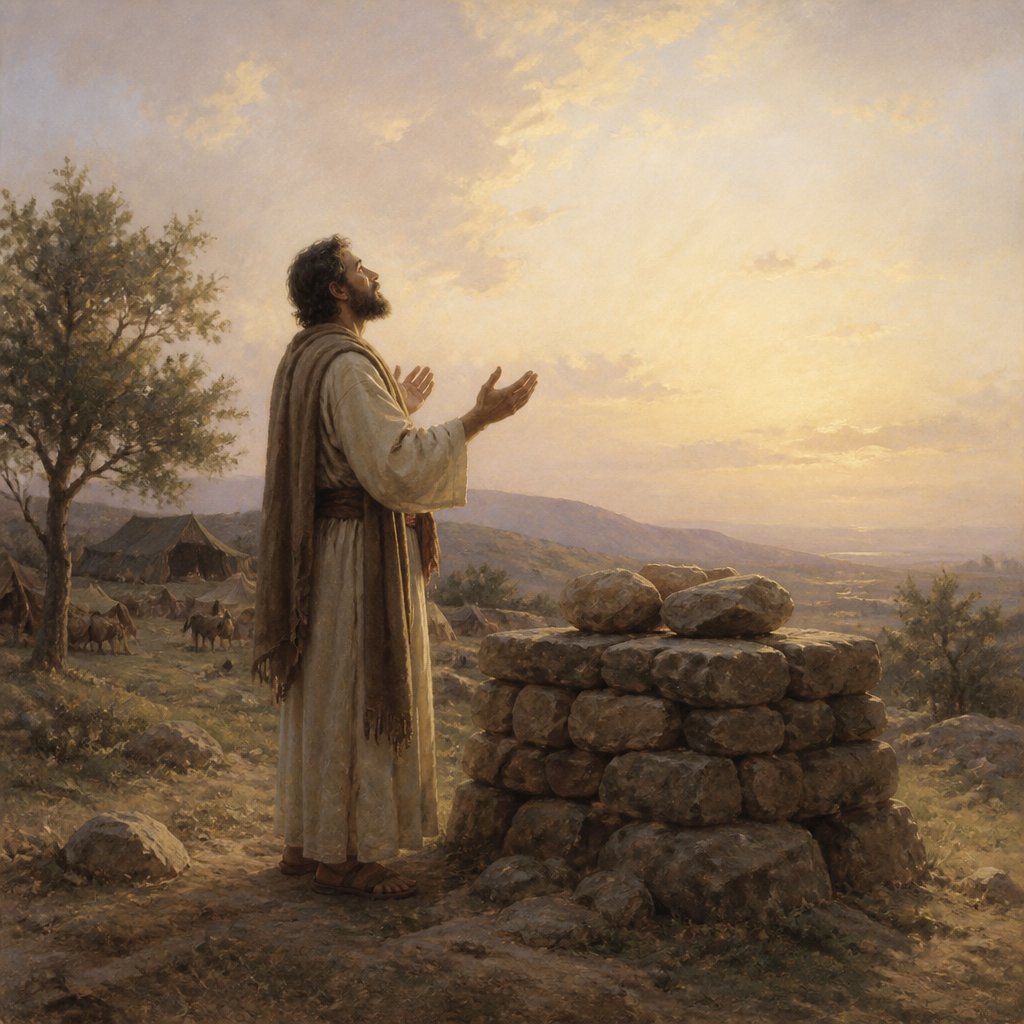
Genesis 33:20 (KJV) reads, "And he erected there an altar, and called it El-elohe-Israel." This verse comes at the end of the encounter between Jacob and his brother Esau. After years of estrangement, they have finally reconciled, and Jacob has expressed his gratitude and relief at their peaceful meeting and the forgiveness shown by his brother. In response to this, Jacob sets up an altar and names it El-elohe-Israel, which can be translated as “God, the God of Israel.” This act symbolizes Jacob’s deepening relationship with God and his commitment to living as God’s chosen servant, as well as marking a significant turning point in Jacob's journey.
The setting of this passage is significant. Jacob and Esau have just reunited after a long period of separation, during which time Jacob had lived in fear of his brother's anger and retaliation for the deception that had led to him receiving their father’s blessing instead of Esau. However, Esau forgives Jacob, leading to a moment of deep emotional significance for both of them. The naming of the altar, El-elohe-Israel, is Jacob’s way of acknowledging the divine hand in their reconciliation and his gratitude for God's protection and guidance throughout his life.
This verse also highlights Jacob’s transformation. He started out as a self-serving and deceitful young man, willing to manipulate and deceive to get what he wanted. But through his experiences and encounters with God, he has gradually become a man of faith and integrity. Jacob’s decision to establish an altar and give it such a powerful and personal name indicates his spiritual growth and his acknowledgment of his identity as Israel, the one who struggles with God.
Furthermore, the naming of the altar signifies the establishment of the God of Israel as the central figure in Jacob’s life and the life of his descendants. This act has the effect of solidifying God's presence and influence among the people of Israel. By naming the altar in this way, Jacob is making a public declaration of his faith and his commitment to serve the one true God. This faith would go on to be a defining characteristic of the ancient Israelites, and the altar's name serves as a powerful reminder of their heritage and the covenant that was established with God.
The symbolism of the altar in this verse is also significant. Throughout the Bible, altars are places of worship, sacrifice, and encounter with the divine. They serve as physical markers of spiritual experiences and can represent a meeting place between heaven and earth. By erecting an altar, Jacob is dedicating a sacred space to God, where he can come to offer sacrifices, seek guidance, and commune with the divine. In this way, the altar becomes a tangible symbol of Jacob’s commitment to his faith and his desire to honor and worship God.
In conclusion, Genesis 33:20 is a pivotal verse in the story of Jacob. It not only reflects his personal journey of faith and transformation but also marks a significant moment in the history of the Israelite people. The naming of the altar, El-elohe-Israel, represents Jacob’s deepening relationship with God, his newfound integrity, and his acknowledgment of his identity as Israel. It also serves as a symbolic declaration of faith and commitment to God, setting a powerful precedent for future generations of Israelites. Through this verse, we are reminded of the importance of faith, reconciliation, and the power of God’s transformative love.
Get our apps


Artwork for Genesis 33:20

Genesis 33:20 - "And he erected there an altar, and called it El-elohe-Israel."
"And he erected there an altar, and called it El-elohe-Israel." - Genesis 33:20

Genesis 19-33

Genesis 21-33

Genesis 18-33

Genesis 24-33

Genesis 25-33

Numbers 33:20 - "And they departed from Rimmon-parez, and pitched in Libnah."

Genesis 33:6 - "Then the handmaidens came near, they and their children, and they bowed themselves."

Acts 20:33 - "I have coveted no man's silver, or gold, or apparel."

Matthew 20:33 - "They say unto him, Lord, that our eyes may be opened."

Genesis 33:16 - "¶ So Esau returned that day on his way unto Seir."

Psalms 33:20 - "Our soul waiteth for the LORD: he is our help and our shield."

Job 33:20 - "So that his life abhorreth bread, and his soul dainty meat."

Genesis 36:33 - "And Bela died, and Jobab the son of Zerah of Bozrah reigned in his stead."

Luke 20:33 - "Therefore in the resurrection whose wife of them is she? for seven had her to wife."

Genesis 20

Genesis 21:33 - "¶ And Abraham planted a grove in Beer-sheba, and called there on the name of the LORD, the everlasting God."

Genesis 26:33 - "And he called it Shebah: therefore the name of the city is Beer-sheba unto this day."

Exodus 33:20 - "And he said, Thou canst not see my face: for there shall no man see me, and live."

Genesis 20-18

Genesis 20-16

Genesis 15:20

Genesis 20-1

Genesis 20-15

Genesis 20-4

Genesis 20-13

Genesis 20-17
Genesis 20-3

Genesis 19-20