Dukes of the Desert: A Journey into Identity and Legacy
“And Dishon, and Ezer, and Dishan: these are the dukes of the Horites, the children of Seir in the land of Edom.” — Genesis 36:21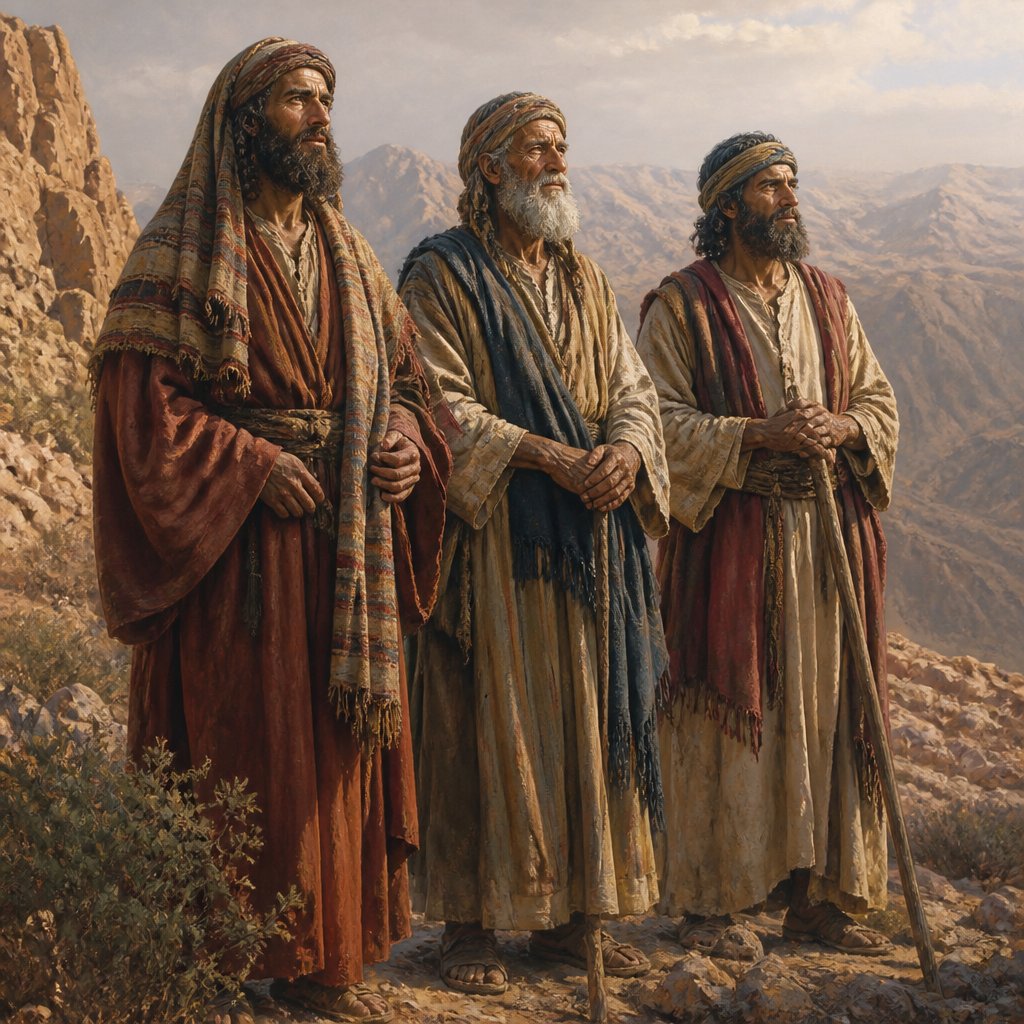
Genesis 36:21 states, "And Dishon, and Ezer, and Dishan: these are the dukes of the Horites, the children of Seir in the land of Edom." At first glance, this verse may appear as a brief list of names and titles, seeming far removed from our modern daily lives and spiritual pursuits. However, tucked away in this genealogical account lies a profound truth about identity, heritage, and the legacy we build as children of God.
Throughout the Bible, names carry significance. They embody identity, purpose, and history. In ancient times, especially in the cultures surrounding the Israelites, a person's name often revealed their lineage and the role they were to fulfill. In Genesis 36, we encounter the descendants of Seir, the Horites, who were significant players in the history of Edom. The mention of Dukes—leaders among their people—indicates that even those outside of Israel's immediate lineage had a place, a significance, and a divinely appointed role in God’s unfolding plan.
In our spiritual journey, we often grapple with our identity. Who are we in the eyes of God? Just as the Dukes of the Horites found their identity in their lineage and land, we too are called to explore our relationship with the Divine. Understanding our identity is foundational; we are not merely products of our environments or history, but rather, we have been uniquely crafted by God as His children, each with a specific purpose.
Consider the context of Edom. The land had its own distinct culture and people, yet it was not outside of God's sovereign reach. Through the mention of the dukes, we recognize that God can use anyone—regardless of their background—in His story. This encourages us that our past, whether steeped in faith or fraught with struggle, does not disqualify us from being used by God. In fact, God often takes what seems irrelevant or insignificant and weaves it into His grand narrative.
The land of Edom and its rulers served as a reminder that God is sovereign over all nations and people. Though we may not hold titles of dukes in our lives, we have been given an inheritance in Christ that bestows upon us immeasurable value (Ephesians 1:18-19). Like Ezer and Dishan, we each have roles to fulfill in the territory that God has placed us in. Are we stepping into our God-given identities, or are we allowing our past to define us?
Furthermore, the genealogy emphasizes a legacy that continues beyond one's life. The Dukes of the Horites are not simply mentioned as rulers; they represent a continuous line of influence and authority. As Christians, we are called to leave a legacy of faith. We must embrace the truth of Proverbs 13:22: "A good man leaveth an inheritance to his children's children." What kind of legacy are we cultivating through our actions, our words, and our faith?
In every generation, we have the opportunity to inspire those who come after us, embedding lessons of faith, courage, and love. We must ask ourselves, in what way are we being dukes in our families, workplaces, and communities? Are we exemplifying the character of Christ to those around us, building a report of faithfulness that others can look upon?
As we reflect on Genesis 36:21, let us not merely skim over the names of Dishon, Ezer, and Dishan but take a moment to appreciate the underlying call to discover our true identities, recognize our inherited value, and commit to leaving a lasting legacy. May we live boldly as children of the King, fully aware that our lives are intricately woven into God’s grand design, and may we inspire others to step into their God-given roles as well.
Get our apps


Artwork for Genesis 36:21

Genesis 36:21 - "And Dishon, and Ezer, and Dishan: these are the dukes of the Horites, the children of Seir in the land of Edom."
"And Dishon, and Ezer, and Dishan: these are the dukes of the Horites, the children of Seir in the land of Edom." - Genesis 36:21

Genesis 36:36 - "And Hadad died, and Samlah of Masrekah reigned in his stead."

Genesis 24:36

Genesis 19-36

Genesis 36:28 - "The children of Dishan are these; Uz, and Aran."

"And Hadad died, and Samlah of Masrekah reigned in his stead." - Genesis 36:36

Genesis 36:27 - "The children of Ezer are these; Bilhan, and Zaavan, and Akan."

Genesis 36:19 - "These are the sons of Esau, who is Edom, and these are their dukes."

Genesis 36:3 - "And Bashemath Ishmael's daughter, sister of Nebajoth."

Genesis 36:1 - "Now these are the generations of Esau, who is Edom."

Genesis 36:26 - "And these are the children of Dishon; Hemdan, and Eshban, and Ithran, and Cheran."

Genesis 36:42 - "Duke Kenaz, duke Teman, duke Mibzar,"

Genesis 36:9 - "¶ And these are the generations of Esau the father of the Edomites in mount Seir:"

Acts 21:36 - "For the multitude of the people followed after, crying, Away with him."

Genesis 36:41 - "Duke Aholibamah, duke Elah, duke Pinon,"

Genesis 19:36 - "Thus were both the daughters of Lot with child by their father."

Genesis 36:8 - "Thus dwelt Esau in mount Seir: Esau is Edom."

Genesis 36:25 - "And the children of Anah were these; Dishon, and Aholibamah the daughter of Anah."

Genesis 36:4 - "And Adah bare to Esau Eliphaz; and Bashemath bare Reuel;"

Genesis 21-21

Genesis 36:11 - "And the sons of Eliphaz were Teman, Omar, Zepho, and Gatam, and Kenaz."

Joshua 21:36 - "And out of the tribe of Reuben, Bezer with her suburbs, and Jahazah with her suburbs,"

Exodus 36:21 - "The length of a board was ten cubits, and the breadth of a board one cubit and a half."

Genesis 36:23 - "And the children of Shobal were these; Alvan, and Manahath, and Ebal, Shepho, and Onam."

Genesis 36:34 - "And Jobab died, and Husham of the land of Temani reigned in his stead."

Genesis 36:22 - "And the children of Lotan were Hori and Hemam; and Lotan's sister was Timna."
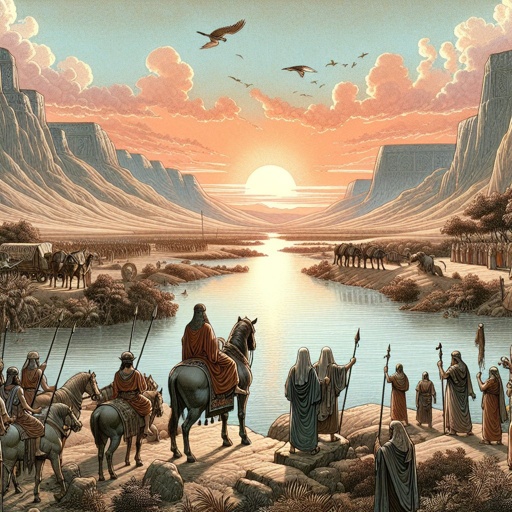
Genesis 36:37 - "And Samlah died, and Saul of Rehoboth by the river reigned in his stead."

Genesis 36:33 - "And Bela died, and Jobab the son of Zerah of Bozrah reigned in his stead."

Genesis 36:38 - "And Saul died, and Baal-hanan the son of Achbor reigned in his stead."