The Legacy of Leadership: Lessons from Jobab and Husham
“And Jobab died, and Husham of the land of Temani reigned in his stead.” — Genesis 36:34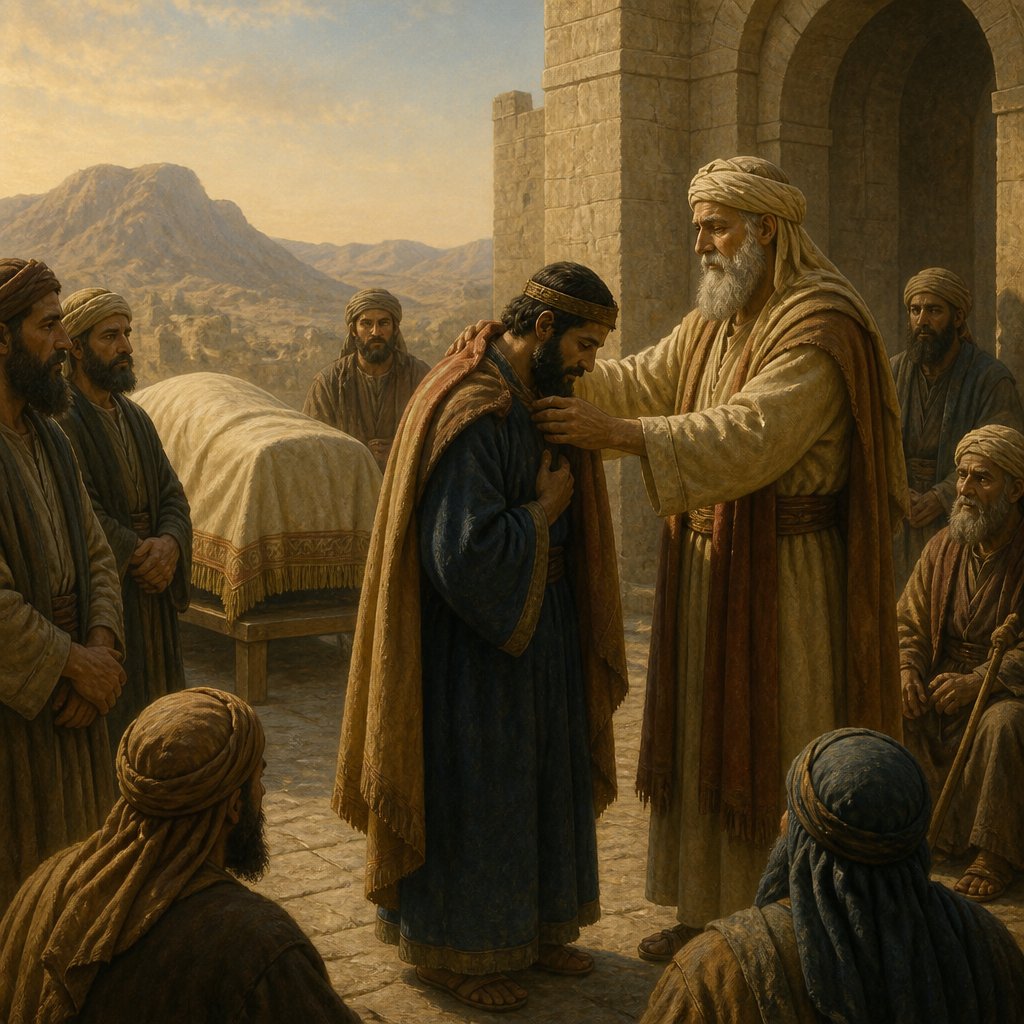
In our journey of faith and understanding, we often find ourselves reflecting on the significance of legacy and leadership. Today, we turn our attention to a seemingly straightforward verse in Genesis 36:34—"And Jobab died, and Husham of the land of Temani reigned in his stead." While this passage may appear simple, the layers of meaning within it invite us to explore the profound implications of leadership, mortality, and the continuity of purpose.
Jobab, mentioned in this brief line, holds a place in the lineage of Ishmael, a son of Abraham. His legacy, though summarized in mere words, encapsulates a life filled with influence, decision-making, trials, and victories. When we contemplate Jobab’s reign, we must consider the burdens a leader carries and the impact they have on their people. Jobab's death signifies that even the most resolute leaders face the inevitable—mortality. It reminds us that life is finite, and leaders, no matter how strong or wise, will one day pass the mantle to another.
Husham's ascension to leadership is equally compelling. "Husham of the land of Temani"—a specific reference that suggests geographical and cultural significance. Temani is often associated with wisdom and insight, which adds depth to Husham's character as a successor. His reign is a testament not only to the continuation of leadership but also to the transition from one leader to another—a necessary cycle of life that ensures progress and adaptability in governance.
In our lives, this verse resonates deeply as it encapsulates a spiritual principle: leadership is a series of transitions, each one carrying its challenges and responsibilities. For those among us who are leaders—whether in the workplace, at home, or within our communities—this passage can serve as a reminder of our responsibilities. Each day, we are faced with decisions that can shape the future. We should ask ourselves: What kind of legacy do we want to leave behind?
Jobab's reign ends with his death, yet it is not the end of the story. Husham steps into the light, embodying the hope that change brings. In the same way, we must remember that our influence continues beyond our years. Our words, actions, and the way we lead can have lasting effects on those around us. This verse also calls us to reflect on how we prepare the next generation of leaders. Are we mentoring and guiding them? Are we instilling in them the values that will promote righteousness and justice?
The fleeting nature of life is another dimension of this passage worth our attention. As we meditate on Jobab and Husham, we recognize the importance of living each day with a sense of purpose. We must be intentional in our interactions and leadership, knowing that the choices we make today will ripple through time. We are reminded of the biblical truth in James 4:14, where we’re told, "For what is your life? It is even a vapor, that appeareth for a little time, and then vanisheth away." Like Jobab, each of us has a time appointed to lead, and we should endeavor to do so with diligence and integrity.
In conclusion, Genesis 36:34 prompts us to consider not only the passage of leadership from one person to another but also the impact of that leadership on the community at large. As we navigate our leadership journeys, let us seek to be like Husham—wise, capable, and ready to face the challenges ahead. Let us honor the legacies of those who came before us by leading with love, wisdom, and an unwavering commitment to our faith. May we live each day as an opportunity to sow seeds of excellence and righteousness, ensuring our legacy will inspire generations to come. Amen.
Get our apps


Artwork for Genesis 36:34

Genesis 36:34 - "And Jobab died, and Husham of the land of Temani reigned in his stead."

"And Jobab died, and Husham of the land of Temani reigned in his stead." - Genesis 36:34

Proverbs 8:34-36

2 kings 9:34-36

Genesis 36:36 - "And Hadad died, and Samlah of Masrekah reigned in his stead."

Ezekiel 36:34 - "And the desolate land shall be tilled, whereas it lay desolate in the sight of all that passed by."

Genesis 24:36

Genesis 19-36

Exodus 36:34 - "And he overlaid the boards with gold, and made their rings of gold to be places for the bars, and overlaid the bars with gold."

Job 34:36 - "My desire is that Job may be tried unto the end because of his answers for wicked men."

Genesis 21-34

Genesis 19-34

Genesis 24-34

Genesis 36:28 - "The children of Dishan are these; Uz, and Aran."

"And Hadad died, and Samlah of Masrekah reigned in his stead." - Genesis 36:36

Genesis 36:27 - "The children of Ezer are these; Bilhan, and Zaavan, and Akan."

Genesis 36:3 - "And Bashemath Ishmael's daughter, sister of Nebajoth."

Genesis 36:19 - "These are the sons of Esau, who is Edom, and these are their dukes."

Genesis 36:1 - "Now these are the generations of Esau, who is Edom."

Genesis 36:26 - "And these are the children of Dishon; Hemdan, and Eshban, and Ithran, and Cheran."

Genesis 36:42 - "Duke Kenaz, duke Teman, duke Mibzar,"

Genesis 36:9 - "¶ And these are the generations of Esau the father of the Edomites in mount Seir:"

Genesis 36:41 - "Duke Aholibamah, duke Elah, duke Pinon,"

Genesis 36:8 - "Thus dwelt Esau in mount Seir: Esau is Edom."

Genesis 19:36 - "Thus were both the daughters of Lot with child by their father."

Genesis 36:25 - "And the children of Anah were these; Dishon, and Aholibamah the daughter of Anah."

Genesis 36:4 - "And Adah bare to Esau Eliphaz; and Bashemath bare Reuel;"

Genesis 21:34 - "And Abraham sojourned in the Philistines' land many days."

Genesis 36:11 - "And the sons of Eliphaz were Teman, Omar, Zepho, and Gatam, and Kenaz."

Genesis 36:23 - "And the children of Shobal were these; Alvan, and Manahath, and Ebal, Shepho, and Onam."