The Sovereignty of God in the Rise and Fall of Kings
“And Hadad died, and Samlah of Masrekah reigned in his stead.” — Genesis 36:36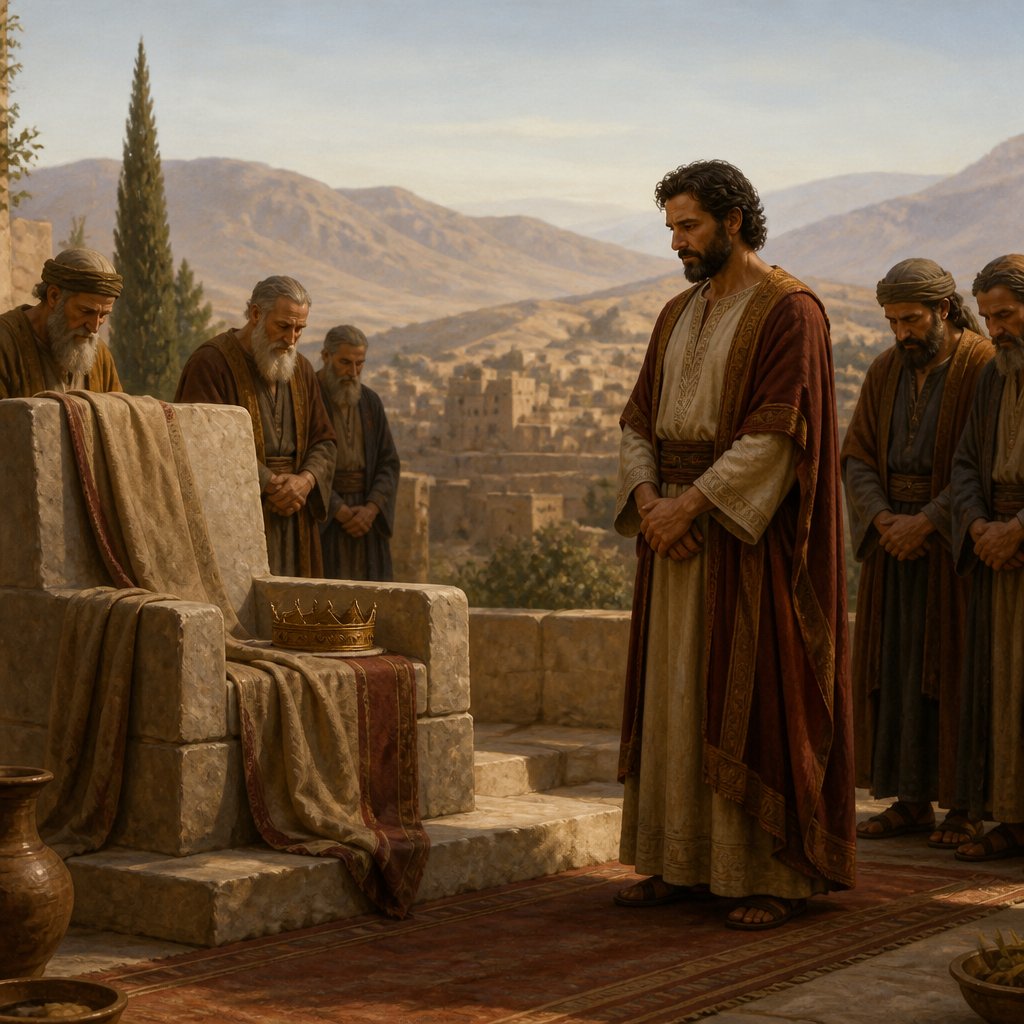
Genesis 36:36 states, "And Hadad died, and Samlah of Masrekah reigned in his stead." On the surface, this verse may seem simple, chronicling a seamless transition of power from one king to another in the line of Edom. However, within this concise record lies profound truths about the sovereignty of God, the impermanence of human leadership, and the continuity of His divine plan.
To fully appreciate this verse, we must first consider its context within the broader narrative of Genesis. Genesis chapters 36 is a genealogical account detailing the descendants of Esau, Jacob's brother, and the establishment of nations. This chapter reveals that while Genesis predominantly focuses on the covenant promises God made to Abraham, Isaac, and Jacob, there are also significant aspects concerning the descendants of Esau. God’s work is not confined to a singular bloodline; His sovereignty encompasses all nations, including those born out of struggle and conflict.
In the lives of many leaders, like Hadad and Samlah, we can see reflected human frailty. Hadad, who is mentioned as a king of Edom, meets the inevitability of death—a striking reminder that all leaders, regardless of their might and power, are subject to mortality. Death is an appointment we all must face, often coming unexpectedly, regardless of our titles and achievements. As the wise philosopher Solomon mused in Ecclesiastes 3:2, "A time to be born and a time to die; a time to plant and a time to pluck up that which is planted." This verse serves to remind us that there is a divinely ordained rhythm to life.
The subsequent verse cites Samlah of Masrekah ascending to the throne. This change in leadership illustrates God’s providence in maintaining the governance of nations, even in transition. The fact that Samlah emerged underscores a divine principle: God appoints leaders according to His purpose, sometimes for the prosperity of a people and at other times for judgment. While we might not have full visibility into the workings of government and providence, we hold fast to the belief that God is ultimately in control, even when earthly rulers change.
The brief mention of Hadad’s death and Samlah’s rise also challenges us to reflect on our own lives. What legacy are we building as we navigate through various seasons? In life, we often grapple with our ambitions and the quest for significance. The story of these two kings serves as a humbling reminder that our time is transient, and our opportunities to lead or influence are but fleeting moments. Jesus said in Matthew 20:26, "But it shall not be so among you: but whosoever will be great among you, let him be your minister." True greatness, from God’s perspective, lies not in exaltation but in servitude and humility.
Moreover, as we ponder the transition of earthly authority illustrated in Genesis 36:36, we are invited to consider who reigns in our own hearts. The true King of kings, Jesus Christ, offers a reign marked by love, justice, and peace. Where human leaders may fail us, He remains steadfast and unchanging. As we submit to His authority, we are assured that His plans for us are good, even in the face of uncertainty.
In conclusion, the tale of Hadad and Samlah encapsulates the sovereign hand of God in the ebb and flow of history. It beckons us to acknowledge our mortality and the fleeting nature of human power. May we learn to live in light of eternity, serving faithfully in our roles while entrusting God's governance over our lives and the world around us. Let us rest in the certainty that while kings may come and go, our God remains forever.
By meditating on this verse, we invite divine wisdom into our leadership and daily practices. May this fuel our desire to seek His Kingdom first, remembering always that it is ultimately His timeline and purpose that prevail.
Get our apps


Artwork for Genesis 36:36

Genesis 36:36 - "And Hadad died, and Samlah of Masrekah reigned in his stead."

"And Hadad died, and Samlah of Masrekah reigned in his stead." - Genesis 36:36

Genesis 24:36

Genesis 19-36

Genesis 36:28 - "The children of Dishan are these; Uz, and Aran."

Genesis 36:27 - "The children of Ezer are these; Bilhan, and Zaavan, and Akan."

Genesis 36:19 - "These are the sons of Esau, who is Edom, and these are their dukes."

Genesis 36:3 - "And Bashemath Ishmael's daughter, sister of Nebajoth."

Genesis 36:1 - "Now these are the generations of Esau, who is Edom."

Genesis 36:26 - "And these are the children of Dishon; Hemdan, and Eshban, and Ithran, and Cheran."

Genesis 36:42 - "Duke Kenaz, duke Teman, duke Mibzar,"

Genesis 36:9 - "¶ And these are the generations of Esau the father of the Edomites in mount Seir:"

Genesis 36:41 - "Duke Aholibamah, duke Elah, duke Pinon,"

Genesis 19:36 - "Thus were both the daughters of Lot with child by their father."

Genesis 36:8 - "Thus dwelt Esau in mount Seir: Esau is Edom."

Genesis 36:25 - "And the children of Anah were these; Dishon, and Aholibamah the daughter of Anah."

Genesis 36:4 - "And Adah bare to Esau Eliphaz; and Bashemath bare Reuel;"

Genesis 36:11 - "And the sons of Eliphaz were Teman, Omar, Zepho, and Gatam, and Kenaz."

Genesis 36:23 - "And the children of Shobal were these; Alvan, and Manahath, and Ebal, Shepho, and Onam."

Genesis 36:34 - "And Jobab died, and Husham of the land of Temani reigned in his stead."

Genesis 36:22 - "And the children of Lotan were Hori and Hemam; and Lotan's sister was Timna."
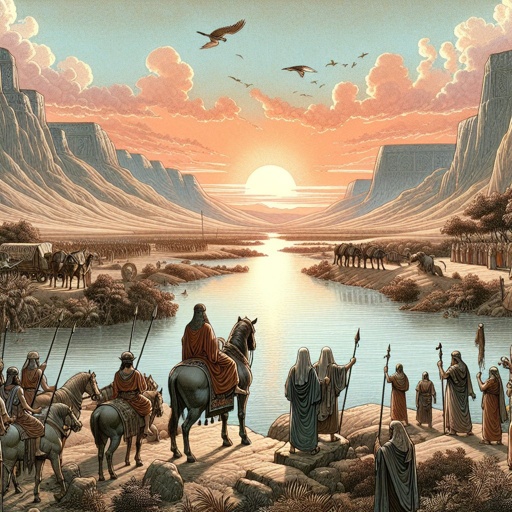
Genesis 36:37 - "And Samlah died, and Saul of Rehoboth by the river reigned in his stead."

Genesis 36:33 - "And Bela died, and Jobab the son of Zerah of Bozrah reigned in his stead."

Genesis 36:38 - "And Saul died, and Baal-hanan the son of Achbor reigned in his stead."

Genesis 36:21 - "And Dishon, and Ezer, and Dishan: these are the dukes of the Horites, the children of Seir in the land of Edom."

Genesis 36:32 - "And Bela the son of Beor reigned in Edom: and the name of his city was Dinhabah."

"The children of Dishan are these; Uz, and Aran." - Genesis 36:28

Genesis 37:36 - "And the Midianites sold him into Egypt unto Potiphar, an officer of Pharaoh's, and captain of the guard."

Genesis 36:20 - "¶ These are the sons of Seir the Horite, who inhabited the land; Lotan, and Shobal, and Zibeon, and Anah,"

Genesis 36:29 - "These are the dukes that came of the Horites; duke Lotan, duke Shobal, duke Zibeon, duke Anah,"