Desolation and Restoration: A Call to Examine Our Hearts
“Your country is desolate, your cities are burned with fire: your land, strangers devour it in your presence, and it is desolate, as overthrown by strangers.” — Isaiah 1:7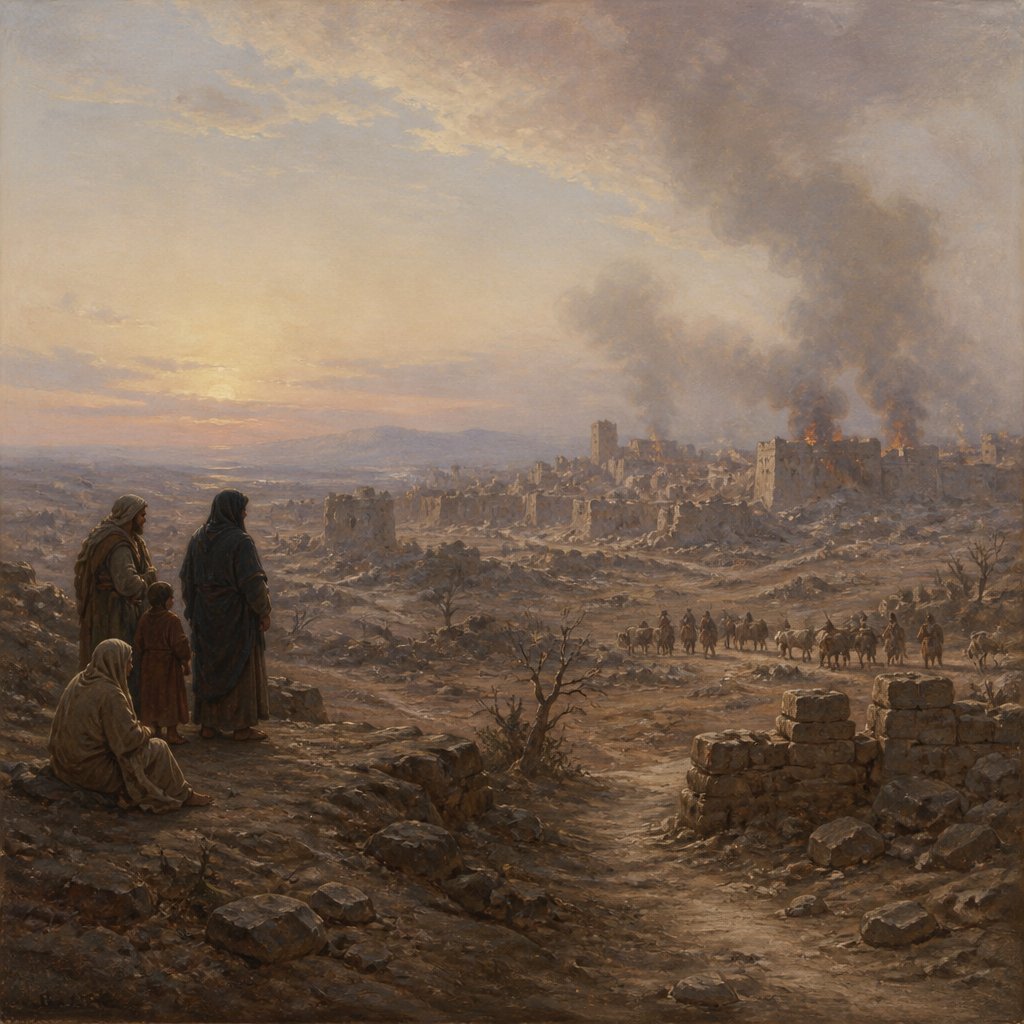
In Isaiah 1:7, the prophet declares a profound truth regarding the state of Judah: "Your country is desolate, your cities are burned with fire: your land, strangers devour it in your presence, and it is desolate, as overthrown by strangers." This verse captures a snapshot of devastation, loss, and the dire consequences of turning away from God. In these words, we find a mirror reflecting both the historical context of Israel and the timeless realities of our spiritual lives.
As we delve deeper into this scripture, we first encounter the stark imagery of desolation. The cities, once vibrant with life, have now been reduced to ashes. The mention of strangers devouring the land signifies not only physical displacement but also the spiritual emptiness that follows a society divorced from divine guidance. In a similar vein, we often find ourselves experiencing desolation in our own lives—a sense of hopelessness and despair when we stray from our relationship with God.
In this modern age, it’s easy to become complacent, rationalizing our behaviors and turning a blind eye to the gradual erosion of our moral compass. Just as ancient Israel faced the consequences of their unfaithfulness, we too experience the fallout of neglecting our spiritual obligations. The ‘strangers’ in our lives—the distractions, sins, and worldly desires—can consume us, leaving us desolate and longing for restoration. It's a somber reminder that when we allow things outside of God to take precedence, we inevitably invite devastation into our lives.
Yet, there is hope hidden within the profound sorrow of this verse. God does not abandon us in our desolation. Instead, He uses these moments as opportunities for reflection, repentance, and eventual restoration. When we find ourselves facing the ruins of our decisions, we are reminded to return to the Lord and seek His face rather than allowing despair to lead us deeper into isolation.
The beauty of Isaiah’s prophecy lies in its call to awareness and action. It prompts us to examine the current state of our hearts—are we allowing worldly distractions to dominate our lives? Are our spiritual temples in disarray while we pursue earthly desires? Just as God revealed the brokenness of Judah, He invites us to confront our vulnerabilities openly.
In this season of reflection, we must ask ourselves probing questions: What foreign influences are consuming our time? What habits have we allowed to shape our character? Are we building walls around our hearts instead of inviting God in? With each self-examination, we can start recognizing these desolate areas and cry out for God’s mercy and restoration.
Furthermore, as we reflect on this verse, we must consider the communal aspect of desolation. Isaiah's words were not just for individuals but for a whole nation. Likewise, the decline of faith and morals is often a collective issue. We are part of a larger body—the Church. Thus, we’re called to rally together in prayer for our communities, urging one another to return to God’s ways and to seek restoration, not just for our individual hearts but for our cities that have also fallen into chaos.
In conclusion, Isaiah 1:7 serves as a sobering reminder of both the consequences of turning away from God and the hope He provides for restoration. This season invites us to return to Him with contrite hearts, recognizing our need for His grace. As we navigate our own struggles with desolation, let us hold fast to the promise of renewal through repentance, for His desire is always to bring forth beauty from ashes. May we heed this call and seek Him earnestly, so that we may transform desolation into a testimony of His unfailing love.
Get our apps


Artwork for Isaiah 1:7
Isaiah 1:7 - "Your country is desolate, your cities are burned with fire: your land, strangers devour it in your presence, and it is desolate, as overthrown by strangers."
"Your country is desolate, your cities are burned with fire: your land, strangers devour it in your presence, and it is desolate, as overthrown by strangers." - Isaiah 1:7

Isaiah 49 1-7

isaiah 6:7

isaiah 6:7

Isaiah 7:7 - "Thus saith the Lord GOD, It shall not stand, neither shall it come to pass."

Isaiah 50:7–9

Isaiah 6:4-7

Isaiah 7:1 - "And it came to pass in the days of Ahaz the son of Jotham, the son of Uzziah, king of Judah, that Rezin the king of Syria, and Pekah the son of Remaliah, king of Israel, went up toward Jerusalem to war against it, but could not prevail against it."

Isaiah 14:7 - "The whole earth is at rest, and is quiet: they break forth into singing."

Isaiah 7:10 - "¶ Moreover the LORD spake again unto Ahaz, saying,"

Isaiah 7:12 - "But Ahaz said, I will not ask, neither will I tempt the LORD."

Isaiah 7:3 - "Then said the LORD unto Isaiah, Go forth now to meet Ahaz, thou, and Shear-jashub thy son, at the end of the conduit of the upper pool in the highway of the fuller's field;"

Isaiah 24:7 - "The new wine mourneth, the vine languisheth, all the merryhearted do sigh."

Isaiah 13:7 - "Therefore shall all hands be faint, and every man's heart shall melt:"

Isaiah 26:7 - "The way of the just is uprightness: thou, most upright, dost weigh the path of the just."

Isaiah 2:1 - "The word that Isaiah the son of Amoz saw concerning Judah and Jerusalem."

Isaiah 1:1 - "The vision of Isaiah the son of Amoz, which he saw concerning Judah and Jerusalem in the days of Uzziah, Jotham, Ahaz, and Hezekiah, kings of Judah."

2 Kings 20:7 - "And Isaiah said, Take a lump of figs. And they took and laid it on the boil, and he recovered."

Isaiah 54:7 - "For a small moment have I forsaken thee; but with great mercies will I gather thee."

Isaiah 33:7 - "Behold, their valiant ones shall cry without: the ambassadors of peace shall weep bitterly."

Isaiah 7:21 - "And it shall come to pass in that day, that a man shall nourish a young cow, and two sheep;"

Isaiah 13:1 - "The burden of Babylon, which Isaiah the son of Amoz did see."

Isaiah 60:1

Isaiah 7:11 - "Ask thee a sign of the LORD thy God; ask it either in the depth, or in the height above."

Isaiah 11:1

Isaiah 7:15 - "Butter and honey shall he eat, that he may know to refuse the evil, and choose the good."

Isaiah 40:7 - "The grass withereth, the flower fadeth: because the spirit of the LORD bloweth upon it: surely the people is grass."

Isaiah 7:5 - "Because Syria, Ephraim, and the son of Remaliah, have taken evil counsel against thee, saying,"

"Thus saith the Lord GOD, It shall not stand, neither shall it come to pass." - Isaiah 7:7