What does Isaiah 1:7 mean?
“Your country is desolate, your cities are burned with fire: your land, strangers devour it in your presence, and it is desolate, as overthrown by strangers.” — Isaiah 1:7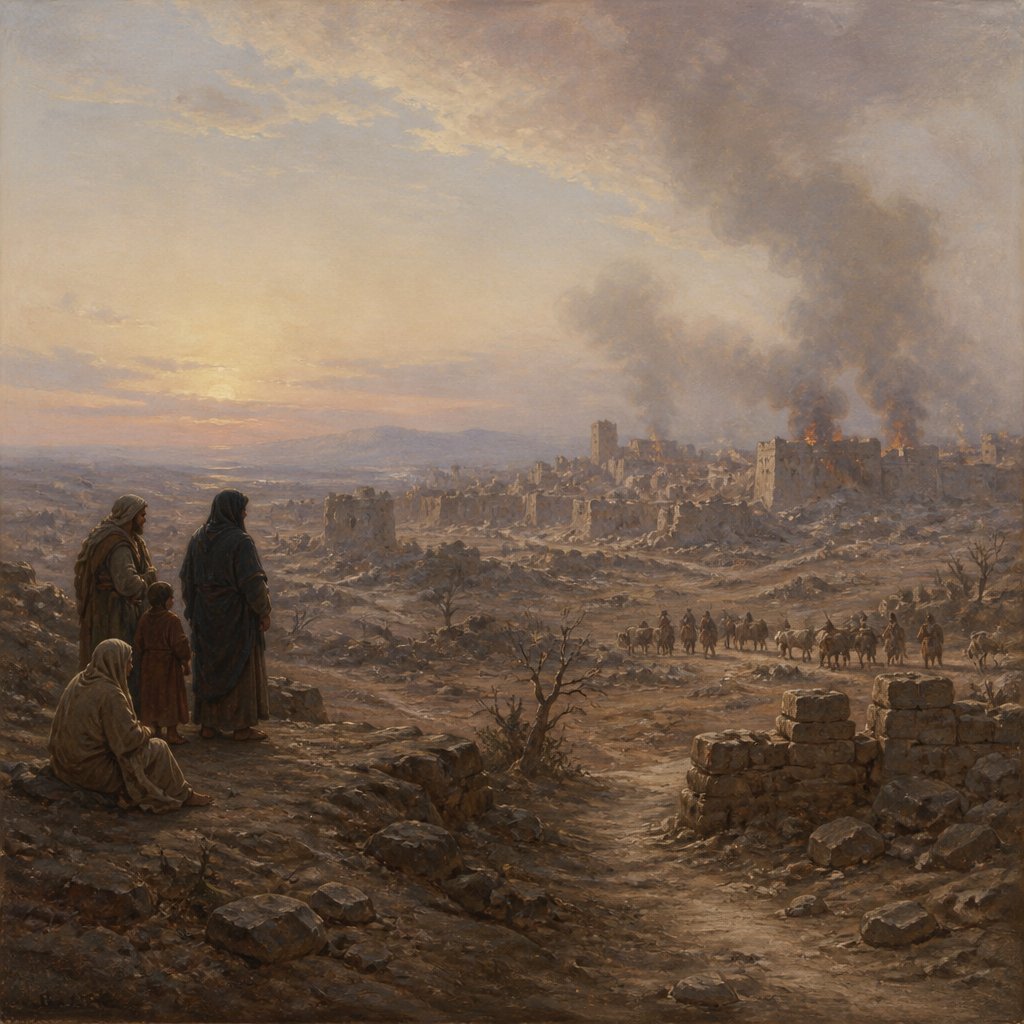
Isaiah 1:7 in the King James Version of the Bible states: "Your country is desolate, your cities are burned with fire: your land, strangers devour it in your presence, and it is desolate, as overthrown by strangers."
This verse comes from the book of Isaiah, which is a prophetic book in the Old Testament that is attributed to the prophet Isaiah. The verse is part of a larger passage in which Isaiah is delivering a message of judgment and warning to the people of Judah. In this passage, Isaiah is speaking on behalf of God, and he is warning the people of the consequences of their disobedience and sinful ways.
The context of this verse is important for understanding its meaning. At the time that Isaiah was prophesying, the nation of Judah was in a state of moral and spiritual decline. The people had turned away from God and had become corrupt and unjust. They were engaging in idolatry, social injustice, and moral decay. As a result, God was warning them of the impending judgment that would come upon them if they did not repent and turn back to Him.
The verse begins with a depiction of desolation and destruction. The phrase "Your country is desolate, your cities are burned with fire" paints a grim picture of the devastation that has befallen the nation. The imagery of desolation and fire conveys the idea of complete ruin and destruction. This is a direct result of the people's disobedience and sinfulness, which has led God to allow their land to become desolate.
The next part of the verse speaks of strangers devouring the land in the presence of the people. This signifies that the judgment is not just a one-time event, but an ongoing experience of suffering and loss. The presence of strangers represents the foreign invaders who are responsible for the destruction and desolation of the land. This emphasizes the idea that the people have lost control over their own land and are subject to the dominance of outsiders.
The final part of the verse states that the land is desolate, as though it has been overthrown by strangers. This language reinforces the sense of loss and devastation that the people are experiencing. The land, which was once their inheritance and their source of sustenance, has been taken from them and laid waste by foreign forces.
Symbolically, this verse can be interpreted as a warning about the consequences of turning away from God and living in disobedience. The desolation and destruction of the land represent the spiritual and moral decay that occurs when people stray from God's ways. The presence of strangers devouring the land signifies the loss of identity and autonomy that comes from being estranged from God. The overall message is one of warning and admonition, urging the people to repent and turn back to God before it is too late.
In conclusion, Isaiah 1:7 is a powerful and evocative verse that conveys a message of warning and judgment. It is a vivid depiction of the consequences of disobedience and turning away from God. The imagery of desolation and destruction serves as a stark reminder of the price of unfaithfulness, while the presence of strangers emphasizes the loss of control and sovereignty that comes from living in sin. This verse serves as a call to repentance and a reminder of the importance of remaining faithful to God.
Get our apps


Artwork for Isaiah 1:7
Isaiah 1:7 - "Your country is desolate, your cities are burned with fire: your land, strangers devour it in your presence, and it is desolate, as overthrown by strangers."
"Your country is desolate, your cities are burned with fire: your land, strangers devour it in your presence, and it is desolate, as overthrown by strangers." - Isaiah 1:7

Isaiah 49 1-7

isaiah 6:7

isaiah 6:7

Isaiah 7:7 - "Thus saith the Lord GOD, It shall not stand, neither shall it come to pass."

Isaiah 50:7–9

Isaiah 6:4-7

Isaiah 7:1 - "And it came to pass in the days of Ahaz the son of Jotham, the son of Uzziah, king of Judah, that Rezin the king of Syria, and Pekah the son of Remaliah, king of Israel, went up toward Jerusalem to war against it, but could not prevail against it."

Isaiah 14:7 - "The whole earth is at rest, and is quiet: they break forth into singing."

Isaiah 7:10 - "¶ Moreover the LORD spake again unto Ahaz, saying,"

Isaiah 7:12 - "But Ahaz said, I will not ask, neither will I tempt the LORD."

Isaiah 7:3 - "Then said the LORD unto Isaiah, Go forth now to meet Ahaz, thou, and Shear-jashub thy son, at the end of the conduit of the upper pool in the highway of the fuller's field;"

Isaiah 24:7 - "The new wine mourneth, the vine languisheth, all the merryhearted do sigh."

Isaiah 13:7 - "Therefore shall all hands be faint, and every man's heart shall melt:"

Isaiah 26:7 - "The way of the just is uprightness: thou, most upright, dost weigh the path of the just."

Isaiah 2:1 - "The word that Isaiah the son of Amoz saw concerning Judah and Jerusalem."

Isaiah 1:1 - "The vision of Isaiah the son of Amoz, which he saw concerning Judah and Jerusalem in the days of Uzziah, Jotham, Ahaz, and Hezekiah, kings of Judah."

2 Kings 20:7 - "And Isaiah said, Take a lump of figs. And they took and laid it on the boil, and he recovered."

Isaiah 54:7 - "For a small moment have I forsaken thee; but with great mercies will I gather thee."

Isaiah 33:7 - "Behold, their valiant ones shall cry without: the ambassadors of peace shall weep bitterly."

Isaiah 7:21 - "And it shall come to pass in that day, that a man shall nourish a young cow, and two sheep;"

Isaiah 13:1 - "The burden of Babylon, which Isaiah the son of Amoz did see."

Isaiah 60:1

Isaiah 7:11 - "Ask thee a sign of the LORD thy God; ask it either in the depth, or in the height above."

Isaiah 11:1

Isaiah 7:15 - "Butter and honey shall he eat, that he may know to refuse the evil, and choose the good."

Isaiah 40:7 - "The grass withereth, the flower fadeth: because the spirit of the LORD bloweth upon it: surely the people is grass."

Isaiah 7:5 - "Because Syria, Ephraim, and the son of Remaliah, have taken evil counsel against thee, saying,"

"Thus saith the Lord GOD, It shall not stand, neither shall it come to pass." - Isaiah 7:7