The Unyielding Devotion: Embracing Suffering for the Sake of Others
“I gave my back to the smiters, and my cheeks to them that plucked off the hair: I hid not my face from shame and spitting.” — Isaiah 50:6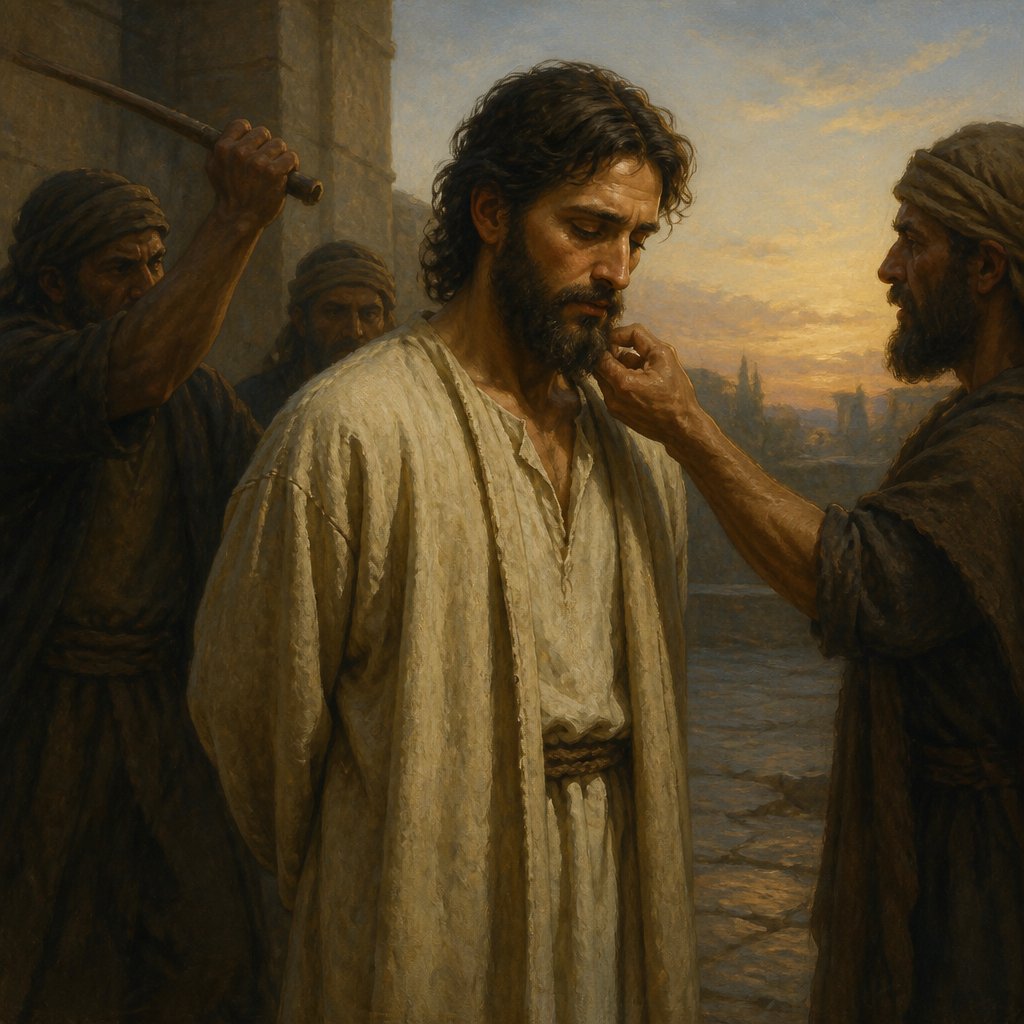
Isaiah 50:6 declares, "I gave my back to the smiters, and my cheeks to them that plucked off the hair: I hid not my face from shame and spitting." This is not merely a statement of resignation but a profound expression of unconditional love and commitment amidst suffering. This verse encapsulates the essence of sacrifice, a theme that reverberates throughout Scripture and finds its ultimate expression in the life of Jesus Christ.
When we contemplate the weight of this verse, we should first acknowledge the stark imagery that Isaiah employs. The act of giving one’s back to the smiters denotes a voluntary submission to pain and humiliation. In the culture of Isaiah's time—and even in our own—faces and bodies are often symbols of dignity and honor. To have one’s back whipped and face spit upon speaks to an extreme degradation of that dignity. Yet, Isaiah described the act without an ounce of violence in his intent. Instead, it showcases a willingness to undergo suffering not for oneself, but for the benefit of others.
In a world dominated by self-preservation and personal advancement, this perspective is radical. We live in an age that promotes the idea that one’s worth is found in their societal standing—their accomplishments, appearances, and reputations. However, Isaiah calls us to a different understanding. Here, pain is not a mere consequence of failure but a conscious choice that is intertwined with a purpose. This verse invites readers to consider the greater good that can spring from personal sacrifice.
Isaiah's words foretell the suffering of the Messiah. As we reflect on the life of Jesus, we see this prophecy fulfilled in His passion. He faced mockery, beating, and ultimate crucifixion—not because of any wrong He had done but out of love for humanity. The Gospel accounts echo Isaiah's sentiment as Jesus willingly endured suffering for our transgressions. Each lash He received, every insult hurled at Him, was borne with an unwavering resolve borne out of divine love. Rather than flee from suffering, Jesus stepped into it headfirst, demonstrating that true strength lies in vulnerability.
In embracing this message, we are called to have a similar posture in our Christian walk. Suffering is often an inevitable part of life; it may manifest through various trials, be they emotional, spiritual, or physical. However, how we respond to these trials can have everlasting implications—not only for ourselves but for those around us. The choice to endure suffering graciously and to offer our struggles to Jesus can create pathways for others to witness His love and grace. Jesus, in His suffering, opened up the opportunity for reconciliation between God and humanity, and in our trials, we can also point others to the redemptive power of Christ.
Moreover, this verse also beckons us to embrace humility. In a culture that seeks to project strength and dominance, the act of being spitted on and humiliated is counterintuitive. Just as Jesus endured scorn without retaliation—‘[He] hid not his face from shame and spitting’—we too are called to respond to this world’s hostility with grace rather than anger.
As we meditate on Isaiah 50:6, let it serve as a reminder that our lives should reflect a commitment to love that is willing to bear the burdens of others. In times when you feel overwhelmed by your circumstances, remember the depth of Christ's sacrifice. His willingness to endure shame is an emblem of hope, teaching us that our suffering can lead to a greater understanding of Christ's love—a love that transforms and revitalizes not only our souls but also the lives we touch. Let us embrace the path of selflessness in a world that desperately needs the light of Christ shining through our willingness to endure for the sake of others.
Get our apps


Artwork for Isaiah 50:6

Isaiah 50:6 - "I gave my back to the smiters, and my cheeks to them that plucked off the hair: I hid not my face from shame and spitting."
"I gave my back to the smiters, and my cheeks to them that plucked off the hair: I hid not my face from shame and spitting." - Isaiah 50:6

Isaiah 50:7–9

Isaiah 50:3 - "I clothe the heavens with blackness, and I make sackcloth their covering."

Isaiah 50:5 - "¶ The Lord GOD hath opened mine ear, and I was not rebellious, neither turned away back."

Psalms 50:6 - "And the heavens shall declare his righteousness: for God is judge himself. Selah."
1 Chronicles 6:50 - "And these are the sons of Aaron; Eleazar his son, Phinehas his son, Abishua his son,"

John 6:50 - "This is the bread which cometh down from heaven, that a man may eat thereof, and not die."

Genesis 50:6 - "And Pharaoh said, Go up, and bury thy father, according as he made thee swear."

"I clothe the heavens with blackness, and I make sackcloth their covering." - Isaiah 50:3

Isaiah 50:8 - "He is near that justifieth me; who will contend with me? let us stand together: who is mine adversary? let him come near to me."

Isaiah 50:7 - "¶ For the Lord GOD will help me; therefore shall I not be confounded: therefore have I set my face like a flint, and I know that I shall not be ashamed."

Mark 6:50 - "For they all saw him, and were troubled. And immediately he talked with them, and saith unto them, Be of good cheer: it is I; be not afraid."

Isaiah 50:10 - "¶ Who is among you that feareth the LORD, that obeyeth the voice of his servant, that walketh in darkness, and hath no light? let him trust in the name of the LORD, and stay upon his God."

Isaiah 50:9 - "Behold, the Lord GOD will help me; who is he that shall condemn me? lo, they all shall wax old as a garment; the moth shall eat them up."

isaiah 6:6

"And the heavens shall declare his righteousness: for God is judge himself. Selah." - Psalms 50:6

"¶ The Lord GOD hath opened mine ear, and I was not rebellious, neither turned away back." - Isaiah 50:5

John 6:50 - "This is the bread which cometh down from heaven, that a man may eat thereof, and not die."

Isaiah 50:11 - "Behold, all ye that kindle a fire, that compass yourselves about with sparks: walk in the light of your fire, and in the sparks that ye have kindled. This shall ye have of mine hand; ye shall lie down in sorrow."

Isaiah 50:4 - "The Lord GOD hath given me the tongue of the learned, that I should know how to speak a word in season to him that is weary: he wakeneth morning by morning, he wakeneth mine ear to hear as the learned."

Isaiah 6

Isaiah 6

John 6:50 - "This is the bread which cometh down from heaven, that a man may eat thereof, and not die."

Isaiah 6:1-5

Isaiah 6:1-5

isaiah 6:7

Isaiah 6:1-5

Isaiah 6:1-5

"This is the bread which cometh down from heaven, that a man may eat thereof, and not die." - John 6:50