Worship in the Midst of Despair
“Then Job arose, and rent his mantle, and shaved his head, and fell down upon the ground, and worshipped,” — Job 1:20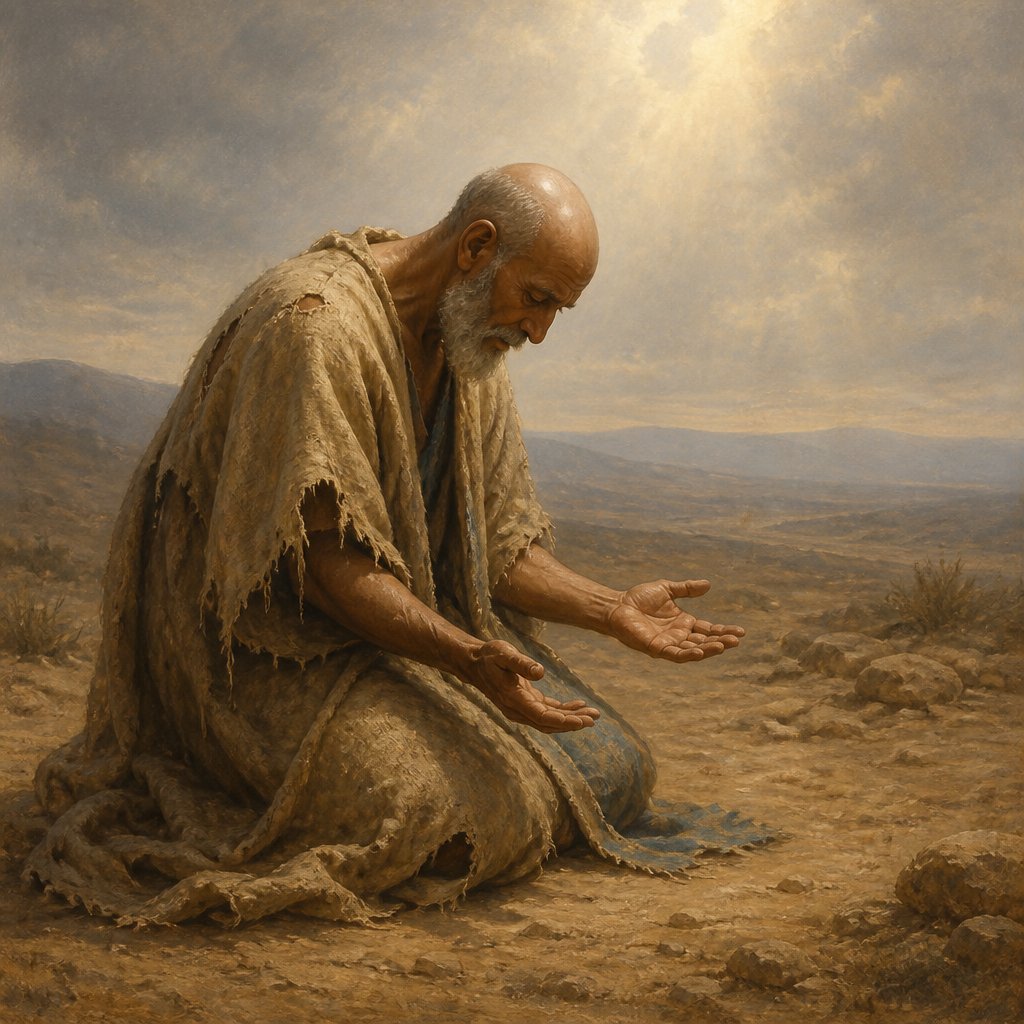
Job 1:20 (KJV) states, "Then Job arose, and rent his mantle, and shaved his head, and fell down upon the ground, and worshipped." At first glance, this verse appears to capture a moment of profound grief and sorrow—a piercing snapshot of a man who has lost everything. Job, a prosperous man of great faith, has just learned of the catastrophic loss of his children and wealth. The actions described in this verse illustrate not only his immense pain but also something incredibly powerful: the choice to worship in the face of unimaginable suffering.
When Job tore his mantle, it was a physical manifestation of his grief, a cultural expression of loss. In ancient times, such an action indicated deep mourning. It is a visceral reminder of the human condition—a recognition that we all endure seasons of suffering. Whether it is the loss of loved ones, financial hardship, illness, or betrayal, life has a way of presenting us with challenges that seem insurmountable. Each of us can relate to Job in some way; we have all faced moments that stripped us of our joy and left us questioning the very fabric of our faith.
However, what follows is utterly remarkable. Despite the weight of his grief, after tearing his mantle, Job did not succumb to despair. He shaved his head, another sign of mourning in biblical times, yet this was merely the prelude to the extraordinary act that followed. Job fell to the ground—an incredibly humbling posture—and worshipped. In that moment of agony, he chose to honor God despite the storm swirling around him. Instead of cursing God or blaming Him for his losses, Job recognized a higher truth: that God is worthy of worship in every circumstance.
Worship is often easy when life goes smoothly. We celebrate and sing praises during moments of joy and triumph. Yet, Job shows us that true worship is not contingent upon our circumstances. It becomes a necessity in the darkest of times. By falling to the ground and worshipping, Job acknowledges God’s sovereignty even in the valley of despair. He exemplifies the essence of faith—that it is not blind optimism but an unwavering trust that God is good, even when life is not.
In worshipping, Job sets a precedent for us. He teaches us that our answers, healing, and hope do not always arrive immediately after the tragedy. Instead, our response in suffering can be a powerful declaration of faith. When we lift our hearts in worship amidst trials, we affirm that God remains on His throne, that His plans transcend our understanding, and that His presence provides peace that surpasses all comprehension.
Furthermore, Job’s actions invite us to reflect on our own responses to adversity. When facing loss, do we blame God, wallow in self-pity, or deny His existence? Or do we find the strength to worship, to declare His goodness and faithfulness even when our eyes see the opposite? An essential aspect of worship is surrender—the acknowledgment that we are not in control, yet we trust the One who is. The New Testament echoes this by reminding us that in our weakness, He is strong (2 Corinthians 12:9).
Let us consider what Job teaches us: in every season, especially those marked by sorrow, let us choose to worship. Let us rip our mantles of despair, but rather than succumbing to grief, let it lead us to our knees in reverence before God. For in worship, we exchange our burdens for His promise of peace. And so today, irrespective of our circumstances, let us arise, rend our hearts—not just our mantles—shave off the despair, and fall down in worship, recognizing that our God is worthy of all honor despite our trials. May our worship be a testament to our faith, a lighthouse that guides our hearts back to the unchanging nature of our Creator.
Get our apps


Artwork for Job 1:20

Job 1:20

Job 1:20

Job 1:20 - "Then Job arose, and rent his mantle, and shaved his head, and fell down upon the ground, and worshipped,"
"Then Job arose, and rent his mantle, and shaved his head, and fell down upon the ground, and worshipped," - Job 1:20

Job 1:20 Job's reaction to the news of his children's deaths is described as nearly crushing him, causing him to tear his robe, shave his head, and fall to the ground. He then worships and says, "Naked I came from my mother's womb, and naked I will depart. The LORD gave and the LORD has taken away;

Job 20:1 - "Then answered Zophar the Naamathite, and said,"
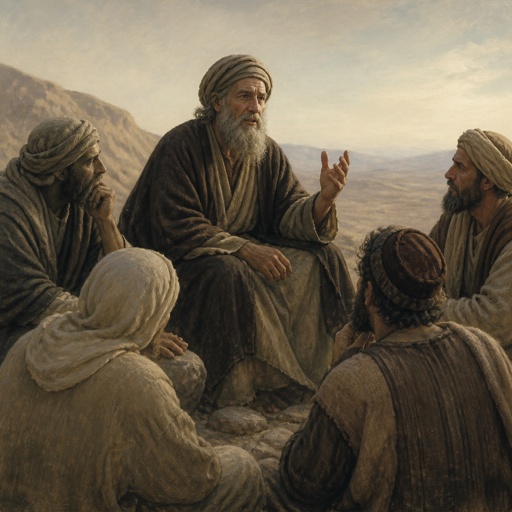
"Then answered Zophar the Naamathite, and said," - Job 20:1

Job 3:20-21 - "Job 3:20-21: Why is light given to those in misery, and life to the bitter of soul, to those who long for death that does not come, who search for it more than for hidden treasure?"

Job 20:5 - "That the triumphing of the wicked is short, and the joy of the hypocrite but for a moment?"

Job 20:20 - "Surely he shall not feel quietness in his belly, he shall not save of that which he desired."

Job 28:20 - "Whence then cometh wisdom? and where is the place of understanding?"

Job 36:20 - "Desire not the night, when people are cut off in their place."

Job 20:4 - "Knowest thou not this of old, since man was placed upon earth,"

Job 20:17 - "He shall not see the rivers, the floods, the brooks of honey and butter."

Job 4:20 - "They are destroyed from morning to evening: they perish for ever without any regarding it."

Job 3:20 - "Wherefore is light given to him that is in misery, and life unto the bitter in soul;"

Job 29:20 - "My glory was fresh in me, and my bow was renewed in my hand."

Job 22:20 - "Whereas our substance is not cut down, but the remnant of them the fire consumeth."

Job 33:20 - "So that his life abhorreth bread, and his soul dainty meat."

Job 6:20 - "They were confounded because they had hoped; they came thither, and were ashamed."

Job 20:13 - "Though he spare it, and forsake it not; but keep it still within his mouth:"

Job 12:20 - "He removeth away the speech of the trusty, and taketh away the understanding of the aged."

Job 32:20 - "I will speak, that I may be refreshed: I will open my lips and answer."

Job 27:20 - "Terrors take hold on him as waters, a tempest stealeth him away in the night."

Job 39:20 - "Canst thou make him afraid as a grasshopper? the glory of his nostrils is terrible."

Job 20:2 - "Therefore do my thoughts cause me to answer, and for this I make haste."

Job 20:29 - "This is the portion of a wicked man from God, and the heritage appointed unto him by God."
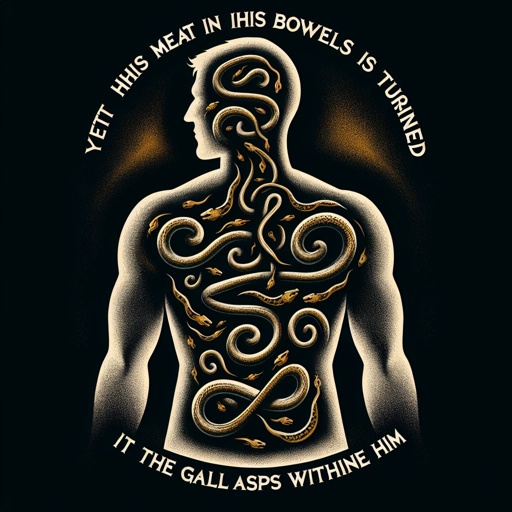
Job 20:14 - "Yet his meat in his bowels is turned, it is the gall of asps within him."

Job 12:1 - "And Job answered and said,"

Job 23:1 - "Then Job answered and said,"