What does Job 1:20 mean?
“Then Job arose, and rent his mantle, and shaved his head, and fell down upon the ground, and worshipped,” — Job 1:20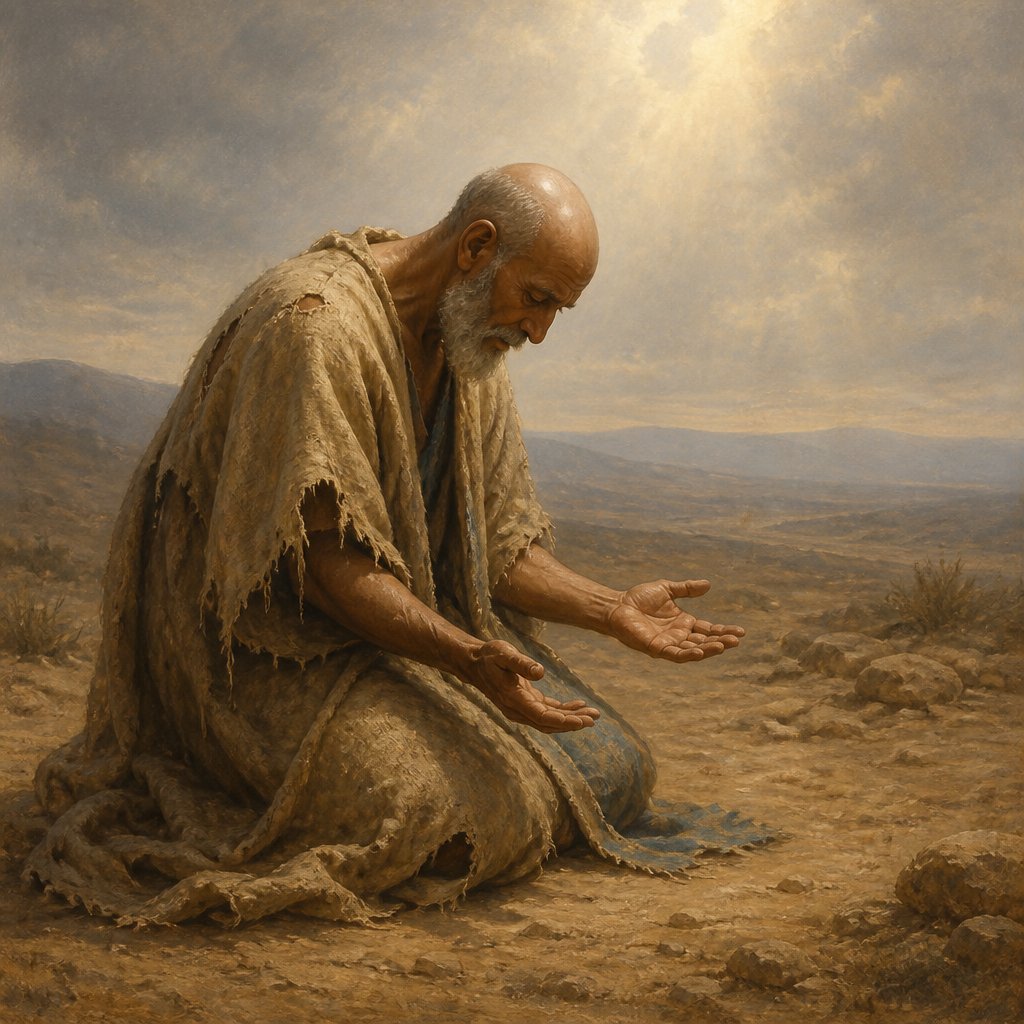
Job 1:20 from the King James Version of the Bible reads, "Then Job arose, and rent his mantle, and shaved his head, and fell down upon the ground, and worshipped." This verse comes from the Book of Job, which is part of the Old Testament. The Book of Job tells the story of a man named Job who faces immense suffering and loss but remains faithful to God.
Job 1:20 comes at a pivotal moment in the story of Job. In the preceding verses, Job has received a series of devastating news - his livestock has been stolen or killed, his servants have been slain, and worst of all, his ten children have all perished in a great wind that collapsed the house they were in. Understandably, Job is overwhelmed by grief and anguish. However, rather than succumbing to despair or lashing out at God, Job responds in a profoundly moving way.
The act of tearing his robe and shaving his head were traditional signs of mourning in ancient Jewish culture. These expressions of grief demonstrate Job's deep sorrow and pain at the loss of his children and his material wealth. The act of falling to the ground and worshiping shows Job's unwavering faith in God, despite the overwhelming adversity he is facing. This reaction is a testament to Job's exceptional faith and resilience in the face of devastating tragedy.
One of the primary themes of Job 1:20 is the concept of unwavering faith in the midst of suffering. Job's response to his overwhelming loss is a powerful example of faith and trust in God, even in the midst of deep sorrow. His ability to worship and praise God despite his circumstances is a profound example of how to remain steadfast in belief, even when it feels like everything is falling apart. This theme of faith in the face of suffering is one that resonates deeply with many people, as it speaks to the universal human experience of enduring hardship.
Another important theme in Job 1:20 is the nature of grief and mourning. Job's actions reflect the profoundly human experience of grappling with overwhelming loss. His tearing of his robe and shaving of his head are outward signs of his internal anguish and sorrow. Despite his grief, Job's ability to worship God is a powerful illustration of how it is possible to find solace and strength in faith, even in the most devastating of circumstances. This theme provides comfort and inspiration to those who may be experiencing their own periods of mourning and grief.
The context of Job 1:20 is crucial to understanding its significance. Job's story is a timeless tale of suffering, faith, and resilience. The Book of Job addresses deep theological and philosophical questions about the nature of suffering and the role of God in human life. Job's unwavering faith in the face of unimaginable suffering serves as a powerful example of how to navigate the complexities of life with grace and faith.
Symbolism also plays a significant role in Job 1:20. The tearing of Job's robe and the shaving of his head are symbolic actions that represent his grief and mourning. Their significance lies in the cultural and religious traditions of the time, as well as the deeply personal and emotional nature of these rituals. Job's act of worship while on the ground symbolizes his humility and submission to God, even in the midst of his suffering.
In conclusion, Job 1:20 is a powerful and poignant verse that highlights the themes of faith, suffering, and resilience. Job's response to his unimaginable loss serves as an inspiring example of unwavering faith and devotion, even in the face of overwhelming adversity. This verse provides profound insight into the human experience of grief and mourning, and the role that faith can play in finding strength and solace in the midst of suffering. Job's story continues to resonate with readers of the Bible, offering comfort and inspiration to those facing their own trials and tribulations.
Get our apps


Artwork for Job 1:20

Job 1:20

Job 1:20

Job 1:20 - "Then Job arose, and rent his mantle, and shaved his head, and fell down upon the ground, and worshipped,"
"Then Job arose, and rent his mantle, and shaved his head, and fell down upon the ground, and worshipped," - Job 1:20

Job 1:20 Job's reaction to the news of his children's deaths is described as nearly crushing him, causing him to tear his robe, shave his head, and fall to the ground. He then worships and says, "Naked I came from my mother's womb, and naked I will depart. The LORD gave and the LORD has taken away;

Job 20:1 - "Then answered Zophar the Naamathite, and said,"
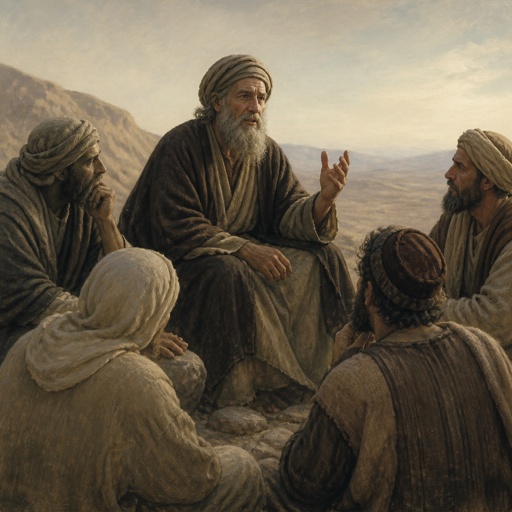
"Then answered Zophar the Naamathite, and said," - Job 20:1

Job 3:20-21 - "Job 3:20-21: Why is light given to those in misery, and life to the bitter of soul, to those who long for death that does not come, who search for it more than for hidden treasure?"

Job 20:5 - "That the triumphing of the wicked is short, and the joy of the hypocrite but for a moment?"

Job 20:20 - "Surely he shall not feel quietness in his belly, he shall not save of that which he desired."

Job 28:20 - "Whence then cometh wisdom? and where is the place of understanding?"

Job 36:20 - "Desire not the night, when people are cut off in their place."

Job 20:4 - "Knowest thou not this of old, since man was placed upon earth,"

Job 20:17 - "He shall not see the rivers, the floods, the brooks of honey and butter."

Job 4:20 - "They are destroyed from morning to evening: they perish for ever without any regarding it."

Job 3:20 - "Wherefore is light given to him that is in misery, and life unto the bitter in soul;"

Job 29:20 - "My glory was fresh in me, and my bow was renewed in my hand."

Job 22:20 - "Whereas our substance is not cut down, but the remnant of them the fire consumeth."

Job 33:20 - "So that his life abhorreth bread, and his soul dainty meat."

Job 6:20 - "They were confounded because they had hoped; they came thither, and were ashamed."

Job 20:13 - "Though he spare it, and forsake it not; but keep it still within his mouth:"

Job 12:20 - "He removeth away the speech of the trusty, and taketh away the understanding of the aged."

Job 32:20 - "I will speak, that I may be refreshed: I will open my lips and answer."

Job 27:20 - "Terrors take hold on him as waters, a tempest stealeth him away in the night."

Job 39:20 - "Canst thou make him afraid as a grasshopper? the glory of his nostrils is terrible."

Job 20:2 - "Therefore do my thoughts cause me to answer, and for this I make haste."

Job 20:29 - "This is the portion of a wicked man from God, and the heritage appointed unto him by God."
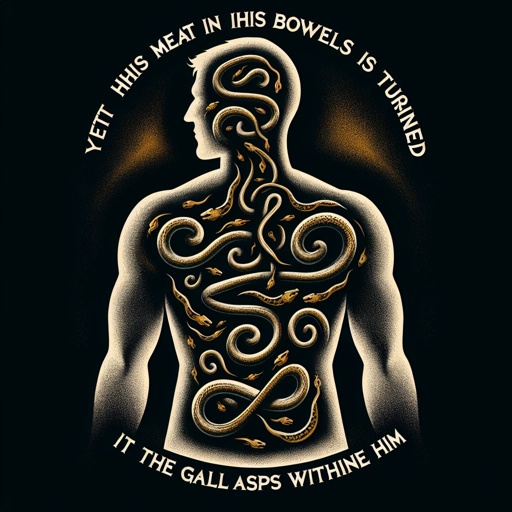
Job 20:14 - "Yet his meat in his bowels is turned, it is the gall of asps within him."

Job 12:1 - "And Job answered and said,"

Job 23:1 - "Then Job answered and said,"