Silent Cries: Finding God in Our Despair
“I cry unto thee, and thou dost not hear me: I stand up, and thou regardest me not.” — Job 30:20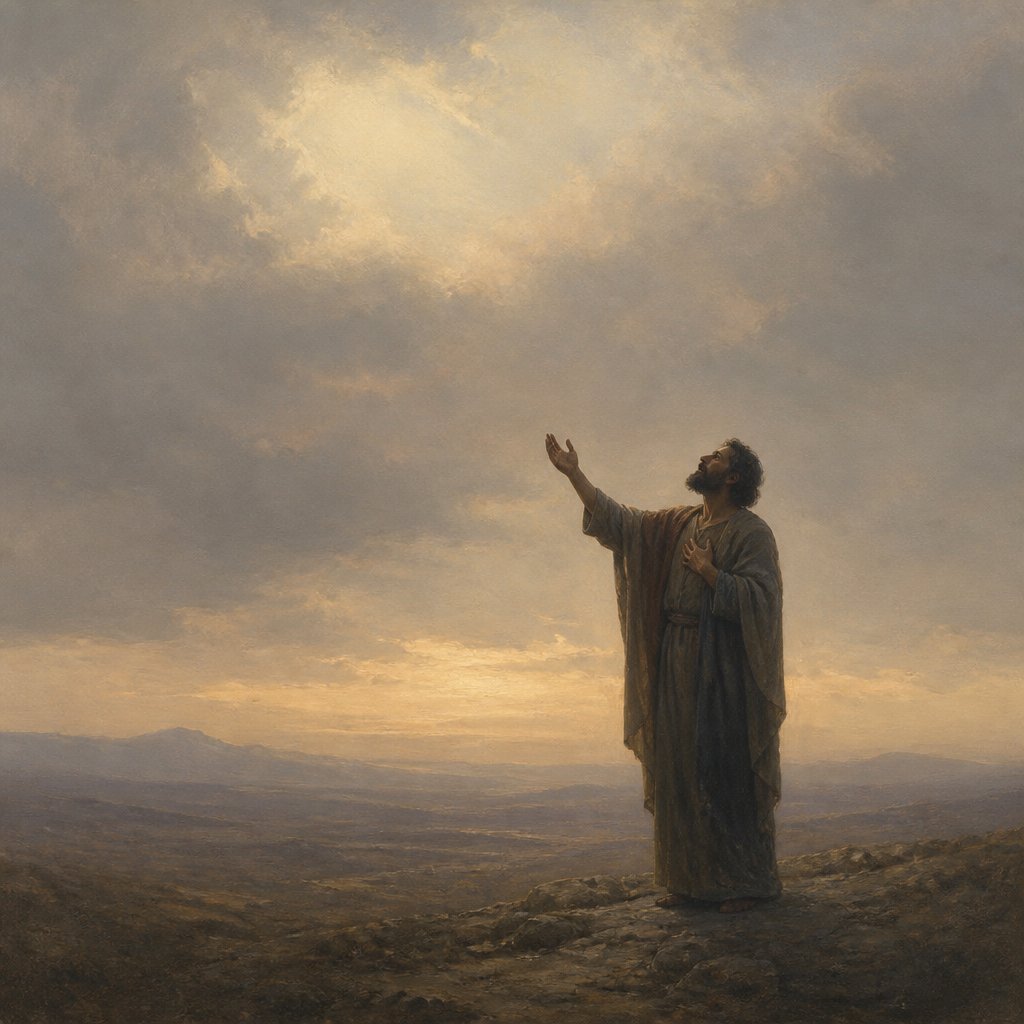
Job 30:20 (KJV) reads: "I cry unto thee, and thou dost not hear me: I stand up, and thou regardest me not." This poignant verse encapsulates one of the darkest moments in Job’s suffering. It reveals a deep sense of abandonment and despair, feelings that many of us can identify with in our own struggles and trials.
Job’s plight serves as a narrative of profound faith in the face of immense suffering. He had already endured unimaginable loss—his children, his wealth, and his health. His friends, who came to comfort him, instead accused him of wrongdoing, suggesting that his afflictions were the direct result of divine wrath. Job found himself not only in physical agony but also in a spiritual quandary, wrestling with the apparent silence of God.
In this particular verse, Job feels as though his cries are falling on deaf ears. Have you ever been in a position where you poured out your heart in prayer, desperate for an answer, only to be met with silence? It can feel like prayers are merely whispers into the void, a sentiment that can lead to discouragement and doubt.
Job’s lamentation presents several profound truths about the human experience in relation to divine silence. Firstly, it highlights the reality of human suffering. The world is full of pain—personal crises, loss, illness, injustice, and heartache. When these trials beset us, our natural inclination is to seek God’s presence fervently. Yet, there are times when it appears that God is unresponsive.
Secondly, Job's expression reveals the nature of our relationship with God. Even in his despair, Job continues to reach out to God. His crying out is an act of faith, indicating that he still believes God is there. He may feel forsaken, but he does not abandon the very act of seeking. In our own varying degrees of turmoil, we must remember to maintain our dialogue with God. It is permissible to voice our feelings of abandonment. In fact, such honesty can deepen our relationship with God and reveal the state of our hearts.
Thirdly, Job's words remind us of the mystery of God’s timing and His ways. We often wish for immediate answers, immediate intervention, but God’s understanding of time is vastly different from our own. His silence does not indicate His absence; rather, it might be an invitation to trust Him even more profoundly. He desires a faith that persists beyond visible circumstances.
Rather than viewing God’s silence as mere neglect, we must contemplate what He might be trying to teach us during these periods of waiting. Sometimes, in the silence, God is shaping our character, deepening our reliance on Him, or preparing us for a future blessing. Could it be that our anguish serves not only to refine us but also to be a testament to others about the enduring faithfulness of God amidst adversity?
Furthermore, Job's expression touches on our deeply ingrained desires for acknowledgment. When we attempt to stand up and be recognized by God, we must understand that our worth and significance are not derived from our circumstances but from being created in His image. God’s regard for us does not waver based on our external situations.
Ultimately, while Job felt unheard, the narrative arc of his story points us toward a resolution—Job's restoration, which emphasizes that God sees all our pain and is profoundly attentive even when the answers are delayed.
As you meditate on Job 30:20, allow the raw emotion of this verse to resonate within you. Acknowledge your feelings, pour out your soul in honesty, but also lean into the truth that God is ever-present, even in silence.
May this understanding bring peace to your heart amidst the storm, and may you find strength to continue calling out to Him, confident that His listening ear is always there, even when you cannot perceive it.
Get our apps


Artwork for Job 30:20

Job 30:20 - "I cry unto thee, and thou dost not hear me: I stand up, and thou regardest me not."
"I cry unto thee, and thou dost not hear me: I stand up, and thou regardest me not." - Job 30:20

Job 30:30 - "My skin is black upon me, and my bones are burned with heat."

Job 30:28

Job 30:28

Job 30:28

Job 30:28

Job 30:28

Job 34:30 - "That the hypocrite reign not, lest the people be ensnared."

Job 30:6 - "To dwell in the clifts of the valleys, in caves of the earth, and in the rocks."

Job 38:30 - "The waters are hid as with a stone, and the face of the deep is frozen."

Job 30:29 - "I am a brother to dragons, and a companion to owls."

Job 30:9 - "And now am I their song, yea, I am their byword."

Job 30:27 - "My bowels boiled, and rested not: the days of affliction prevented me."

Job 30:4 - "Who cut up mallows by the bushes, and juniper roots for their meat."

Job 1:20

Job 1:20

John 20:30-31

Job 30:7 - "Among the bushes they brayed; under the nettles they were gathered together."

"My skin is black upon me, and my bones are burned with heat." - Job 30:30

Job 22:30 - "He shall deliver the island of the innocent: and it is delivered by the pureness of thine hands."

Job 6:30 - "Is there iniquity in my tongue? cannot my taste discern perverse things?"

Job 30:25 - "Did not I weep for him that was in trouble? was not my soul grieved for the poor?"

Job 33:30 - "To bring back his soul from the pit, to be enlightened with the light of the living."

Job 30:13 - "They mar my path, they set forward my calamity, they have no helper."

Job 3:20-21 - "Job 3:20-21: Why is light given to those in misery, and life to the bitter of soul, to those who long for death that does not come, who search for it more than for hidden treasure?"

Job 36:30 - "Behold, he spreadeth his light upon it, and covereth the bottom of the sea."

Job 21:30 - "That the wicked is reserved to the day of destruction? they shall be brought forth to the day of wrath."

Job 30:3 - "For want and famine they were solitary; fleeing into the wilderness in former time desolate and waste."

Job 1:20 - "Then Job arose, and rent his mantle, and shaved his head, and fell down upon the ground, and worshipped,"