The Magnificence of Man: A Reflection on Job 7:17
“What is man, that thou shouldest magnify him? and that thou shouldest set thine heart upon him?” — Job 7:17
In Job 7:17 (KJV), we read, "What is man, that thou shouldest magnify him? and that thou shouldest set thine heart upon him?" This poignant question raised by Job cuts to the very essence of humanity's place in the cosmos and God's relationship with us. The context of this verse is crucial; Job is in deep anguish, having lost everything he cherished. He wrestles with the weight of suffering and the apparent silence of God amidst his trials. Yet, even in his sorrow, he reflects on the nature of humanity and God's divine attention toward us.
To fully grasp the depth of Job’s inquiry, we must first consider who man is, according to Scripture. In Genesis 1:26-27, we learn that man is made in the "image of God." This is a profound truth. Despite our frailties and failings, we are fashioned after the Creator Himself. This divine image denotes not only our dignity and worth but also our capacity for relationship with God. As we walk through life, it often becomes easy to lose sight of our intrinsic value amidst the noise of the world. Job’s question invites us to ponder our significance and the grace we have from the Almighty.
When Job asks, "What is man?" it is not a mere rhetorical question; it is a quest for understanding our purpose. In a world filled with chaos and despair, what does it mean to be a human being loved and nurtured by God? This particular verse challenges us to contemplate the gravity of God’s affection for humanity. Why would the Creator of the universe, who knows every star by name, choose to focus His heart on us?
The answer resides in understanding God’s nature—He is a God of love. Psalm 139:13-14 tells us that we are "fearfully and wonderfully made," suggesting that God takes a personal investment in each of our lives. The divine heart is inclined towards us, not merely as a statistic in His creation but as unique individuals with distinct stories and experiences. This is a humbling realization; despite our imperfections and challenges, we are of significant value to God. Often, we strive for greatness, recognition, and validation in the eyes of others. However, Job reminds us that we are already magnified in God's eyes.
God’s heart set upon us indicates a relationship based on intimacy. It suggests that He is not distant or uninterested; instead, He cares deeply for our well-being and growth. This theme is echoed throughout Scripture. In Isaiah 43:4, God states, "Since thou wast precious in my sight, thou hast been honorable, and I have loved thee." Our significance is not based on our achievements or status but on the unfailing love of God.
Moreover, the act of God magnifying man involves His attention to our struggles. In the New Testament, we see this culminate in the person of Jesus Christ. God Himself took on human form, entering into our suffering, experiencing pain, and offering redemption. As Hebrews 4:15 affirms, we have a High Priest who knows our struggles. This profound connection highlights that God doesn’t just 'set His heart' on humanity in a distant way, but engages with us in our most vulnerable moments.
In understanding Job 7:17, we are confronted with an invitation to recognize our worth through the lens of God’s love. It encourages us to embrace our humanity while also celebrating the extraordinary attention and care God extends toward us. Let us reflect on our identity as image-bearers and acknowledge the truth that we are exceptionally valuable in the eyes of our Creator.
In conclusion, as we ponder Job’s profound question, let it inspire us to not only see ourselves through God’s perspective but also to recognize the dignity of others. In a world quick to judge and categorize, may we be agents of God’s love, magnifying others through compassion, grace, and understanding, just as He has magnified us.
Get our apps


Artwork for Job 7:17

Job 7:17 - "What is man, that thou shouldest magnify him? and that thou shouldest set thine heart upon him?"

"What is man, that thou shouldest magnify him? and that thou shouldest set thine heart upon him?" - Job 7:17

Job 17:7 - "Mine eye also is dim by reason of sorrow, and all my members are as a shadow."
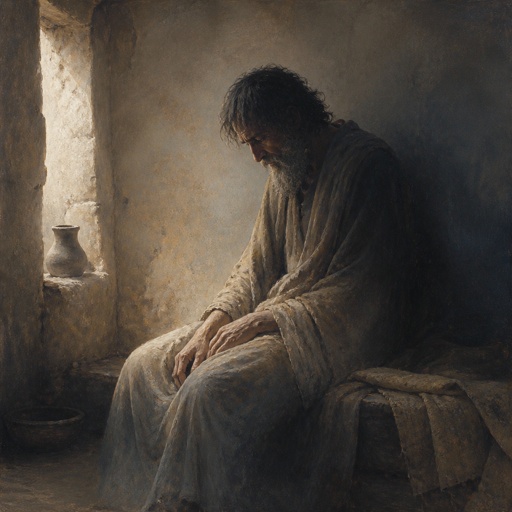
"Mine eye also is dim by reason of sorrow, and all my members are as a shadow." - Job 17:7

Job 42:17 - "So Job died, being old and full of days."

Job 34:7 - "What man is like Job, who drinketh up scorning like water?"

"So Job died, being old and full of days." - Job 42:17

Job 3:17 - "There the wicked cease from troubling; and there the weary be at rest."

Job 1:7

Job 1:7

Job 1:7

Job 17:12 - "They change the night into day: the light is short because of darkness."

Job 41:17 - "They are joined one to another, they stick together, that they cannot be sundered."

Job 17:2 - "Are there not mockers with me? and doth not mine eye continue in their provocation?"

Job 8:17 - "His roots are wrapped about the heap, and seeth the place of stones."

Job 12:17 - "He leadeth counsellors away spoiled, and maketh the judges fools."

Job 20:17 - "He shall not see the rivers, the floods, the brooks of honey and butter."

Job 7:7 - "O remember that my life is wind: mine eye shall no more see good."

Job 16:17 - "Not for any injustice in mine hands: also my prayer is pure."

Job 13:17 - "Hear diligently my speech, and my declaration with your ears."

Job 38:4-7

Job 17:15 - "And where is now my hope? as for my hope, who shall see it?"

Job 9:17 - "For he breaketh me with a tempest, and multiplieth my wounds without cause."

Job 17:1 - "My breath is corrupt, my days are extinct, the graves are ready for me."

Job 29:17 - "And I brake the jaws of the wicked, and plucked the spoil out of his teeth."

Job 28:17 - "The gold and the crystal cannot equal it: and the exchange of it shall not be for jewels of fine gold."

Job 6:17 - "What time they wax warm, they vanish: when it is hot, they are consumed out of their place."

Job 31:17 - "Or have eaten my morsel myself alone, and the fatherless hath not eaten thereof;"

Job 17:6 - "He hath made me also a byword of the people; and aforetime I was as a tabret."

Job 30:17 - "My bones are pierced in me in the night season: and my sinews take no rest."