The Cost of Divine Sonship: Understanding John 19:7
“The Jews answered him, We have a law, and by our law he ought to die, because he made himself the Son of God.” — John 19:7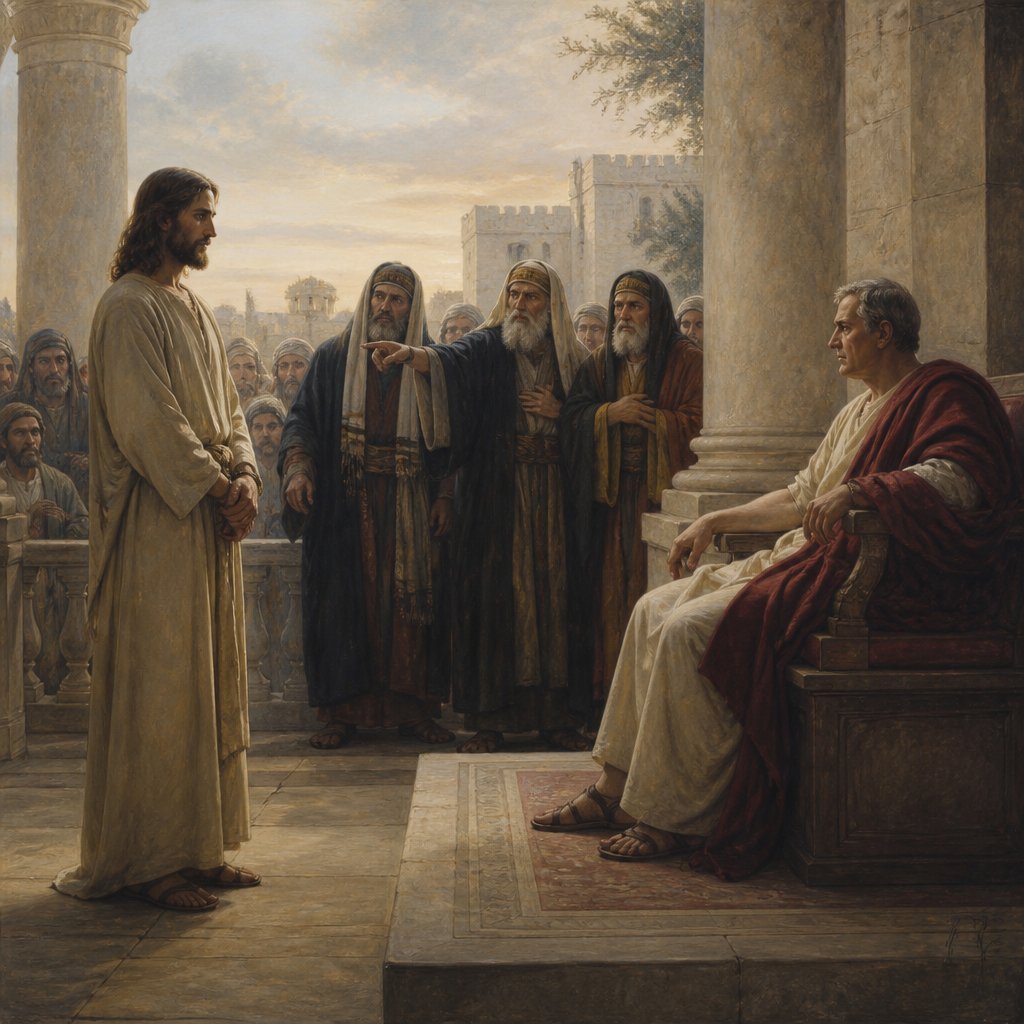
As we delve into John 19:7 in the King James Version (KJV), we find ourselves in the midst of one of the most crucial moments in the history of humanity. The verse states, "The Jews answered him, We have a law, and by our law he ought to die, because he made himself the Son of God." This declaration by the Jewish leaders not only exposes their deep understanding of the law but also their unwillingness to bend even in the face of divine truth.
The context of this statement cannot be overlooked. It comes at the trial of Jesus before Pilate, where the fate of the Son of God hangs delicately in the balance. The Jews are fervently asserting their legal rights, claiming their law as the basis for condemning Jesus. To comprehend this reaction, we must understand their perspective. To them, Jesus's claim of divinity was both blasphemous and dangerous, a direct challenge to their established religious order. They were not merely reacting to a theological assertion; they were responding to what they perceived as a threat to their entire way of life.
But as we consider the gravity of their words, we must also reflect on what it means to be the Son of God. Jesus's identification with this title was radical. Though he performed miracles, taught love, and healed the sick, he also claimed the divine nature that belonged to God alone. For many, including the religious leaders, this was unforgivable. It is crucial to understand that Jesus did not simply declare himself the Son of God; he lived a life that manifested that status, showing the world what it means to be both fully divine and fully human. His life, filled with grace and truth, challenged the very laws the Jews held dear—revealing that the essence of the law was love and relationship rather than mere following of rules.
When the Jews declare, "he ought to die," they are not just pronouncing judgment. They are showing how distant they have become from the very spirit of the law they professed to uphold. In their pursuit of justice, they were prepared to execute pure innocence. We see a tragic irony here: in their quest for righteousness as outlined by the law, they overlook the fulfillment of that law standing before them. This reflects a profound truth in our own lives—how often do we cling to the structures and guidelines of our faith while missing the heart of it?
Jesus’s claim as the Son of God was his ultimate testament to divine love. In John 3:16, we read that God sent his only Son because of love—this love was intended to transcend the boundaries of law and conventional understanding. When the Jews sought to kill Jesus, they were rejecting the very embodiment of that love. They were projecting their fears onto the divine and choosing the constraints of the law over embracing radical grace.
As we ponder this verse, we ought to ask ourselves: how do we respond to Jesus's claims? Are there areas in our lives where we, like the Jewish leaders, hold on rigidly to our understanding of faith, missing the call to deeper relationships and love? Do we sometimes prefer the 'law' over the 'life' that Christ offers?
Moreover, the implications of this verse extend beyond the legalistic attitudes of the Jewish leaders. It calls us to recognize the cost of Jesus’s mission. His claim to be the Son of God did not come without consequence; it led him to the cross. Therefore, when we declare ourselves followers of Christ, we must understand that this declaration comes with a call to serve, love, and sometimes, to suffer.
In the shadow of the cross, we find what it truly means to be children of God, called to reflect the love of our heavenly Father. Let us move beyond the constraints of our understanding and embrace the fullness of life in Christ, who offered everything, even unto death, so that we may live fully as sons and daughters of God. May our hearts be open to the transforming power of that truth, guiding us towards real love, humility, and a deeper relationship with Him.
Get our apps


Artwork for John 19:7
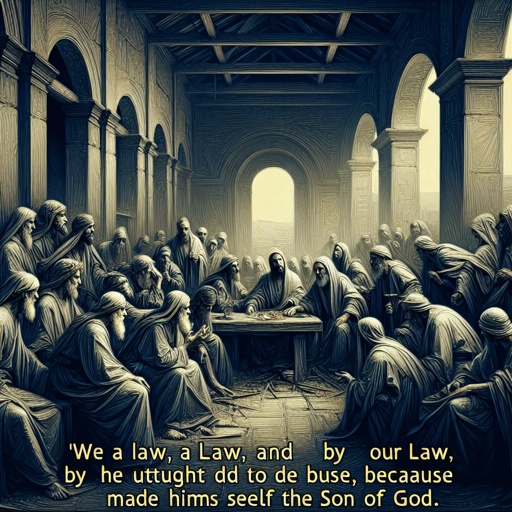
John 19:7 - "The Jews answered him, We have a law, and by our law he ought to die, because he made himself the Son of God."

"The Jews answered him, We have a law, and by our law he ought to die, because he made himself the Son of God." - John 19:7
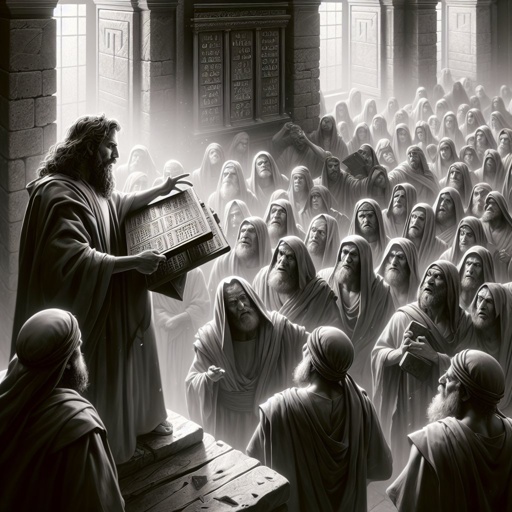
John 7:19 - "Did not Moses give you the law, and yet none of you keepeth the law? Why go ye about to kill me?"

Luke 7:19 - "¶ And John calling unto him two of his disciples sent them to Jesus, saying, Art thou he that should come? or look we for another?"

John 19:38

John 19:1

John 19:19 - "¶ And Pilate wrote a title, and put it on the cross. And the writing was, JESUS OF NAZARETH THE KING OF THE JEWS."

John 17.6-19

John 19:1-3

John 19:25-27
John 7:38

John 15:7

John 7:38

John 1:19 - "¶ And this is the record of John, when the Jews sent priests and Levites from Jerusalem to ask him, Who art thou?"

John 19:25-27

John 19:26-27

John 21:15-19

John 15:7

John 7:38

John 7:38

John 7:17-18

John 7:37-39

John 7:17-18

John 7:37-39
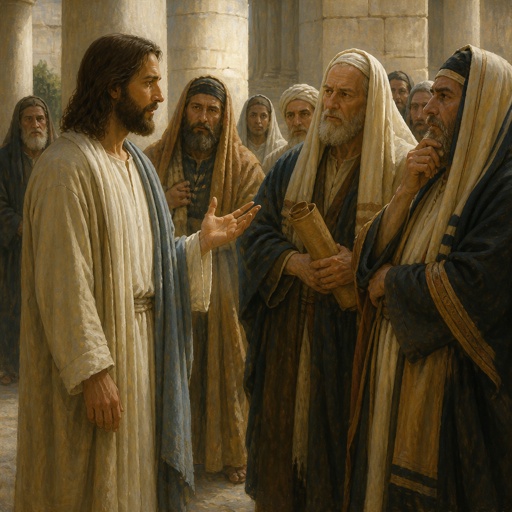
"Did not Moses give you the law, and yet none of you keepeth the law? Why go ye about to kill me?" - John 7:19

John 10:19 - "¶ There was a division therefore again among the Jews for these sayings."

John 7:17-18

John 7:17-18

John 7:38

John 19:1 - "Then Pilate therefore took Jesus, and scourged him."