What does John 19:7 mean?
“The Jews answered him, We have a law, and by our law he ought to die, because he made himself the Son of God.” — John 19:7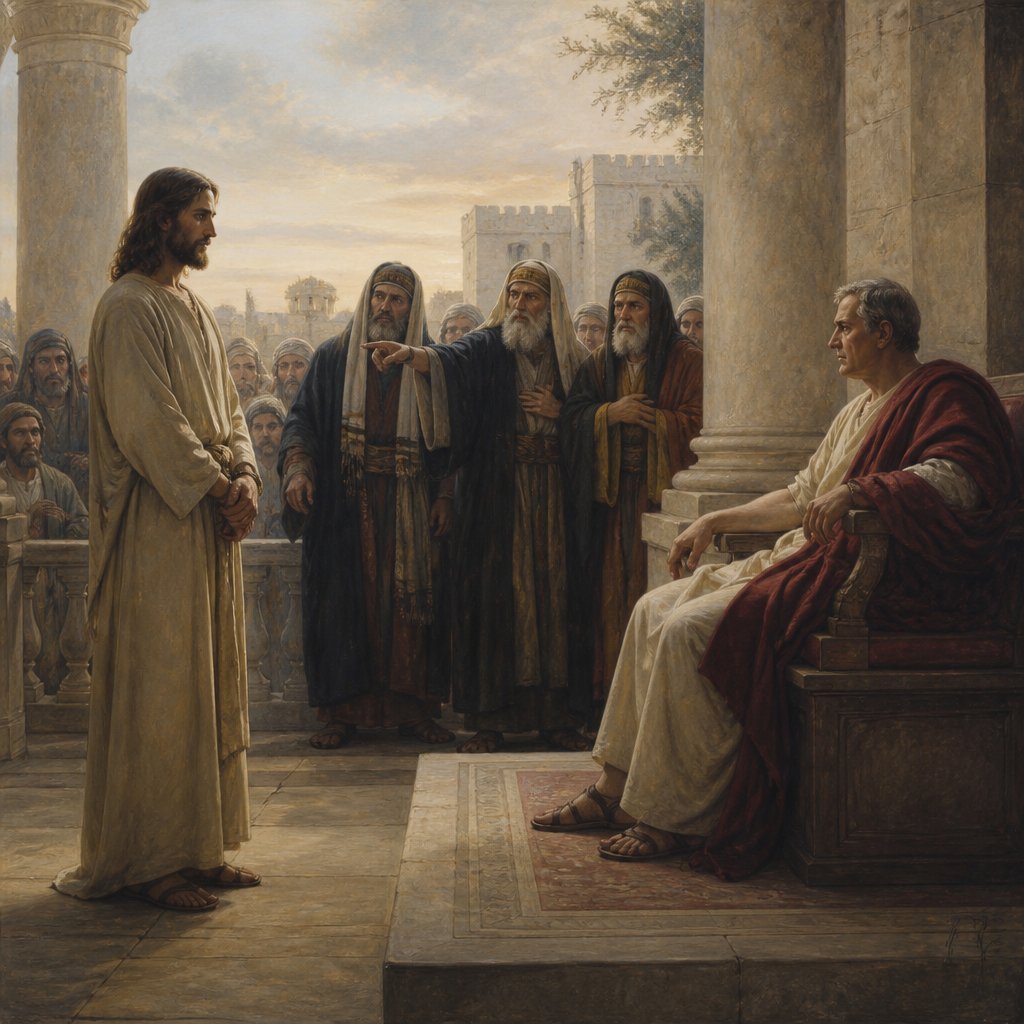
John 19:7 in the King James Version of the Bible states, "The Jews answered him, We have a law, and by our law he ought to die, because he made himself the Son of God."
This verse is from the account of Jesus' trial before Pilate, the Roman governor of Judea. The Jews had brought Jesus to Pilate, accusing him of claiming to be the King of the Jews, which they saw as a direct challenge to the authority of Rome. In response, Pilate questioned Jesus, asking if he was the King of the Jews. Jesus' response led Pilate to find no fault in him and to manifest his desire to release him. However, the Jews vehemently opposed this, saying that according to their law, Jesus should die because he made himself the Son of God.
The themes in this verse are profound and multifaceted. One of the central themes is the conflict between the religious and political authorities of the time. The Jews, representing the religious establishment, were threatened by Jesus' claim of being the Son of God, as it challenged their understanding of the Messiah and his role. On the other hand, Pilate, as the representative of the Roman government, was concerned with maintaining order and preventing any potential uprising or rebellion, which the Jews' accusations against Jesus could imply.
This verse also highlights the religious implications and significance of Jesus' claim to be the Son of God. In the Jewish context, the title "Son of God" held immense theological weight, signifying a unique relationship with God and even divinity. By claiming to be the Son of God, Jesus was asserting his divine nature and authority, something that greatly troubled the religious leaders of the time.
Additionally, the verse underscores the collision of divine and human authority. The Jews appealed to their own law, which they believed justified the death penalty for Jesus, while Pilate, as a Roman governor, was more concerned with Roman law and maintaining order. This intersection of divine and human authority, and the tension between them, serves as a powerful backdrop to the events leading to Jesus' crucifixion.
Symbolism in this verse is also abundant. Jesus' claim to be the Son of God not only holds theological significance but also symbolizes his identity and purpose. Throughout the gospel of John, the concept of Jesus' divinity is a central theme, and his proclamation as the Son of God is a pivotal moment in his ministry. This title points to his unique relationship with God the Father and his role as the Savior of the world.
The rejection of Jesus as the Son of God by the religious leaders is symbolic of the spiritual blindness and hardness of heart that characterized many who encountered Jesus during his earthly ministry. Despite the miracles, teachings, and fulfillment of prophecy, many still refused to accept him as the long-awaited Messiah and Son of God.
The clash between the religious and political authorities also holds symbolic significance. It reflects the broader tension between God's kingdom and the kingdoms of this world. Jesus' kingdom is not of this world, as he himself states in John 18:36, yet its arrival and expansion bring about a collision with the powers and authorities of the earth.
In conclusion, John 19:7 is a pivotal verse in the narrative of Jesus' trial and crucifixion. It captures the depth of theological, political, and spiritual themes that permeate the gospel accounts. It serves as a reminder of the timeless struggle between divine and human authority, and the implications of Jesus' claim to be the Son of God, both for the people of his time and for all who encounter him today.
Get our apps


Artwork for John 19:7
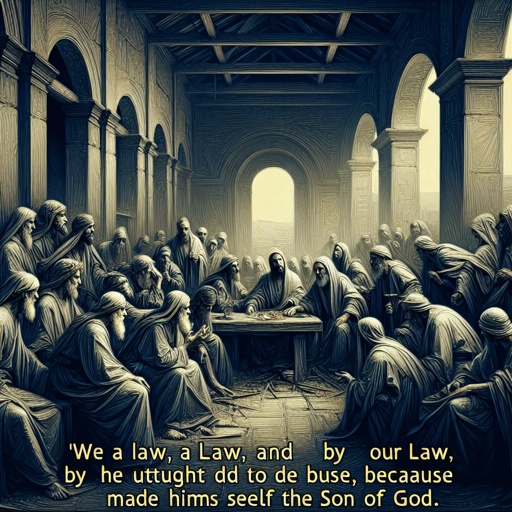
John 19:7 - "The Jews answered him, We have a law, and by our law he ought to die, because he made himself the Son of God."

"The Jews answered him, We have a law, and by our law he ought to die, because he made himself the Son of God." - John 19:7
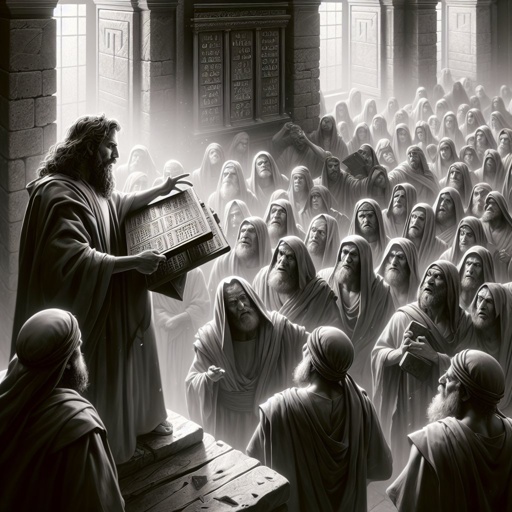
John 7:19 - "Did not Moses give you the law, and yet none of you keepeth the law? Why go ye about to kill me?"

Luke 7:19 - "¶ And John calling unto him two of his disciples sent them to Jesus, saying, Art thou he that should come? or look we for another?"

John 19:38

John 19:1

John 19:19 - "¶ And Pilate wrote a title, and put it on the cross. And the writing was, JESUS OF NAZARETH THE KING OF THE JEWS."

John 17.6-19

John 19:1-3

John 19:25-27
John 7:38

John 15:7

John 7:38

John 1:19 - "¶ And this is the record of John, when the Jews sent priests and Levites from Jerusalem to ask him, Who art thou?"

John 19:25-27

John 19:26-27

John 21:15-19

John 15:7

John 7:38

John 7:38

John 7:17-18

John 7:37-39

John 7:17-18

John 7:37-39
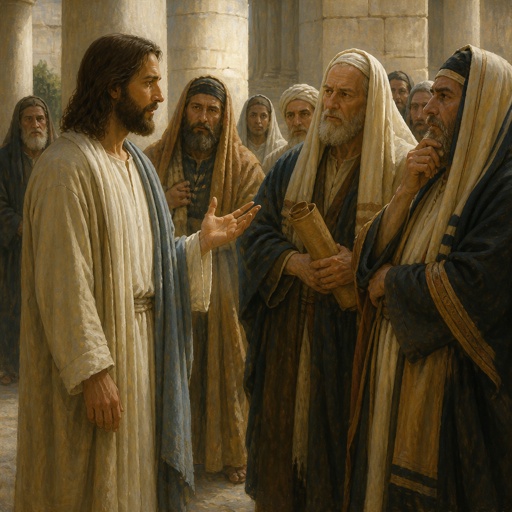
"Did not Moses give you the law, and yet none of you keepeth the law? Why go ye about to kill me?" - John 7:19

John 10:19 - "¶ There was a division therefore again among the Jews for these sayings."

John 7:17-18

John 7:17-18

John 7:38

John 19:1 - "Then Pilate therefore took Jesus, and scourged him."