The Divine Timing of God: Understanding Jesus' Response to Mary
“Jesus saith unto her, Woman, what have I to do with thee? mine hour is not yet come.” — John 2:4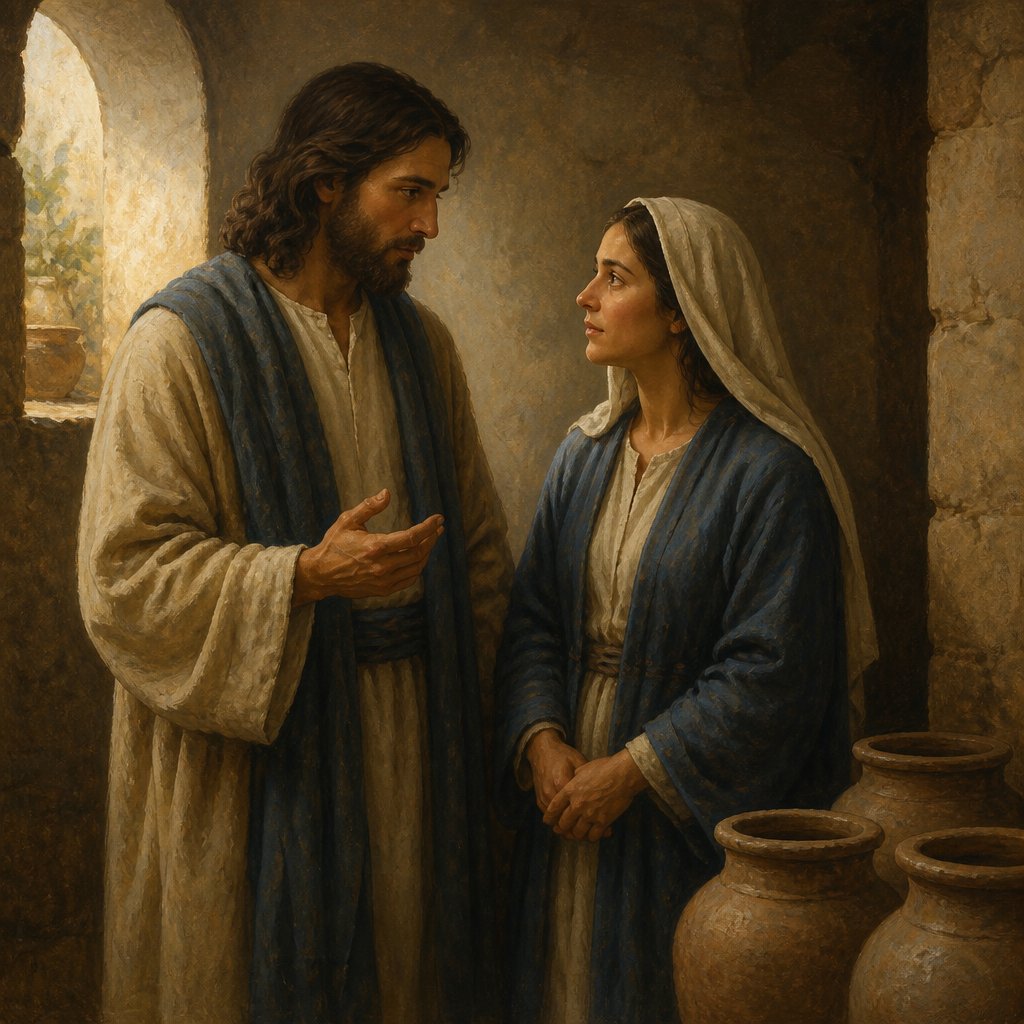
In the Gospel of John, we encounter a significant and profound moment in chapter 2, verse 4, where Jesus responds to His mother, Mary, with the words: "Jesus saith unto her, Woman, what have I to do with thee? mine hour is not yet come" (KJV). At first glance, this response might seem harsh or dismissive; however, a deeper examination reveals a rich tapestry of divine timing, purpose, and the unfolding of God’s plan through Christ.
Mary, having observed the need at the wedding at Cana, approached her son to inform Him that they had run out of wine. In the cultural context of the time, this was a moment of potential disgrace for the hosts of the wedding. Mary's concern reflected both maternal instinct and an understanding of Jesus' unique abilities. Yet, Jesus’ response indicates a boundary—an expression of His mission and timing that transcends immediate human concerns.
When Jesus addresses her as "Woman," it may initially strike us as less personal than "Mother," but this title signifies a deeper, more symbolic relationship. It highlights that while Jesus honors her as His mother, He also distinguishes His divine mission from familial expectations. The term "Woman" is not derogatory; it is an indication of His higher calling and authority. In essence, Jesus is reminding Mary—and us—that His mission extends beyond earthly relationships and temporal matters.
The phrase "what have I to do with thee?" suggests a detachment from worldly concerns, underscoring the urgency of the divine agenda. Jesus came to fulfill a specific purpose, rooted in God’s timeline, not in human urgency. His statement, "mine hour is not yet come," poignantly indicates that there is a sovereign timeline at play.
How often do we, too, find ourselves in a position of wanting to rush God’s plan? We may be caught in situations that demand immediate action—sickness, financial troubles, or interpersonal conflicts—and we petition the Lord with fervent prayers, asking Him to intervene according to our timeline. Yet, we must be reminded that God operates on a scale larger than our immediate concerns. His wisdom knows exactly when the right moment is, and He acts out of perfect timing, not human urgency.
In this moment, Mary chooses to trust her son despite His initial reluctance. She turns to the servants and simply instructs them, "Whatsoever he saith unto you, do it" (John 2:5). Mary’s actions reflect faith—a belief in the capabilities of Jesus, who she knows can address the situation adequately, even if the timing is not as she expected.
As we reflect upon Jesus' response, we can draw comfort and encouragement from the reality that though God may seem silent or distant amid our struggles, He is meticulously at work in our lives. The phrase "mine hour is not yet come" serves as reassurance that God’s timing is perfect. He knows the right moment to act, and when He does, it brings glory to His name, as demonstrated by the miraculous transformation of water into wine—His first miracle that revealed His glory and strengthened the faith of His disciples.
Therefore, as we navigate life’s challenges, let us practice patience, surrendering our timelines to the One who orchestrates all things. Let us remain steadfast in faith, trusting that every season of waiting has purpose, and every delay is not a denial but a preparation for something greater. In every situation, we can confidently acknowledge, like Mary, that God is capable of addressing our needs in ways we cannot fathom. May we learn to listen to His voice, heed His directions, and wait for His perfect timing, just as Mary did, fully trusting that God is always working for our good and His glory.
Get our apps


Artwork for John 2:4

1 John 2:4 - "He that saith, I know him, and keepeth not his commandments, is a liar, and the truth is not in him."

John 2:4 - "Jesus saith unto her, Woman, what have I to do with thee? mine hour is not yet come."

"He that saith, I know him, and keepeth not his commandments, is a liar, and the truth is not in him." - 1 John 2:4
"Jesus saith unto her, Woman, what have I to do with thee? mine hour is not yet come." - John 2:4

John 4:2 - "(Though Jesus himself baptized not, but his disciples,)"

1 John 4:2 - "Hereby know ye the Spirit of God: Every spirit that confesseth that Jesus Christ is come in the flesh is of God:"

"(Though Jesus himself baptized not, but his disciples,)" - John 4:2

2 John 1:4 - "I rejoiced greatly that I found of thy children walking in truth, as we have received a commandment from the Father."

Matthew 10:2-4…Matthew 10:2-4 New International Version 2 These are the names of the twelve apostles: first, Simon (who is called Peter) and his brother Andrew; James son of Zebedee, and his brother John; 3 Philip and Bartholomew; Thomas and Matthew the tax collector; James son of Alphaeus, and Thaddaeus; 4 Simon the Zealot and Judas Iscariot, who betrayed him.

Matthew 10:2-4…Matthew 10:2-4 New International Version 2 These are the names of the twelve apostles: first, Simon (who is called Peter) and his brother Andrew; James son of Zebedee, and his brother John; 3 Philip and Bartholomew; Thomas and Matthew the tax collector; James son of Alphaeus, and Thaddaeus; 4 Simon the Zealot and Judas Iscariot, who betrayed him.

John 4:4 - "And he must needs go through Samaria."

John 4:16

John 3:4

John 4:16

John 4:16

John 4:16

John 4:16

John 4:16

John 4:16

John 4:16

John 3:4

John 4:16

John 4:16

John 4:16

John 3:4

John 4:16

John 4:16

John 4:16

John 3:4

John 4:16