Feeding the Lambs: A Call to Unconditional Love and Service
“So when they had dined, Jesus saith to Simon Peter, Simon, son of Jonas, lovest thou me more than these? He saith unto him, Yea, Lord; thou knowest that I love thee. He saith unto him, Feed my lambs.” — John 21:15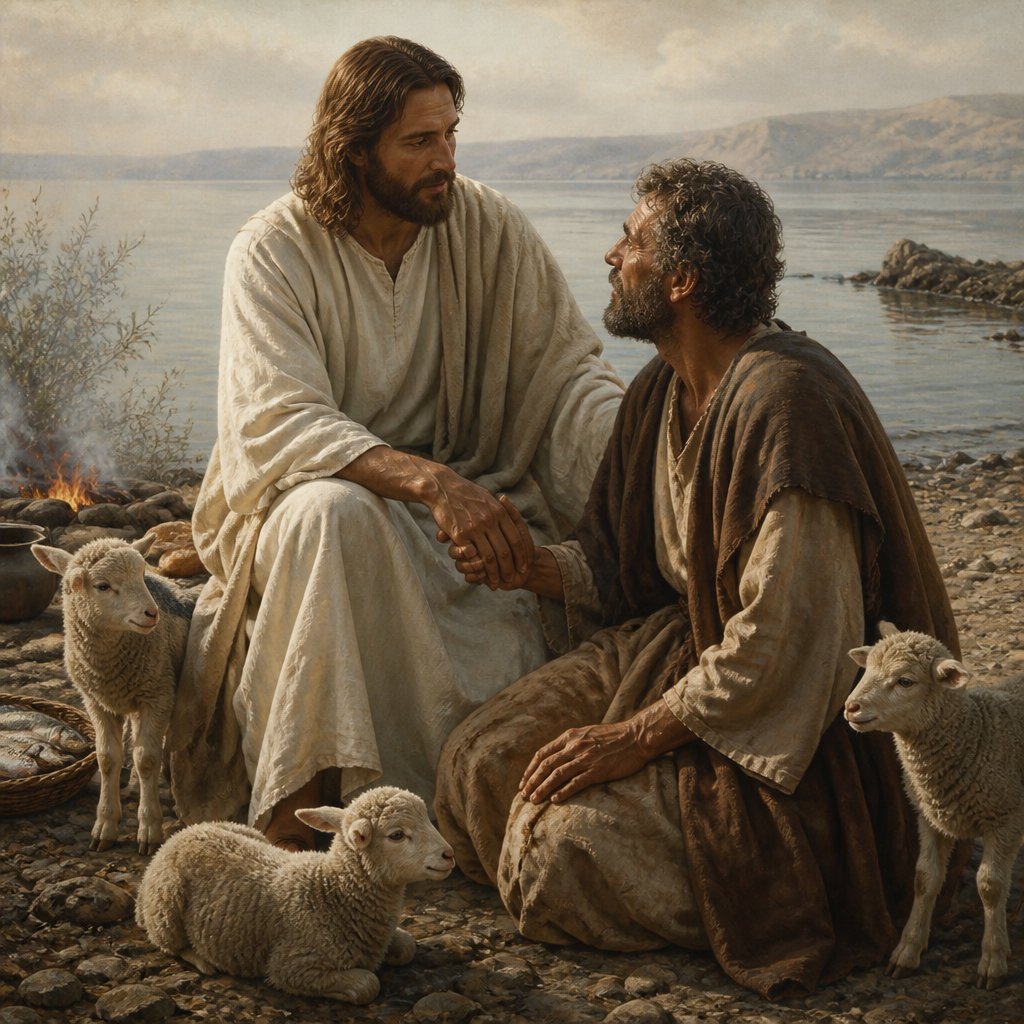
In John 21:15, we encounter a poignant moment between Jesus and Simon Peter, which serves as a pivotal point in Peter’s journey from denial to restoration. The King James Version captures this beautifully: “So when they had dined, Jesus saith to Simon Peter, Simon, son of Jonas, lovest thou me more than these? He saith unto him, Yea, Lord; thou knowest that I love thee. He saith unto him, Feed my lambs.” Here, we find not just an affirmation of love but a profound calling to service that resonates deeply within the Christian faith.
As we reflect on this exchange, it is crucial to consider the context. After a night of fishing without success, Peter and the other disciples encounter the risen Christ, who provides a miraculous catch of fish. They share a meal, basking in the warmth of Jesus' presence, yet beneath the surface lies Peter’s unresolved guilt from his three denials of Christ. Jesus, in His infinite mercy, does not chide Peter for his past but instead offers him a chance at redemption.
When Jesus asks Peter, “Lovest thou me more than these?”, He delves into the heart of Peter’s devotion. The phrasing suggests a comparison—not just of affection for Jesus opposed to his fellow disciples or activities, but to everything in his life. It compels us to question: what do we love more than Jesus? Our ambitions? Our comforts? Our relationships? Jesus’ inquiry challenges us to assess the priorities of our hearts and re-evaluate our devotion to Him.
Peter's response, “Yea, Lord; thou knowest that I love thee,” is a testament to his sincerity, albeit tinged with humility. Although he had faltered, his love for Christ remained intact—a love that was real and earnest. This exchange reveals a pivotal truth: love is not merely an emotion; it carries responsibility. Jesus does not leave Peter empty-handed but immediately commissions him, saying, “Feed my lambs.” Here, we see the intertwining of love and service. True love for Christ is expressed through action, particularly in caring for others—His lambs, the vulnerable and young in faith.
This same call extends to us today. If we profess our love for Christ, what are we doing to feed His lambs? Feeding the lambs speaks to nurturing, teaching, mentoring, and caring for those entrusted to us. It involves both the physical act of sustenance but, more importantly, spiritual nourishment. As believers, we are called to multiply our love for Christ by reflecting that love onto others. We are invited into a ministry of grace that ministers not only to the strong but also to the weak, the lost, and the searching.
Furthermore, this moment serves as a reminder of Christ’s grace. Despite Peter's failures, he is not cast aside but called back into a position of leadership and responsibility. This speaks volumes about the nature of God’s love; it is not conditional upon our perfection, but rather it embraces our imperfections and offers a second chance. As we face our own failures and shortcomings, let us take heart. The risen Christ is also asking each of us, “Do you love me?” Even after our stumbles, He invites us to engage in His mission.
Jesus’ question, followed by the command to feed His lambs, ultimately emphasizes that love is actionable. It asserts that every believer, no matter their past, has a role in the body of Christ. In a world filled with strife, apathy, and disconnection, we have the extraordinary opportunity to embody Christ’s love, cultivating communities where His flock can grow, learn, and thrive.
As we consider this intimate conversation between Jesus and Peter, may we respond to Christ’s call with renewed passion. Let our love for Jesus inspire us to care for others compassionately, to mentor those who are new in faith, and to feed His lambs both spiritually and physically. In doing so, we not only affirm our love for Christ but fulfill His command—transforming that love into meaningful action.
Get our apps


Artwork for John 21:15

John 21:15-19

John 21:15 - "¶ So when they had dined, Jesus saith to Simon Peter, Simon, son of Jonas, lovest thou me more than these? He saith unto him, Yea, Lord; thou knowest that I love thee. He saith unto him, Feed my lambs."
"¶ So when they had dined, Jesus saith to Simon Peter, Simon, son of Jonas, lovest thou me more than these? He saith unto him, Yea, Lord; thou knowest that I love thee. He saith unto him, Feed my lambs." - John 21:15

John 14:15-21

John 15:21 - "But all these things will they do unto you for my name's sake, because they know not him that sent me."
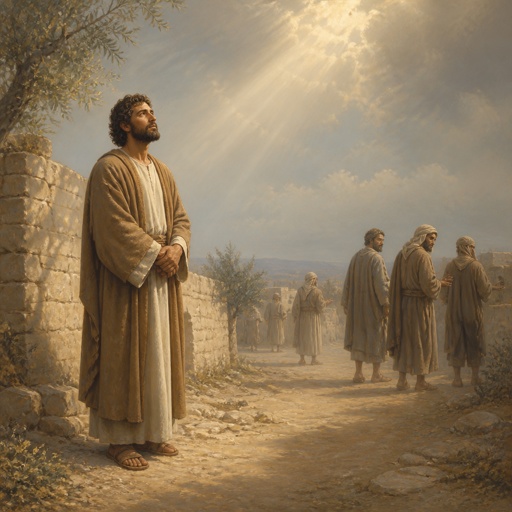
"But all these things will they do unto you for my name's sake, because they know not him that sent me." - John 15:21

John 20:21

john 21:9

John 21:6

John 15:7

John 21:21 - "Peter seeing him saith to Jesus, Lord, and what shall this man do?"

John 15:7

John 21:6

John 21:17

John 21:25

John 21:6

John 21:6

John 15:5

John 15:5

John 15 The Vine

John 2:21 - "But he spake of the temple of his body."

Luke 15:21

Luke 15:21

Genesis 15:21

Exodus 15:21

Genesis 21-15

John 15:26 NLT

John 15:1-8

John 15:9-10

John 15:9-10