The Invitation to Authenticity: Jesus’ Call to Wholeness
“Jesus saith unto her, Go, call thy husband, and come hither.” — John 4:16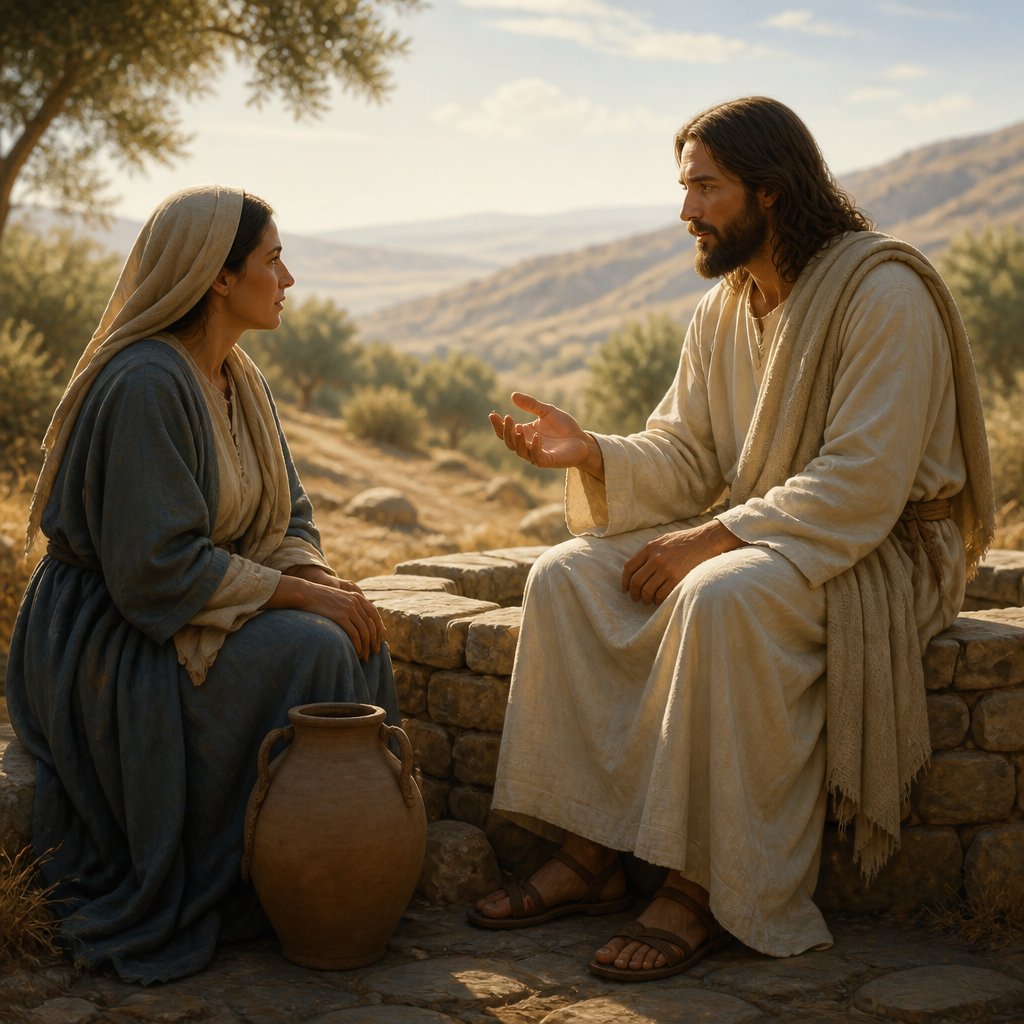
In the Gospel of John, we encounter a pivotal moment in the life of a Samaritan woman at the well—a moment that profoundly illustrates the heart of Jesus as He engages with those who society often overlooks. The verse, John 4:16, states, "Jesus saith unto her, Go, call thy husband, and come hither." In these simple yet profound words, we find an invitation to authenticity, healing, and the recognition of our true selves.
The context of this verse is crucial. Jesus, weary from His journey, encounters the Samaritan woman who comes to draw water at noon, a time when most women would not be present, likely due to shame or social ostracism. As Jesus converses with her, asking for a drink, what begins as a straightforward request quickly escalates into a transformative dialogue about spiritual thirst compared to physical thirst. Jesus reveals to her that He is the source of living water, but first, He gently confronts the woman’s reality by asking her to call her husband.
This request raises an important point about accountability and recognition of one’s circumstances. Jesus, omniscient and fully aware of her life, doesn’t ask out of ignorance but rather as an invitation to face the truth of her life. The woman has had five husbands and is currently with someone who is not her husband. Herein lies a complex narrative of brokenness, mistakes, and unmet longings—not just for love and companionship but also for acceptance and grace. In asking her to call her husband, Jesus compels her toward a moment of self-realization. He is not just interested in surface conversations; He desires a heart that is open and honest.
There is deep significance in this moment. Many of us walk through life hiding parts of ourselves, perhaps due to shame or fear of judgment. We might carry our own burdens of past decisions or failures that we wish to keep concealed. Yet, Jesus invites this woman—and us too—to bring our whole selves into the light, to confront the truths we may wish to hide. It is only in acknowledging our realities that we can begin the journey toward healing and wholeness.
Additionally, Jesus' instruction highlights an invitation into a deeper relationship. By asking her to call her husband, He is calling her to literally bring her life’s complexity into His presence. This act of bringing one’s issues before the Lord can be daunting, but it’s also liberating. It is a testament to God’s desire for us to commune with Him authentically, to lay our burdens down, and to invite Him into the painful and broken parts of our lives so He can bring restoration.
The response of the Samaritan woman is worthy of reflection. Initially, she deflects with a half-truth; she does not explicitly confess her past but acknowledges her situation. This serves as an example of our human tendency to resist full vulnerability. Yet, it is in her encounter with Jesus—a stranger who knows her story—that she begins the process of transformation. This is the grace of God at work.
Jesus does not condemn her; instead, He engages her in a dialogue that opens her eyes to see beyond her immediate circumstances. He reveals profound truths about worship and spirituality, challenging her to embrace her identity not just as a broken woman but as one who can be transformed through an encounter with God.
As we meditate on this passage, we may be prompted to consider our own lives. What parts do we seek to hide from God? What truths is He calling us to confront? Our relationship with Him thrives in truth and honesty. When we come to Him, He meets us not with condemnation, but with the love of a Savior eager to lead us into wholeness.
In concluding this reflection, let us take to heart the cyclical nature of authenticity. As we are honest before God, He reveals Himself more fully to us. As the woman at the well was empowered by her encounter with Christ, may we also find the courage to call out our truths and come nearer to Him, trusting that His grace is sufficient to meet our every need.
So let us respond to Jesus’ invitation: “Go, call thy husband, and come hither.” Whether that means bringing our past mistakes, current struggles, or even our lack of understanding to Him, we must remember that in opening ourselves up to the Lord, we allow Him to transform us from within.
Get our apps


Artwork for John 4:16

John 4:16

John 4:16

John 4:16

John 4:16

John 4:16

John 4:16

John 4:16

John 4:16

John 4:16

John 4:16

John 4:16

John 4:16

John 4:16

John 4:16

John 4:16

John 4:16

John 4:16

John 4:16 - "Jesus saith unto her, Go, call thy husband, and come hither."

1 John 4:16 - "And we have known and believed the love that God hath to us. God is love; and he that dwelleth in love dwelleth in God, and God in him."

"And we have known and believed the love that God hath to us. God is love; and he that dwelleth in love dwelleth in God, and God in him." - 1 John 4:16

"Jesus saith unto her, Go, call thy husband, and come hither." - John 4:16

1 John 4:16-18 - "And so we know and rely on the love God has for us. God is love. Whoever lives in love lives in God, and God in them. This is how love is made complete among us so that we will have confidence on the day of judgment: In this world we are like Jesus. There is no fear in love. But perfect love drives out fear, because fear has to do with punishment. The one who fears is not made perfect in love."

"And we have known and believed the love that God hath to us. God is love; and he that dwelleth in love dwelleth in God, and God in him." - 1 John 4:16

"And so we know and rely on the love God has for us. God is love. Whoever lives in love lives in God, and God in them. This is how love is made complete among us so that we will have confidence on the day of judgment: In this world we are like Jesus. There is no fear in love. But perfect love drives out fear, because fear has to do with punishment. The one who fears is not made perfect in love." - 1 John 4:16-18

John 16:4 - "But these things have I told you, that when the time shall come, ye may remember that I told you of them. And these things I said not unto you at the beginning, because I was with you."

John 16:33

John 16:33

John 16:33

John 16:33

John 16:33