What does John 4:16 mean?
“Jesus saith unto her, Go, call thy husband, and come hither.” — John 4:16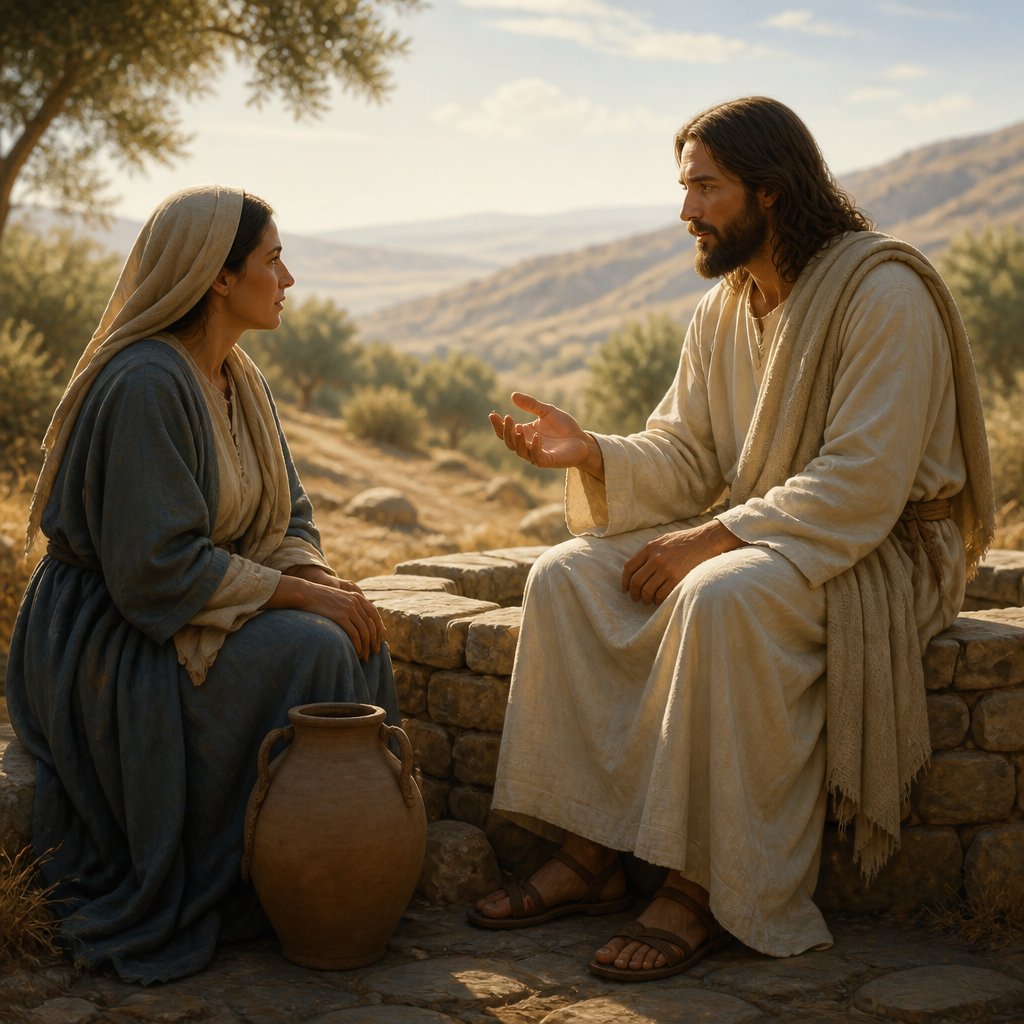
John 4:16 (KJV) states, "Jesus saith unto her, Go, call thy husband, and come hither." This verse is part of a conversation between Jesus and a Samaritan woman at a well, which is commonly referred to as "The Woman at the Well" story. The conversation takes place in Samaria, which was a region where Jews and Samaritans had a strained relationship.
In this verse, Jesus is asking the woman to go and call her husband. This request seems innocent enough, but it is actually a pivotal moment in the conversation because it leads to Jesus revealing his knowledge about the woman's personal life. The woman responds by saying that she does not have a husband, to which Jesus replies by telling her that she has had five husbands and the man she is currently with is not her husband. This revelation causes the woman to recognize Jesus as a prophet.
There are several important themes and meanings in this verse. One of the primary themes is the idea of spiritual fulfillment and the living water that Jesus offers. In the verses leading up to John 4:16, Jesus tells the woman that he can offer her "living water" that will quench her spiritual thirst forever. This living water represents the eternal satisfaction and fulfillment that comes from a relationship with God. The woman at the well represents all of humanity who are spiritually thirsty and seeking fulfillment. Jesus' request for her to go get her husband is the catalyst for him revealing his knowledge about her personal life, which leads her to recognize him as the source of living water.
Another theme in this verse is the idea of truth and revelation. Throughout the conversation, Jesus gradually reveals more and more about himself and his knowledge of the woman's life. This gradual revelation builds tension and intrigue, leading the woman to become more and more interested in who Jesus is and what he has to offer. Jesus' supernatural knowledge about her personal life serves as evidence of his divine nature and power.
The context of this verse is also important to consider. Jesus and the woman are having this conversation at a well, which is significant because water was a very important part of daily life in ancient times. The fact that Jesus offers "living water" as a symbol of eternal spiritual fulfillment would have been particularly meaningful to the woman. Additionally, the fact that Jesus is having this conversation with a Samaritan woman is important because it challenges the social and cultural norms of the time. Jews and Samaritans were not supposed to associate with each other, yet Jesus engages in a deep and meaningful conversation with this woman, breaking down social barriers and demonstrating God's love for all people.
There is also a notable symbolism in this verse. The request for the woman to go call her husband serves as a foreshadowing of Jesus' divine knowledge and the woman's eventual recognition of his true identity. This moment marks a turning point in the conversation, as it leads to the woman's realization that Jesus is more than just a man at the well, but rather a prophet, and ultimately the Messiah.
In conclusion, John 4:16 from the King James Version of the Bible is a pivotal moment in the conversation between Jesus and the Samaritan woman at the well. It is rich with themes of spiritual fulfillment, truth, and revelation, and it is set within a significant cultural and social context. The symbolism in this verse serves to highlight the woman's realization of Jesus' true identity and the transformative power of his living water. This verse is a powerful reminder of the depth of God's love and his desire to bring spiritual fulfillment to all people, regardless of their background or circumstances.
Get our apps


Artwork for John 4:16

John 4:16

John 4:16

John 4:16

John 4:16

John 4:16

John 4:16

John 4:16

John 4:16

John 4:16

John 4:16

John 4:16

John 4:16

John 4:16

John 4:16

John 4:16

John 4:16

John 4:16

John 4:16 - "Jesus saith unto her, Go, call thy husband, and come hither."

1 John 4:16 - "And we have known and believed the love that God hath to us. God is love; and he that dwelleth in love dwelleth in God, and God in him."
"And we have known and believed the love that God hath to us. God is love; and he that dwelleth in love dwelleth in God, and God in him." - 1 John 4:16
"Jesus saith unto her, Go, call thy husband, and come hither." - John 4:16

1 John 4:16-18 - "And so we know and rely on the love God has for us. God is love. Whoever lives in love lives in God, and God in them. This is how love is made complete among us so that we will have confidence on the day of judgment: In this world we are like Jesus. There is no fear in love. But perfect love drives out fear, because fear has to do with punishment. The one who fears is not made perfect in love."
"And we have known and believed the love that God hath to us. God is love; and he that dwelleth in love dwelleth in God, and God in him." - 1 John 4:16
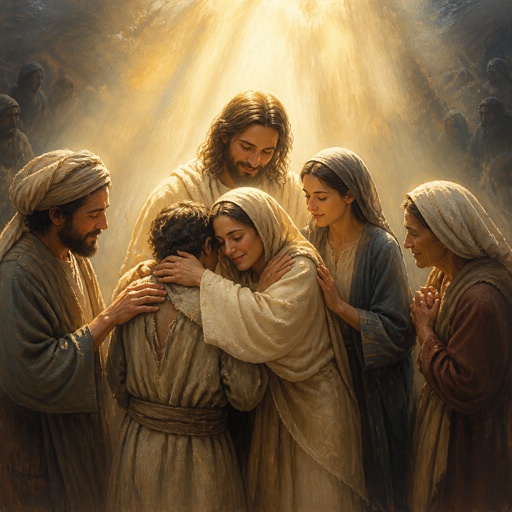
"And so we know and rely on the love God has for us. God is love. Whoever lives in love lives in God, and God in them. This is how love is made complete among us so that we will have confidence on the day of judgment: In this world we are like Jesus. There is no fear in love. But perfect love drives out fear, because fear has to do with punishment. The one who fears is not made perfect in love." - 1 John 4:16-18

John 16:4 - "But these things have I told you, that when the time shall come, ye may remember that I told you of them. And these things I said not unto you at the beginning, because I was with you."

John 16:33

John 16:33

John 16:33

John 16:33

John 16:33