The Legacy of Leadership and Family: Reflections from Judges 12:9
“And he had thirty sons, and thirty daughters, whom he sent abroad, and took in thirty daughters from abroad for his sons. And he judged Israel seven years.” — Judges 12:9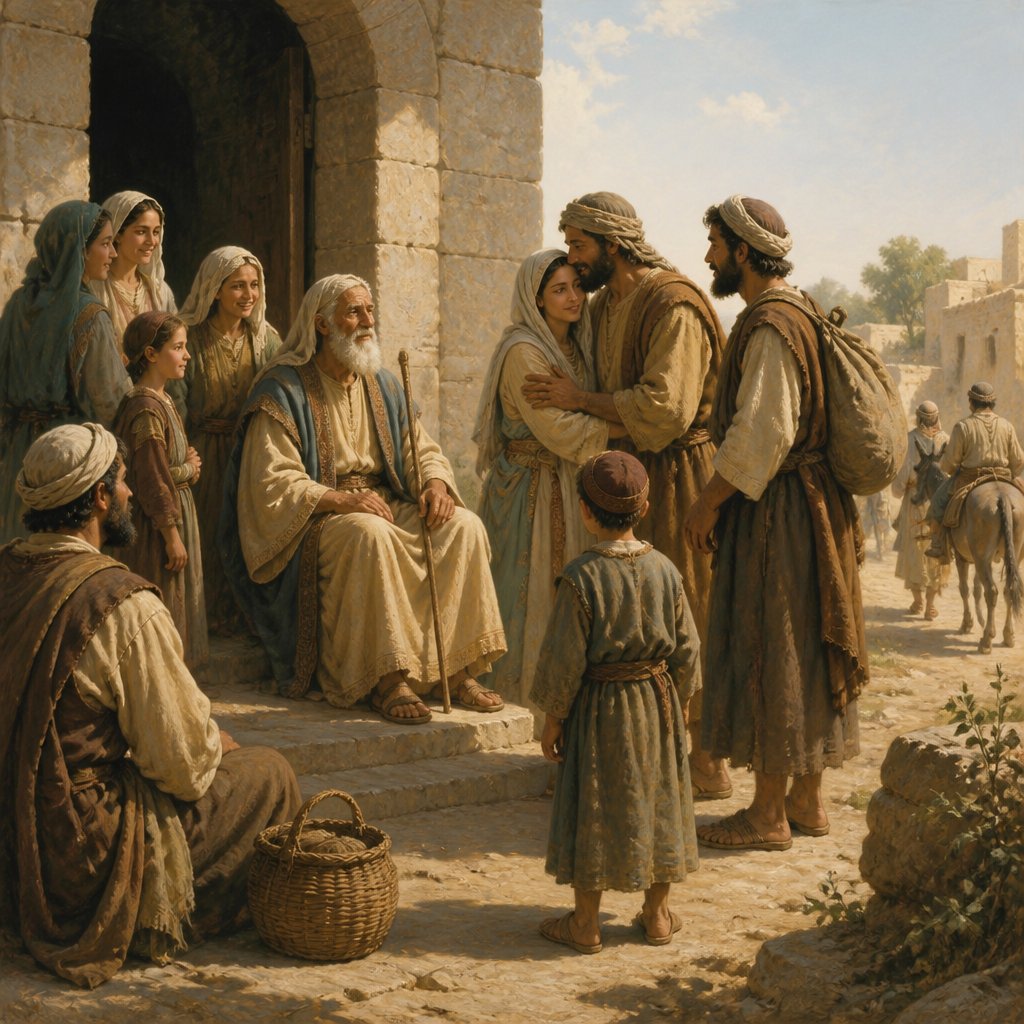
The narrative of Judges 12:9 serves as a poignant reflection on the multifaceted life of leadership, family, and the responsibilities that come with both. The verse states: "And he had thirty sons, and thirty daughters, whom he sent abroad, and took in thirty daughters from abroad for his sons. And he judged Israel seven years." In these simple yet profound words, we encounter a man whose life was deeply intertwined with both the governance of his people and the nurturing of his family.
As we delve into the context of this verse, we discover the character of Jephthah, who ruled as a judge of Israel. Jephthah's leadership followed a tumultuous period marked by warfare, oppression, and a cry for deliverance from his people. He was a man shaped by his past, having endured rejection and hardship, yet chosen by God for a monumental purpose. Judging Israel for seven years offers a clue to his legacy—the time signifies stability and governance that was undoubtedly marked with challenges yet also with achievements.
Yet, the emphasis of our reflection today lies not solely on his judicial responsibilities but also on the familial portrait painted within the verse. Jephthah had thirty sons and thirty daughters—the numbers alone reveal the opportunities and challenges of raising a large family. In ancient Israel, family was not just a personal affair; it was a societal structure that determined one's standing, responsibilities, and alliances. The act of sending his sons abroad and bringing in daughters to marry reflects not only the desire for social connections but also the ancient practice of ensuring family continuity and strength through well-structured alliances.
In a world where legacy is often defined in financial terms or professional accomplishments, Jephthah’s approach prompts us to reconsider what a true legacy entails. As stewards of our own families and communities, how often do we view our roles through the lens of intentionality and foresight? Jephthah understood that the future of Israel would hinge not merely on military might but on the strength of familial bonds and community ties that extended beyond his immediate circle.
As we ponder this passage, it invites us to reflect on our own families. In what ways are we investing in the next generation? Are we establishing relationships that honor God and strengthen our community? If we consider that our families are also our first discipleship areas, how can we ensure they are grounded in faith and purpose?
Beyond his personal family, Jephthah’s rulership underlines the broader concept of community. The intermarriage he facilitated symbolizes a tribe-oriented mindset that champions togetherness and shared goals. It calls for us to consider our role in the broader community. Are we contributing to our communities, making connections that promote unity and harmony, thereby reflecting God’s heart? Perhaps we can ask ourselves: How can we serve and connect with others in meaningful ways, mirroring the wisdom Jephthah displayed?
In conclusion, Judges 12:9 serves as both a reminder and a challenge for us today. Jephthah’s story illustrates the imperative of building a legacy that encompasses not only our achievements but our relationships and influences. As we navigate the complexities of leadership—whether in our homes, workplaces, or communities—we must never forget that our greatest influence may often come through the connections we nurture and the values we instill in those we lead. May we endeavor to build families and communities that reflect the love of Christ, a legacy that extends far beyond our own lifetime.
Get our apps


Artwork for Judges 12:9

Judges 12:9 - "And he had thirty sons, and thirty daughters, whom he sent abroad, and took in thirty daughters from abroad for his sons. And he judged Israel seven years."
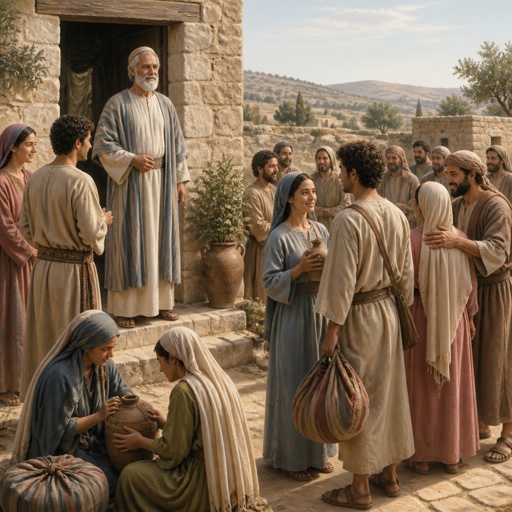
"And he had thirty sons, and thirty daughters, whom he sent abroad, and took in thirty daughters from abroad for his sons. And he judged Israel seven years." - Judges 12:9
"And he had thirty sons, and thirty daughters, whom he sent abroad, and took in thirty daughters from abroad for his sons. And he judged Israel seven years." - Judges 12:9

Judges 9:12 - "Then said the trees unto the vine, Come thou, and reign over us."

"Then said the trees unto the vine, Come thou, and reign over us." - Judges 9:12

Daniel 9:12 - "And he hath confirmed his words, which he spake against us, and against our judges that judged us, by bringing upon us a great evil: for under the whole heaven hath not been done as hath been done upon Jerusalem."

Judges 12:12 - "And Elon the Zebulonite died, and was buried in Aijalon in the country of Zebulun."

Judges 9:8-15

Judges 12:11 - "¶ And after him Elon, a Zebulonite, judged Israel; and he judged Israel ten years."

Judges 12:8 - "¶ And after him Ibzan of Beth-lehem judged Israel."

Judges 12:10 - "Then died Ibzan, and was buried at Beth-lehem."

Judges 12:13 - "¶ And after him Abdon the son of Hillel, a Pirathonite, judged Israel."

Judges 9:50 - "¶ Then went Abimelech to Thebez, and encamped against Thebez, and took it."

"And Elon the Zebulonite died, and was buried in Aijalon in the country of Zebulun." - Judges 12:12

Job 12:17 - "He leadeth counsellors away spoiled, and maketh the judges fools."

Judges 9:22 - "¶ When Abimelech had reigned three years over Israel,"

Judges 15:9 - "¶ Then the Philistines went up, and pitched in Judah, and spread themselves in Lehi."

Judges 12:7 - "And Jephthah judged Israel six years. Then died Jephthah the Gileadite, and was buried in one of the cities of Gilead."

Judges 9:39 - "And Gaal went out before the men of Shechem, and fought with Abimelech."

Judges 4:12 - "And they shewed Sisera that Barak the son of Abinoam was gone up to mount Tabor."

Judges 21:9 - "For the people were numbered, and, behold, there were none of the inhabitants of Jabesh-gilead there."

Judges 9:42 - "And it came to pass on the morrow, that the people went out into the field; and they told Abimelech."

Judges 9:10 - "And the trees said to the fig tree, Come thou, and reign over us."

Judges 9:47 - "And it was told Abimelech, that all the men of the tower of Shechem were gathered together."

Psalms 98:9 - "Before the LORD; for he cometh to judge the earth: with righteousness shall he judge the world, and the people with equity."

Judges 17:12 - "And Micah consecrated the Levite; and the young man became his priest, and was in the house of Micah."

1 Corinthians 5:12 - "For what have I to do to judge them also that are without? do not ye judge them that are within?"

Judges 9:9 - "But the olive tree said unto them, Should I leave my fatness, wherewith by me they honour God and man, and go to be promoted over the trees?"

Judges 9:32 - "Now therefore up by night, thou and the people that is with thee, and lie in wait in the field:"

Judges 9:14 - "Then said all the trees unto the bramble, Come thou, and reign over us."