What does Judges 12:9 mean?
“And he had thirty sons, and thirty daughters, whom he sent abroad, and took in thirty daughters from abroad for his sons. And he judged Israel seven years.” — Judges 12:9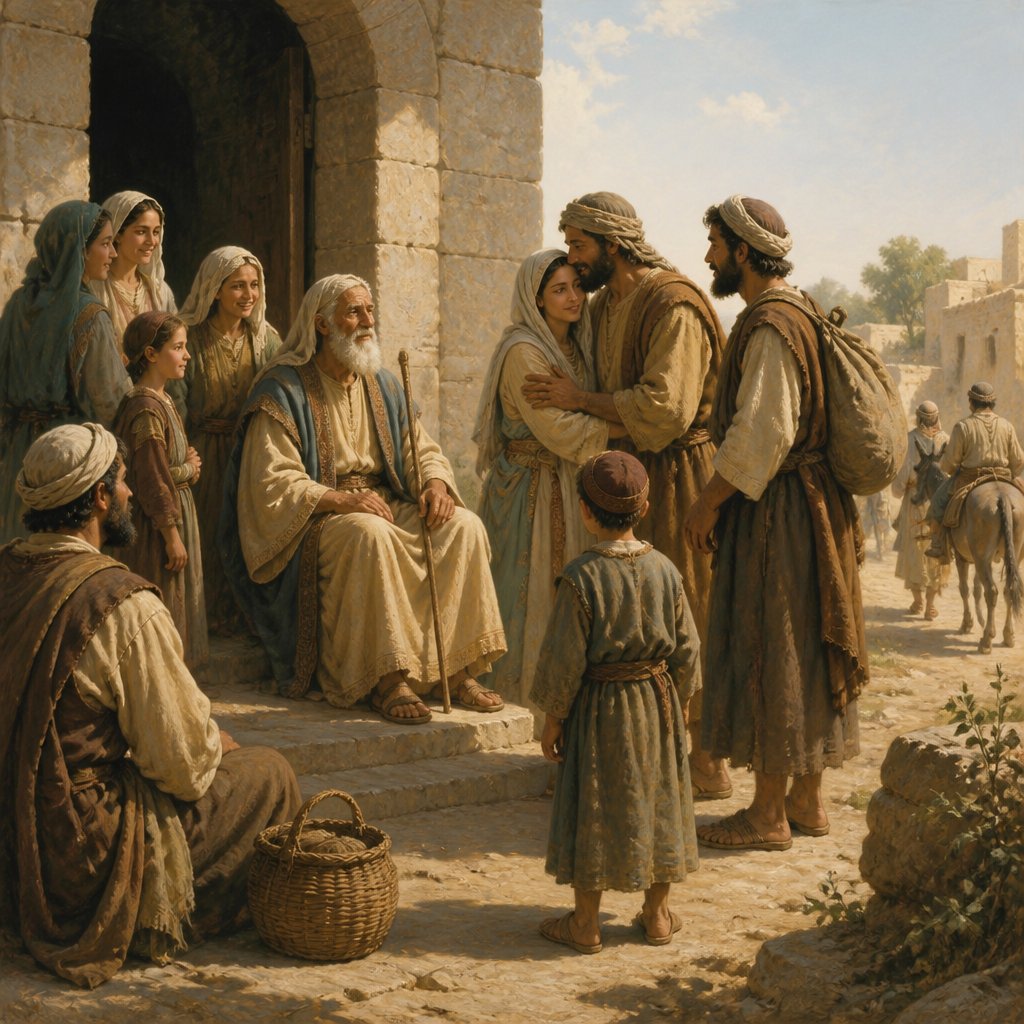
The Bible verse Judges 12:9 from the King James Version (KJV) reads:
"And he had thirty sons, and thirty daughters he sent abroad, and thirty daughters he brought in for his sons. And he judged Israel seven years."
This verse comes from the Book of Judges in the Old Testament, which recounts the period of Israel's history after the death of Joshua, when the Israelites were led by a series of tribal leaders known as judges. This verse specifically refers to a judge named Jephthah, who led the Israelites for a period of seven years.
The verse details Jephthah's large family, as he had thirty sons and thirty daughters. This is significant because it illustrates the prosperity and strength of Jephthah as a leader. In ancient Israelite society, having a large family was seen as a sign of wealth and power, as it ensured a strong labor force and an influential clan. By highlighting Jephthah's extensive family, the verse emphasizes his role as a successful and respected judge in Israel.
Furthermore, the verse mentions that Jephthah "sent abroad" his daughters and "brought in" daughters for his sons. This implies that Jephthah arranged marriages for his children, thus solidifying alliances and relationships with other families and tribes. In ancient Near Eastern societies, marriage alliances were crucial for establishing and maintaining political and social connections. Therefore, this verse underscores Jephthah's diplomatic prowess and his efforts to strengthen and expand his family's influence within the community.
The verse also briefly mentions Jephthah's role as a judge, stating that he "judged Israel seven years." As a judge, Jephthah was responsible for settling disputes, administering justice, and leading the Israelites in times of war. His seven-year tenure reflects his ability to provide stability and guidance to the nation during a tumultuous period in its history.
From a broader thematic perspective, this verse reflects the importance of leadership, diplomacy, and family in ancient Israelite society. Jephthah's success as a judge was intricately tied to his ability to govern his family and tribe effectively, foster alliances with other clans, and uphold justice within the community. Additionally, the verse highlights the interconnectedness of individual and communal prosperity, as Jephthah's family's strength and influence were intertwined with his role as a leader of Israel.
Symbolically, Jephthah's large family and successful leadership can be seen as a representation of God's blessings and favor upon him. In biblical narrative, a large family was often viewed as a sign of God's favor and prosperity. Jephthah's ability to govern and provide for his extensive family can be interpreted as a reflection of his faithfulness and obedience to God, which ultimately led to his success as a judge.
In conclusion, Judges 12:9 offers a rich and multifaceted portrayal of Jephthah as a powerful leader, strategic diplomat, and devoted family man. Through its depiction of Jephthah's extensive family, diplomatic activities, and judicial responsibilities, the verse provides valuable insights into the social, political, and religious dynamics of ancient Israel. Moreover, it symbolically conveys the importance of God's favor and providence in the prosperity and success of a righteous leader.
Get our apps


Artwork for Judges 12:9

Judges 12:9 - "And he had thirty sons, and thirty daughters, whom he sent abroad, and took in thirty daughters from abroad for his sons. And he judged Israel seven years."
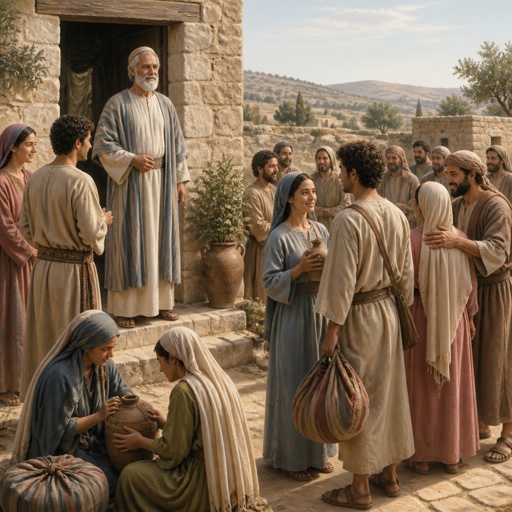
"And he had thirty sons, and thirty daughters, whom he sent abroad, and took in thirty daughters from abroad for his sons. And he judged Israel seven years." - Judges 12:9
"And he had thirty sons, and thirty daughters, whom he sent abroad, and took in thirty daughters from abroad for his sons. And he judged Israel seven years." - Judges 12:9

Judges 9:12 - "Then said the trees unto the vine, Come thou, and reign over us."

"Then said the trees unto the vine, Come thou, and reign over us." - Judges 9:12

Daniel 9:12 - "And he hath confirmed his words, which he spake against us, and against our judges that judged us, by bringing upon us a great evil: for under the whole heaven hath not been done as hath been done upon Jerusalem."

Judges 12:12 - "And Elon the Zebulonite died, and was buried in Aijalon in the country of Zebulun."

Judges 9:8-15

Judges 12:11 - "¶ And after him Elon, a Zebulonite, judged Israel; and he judged Israel ten years."

Judges 12:8 - "¶ And after him Ibzan of Beth-lehem judged Israel."

Judges 12:10 - "Then died Ibzan, and was buried at Beth-lehem."

Judges 12:13 - "¶ And after him Abdon the son of Hillel, a Pirathonite, judged Israel."

Judges 9:50 - "¶ Then went Abimelech to Thebez, and encamped against Thebez, and took it."

"And Elon the Zebulonite died, and was buried in Aijalon in the country of Zebulun." - Judges 12:12

Job 12:17 - "He leadeth counsellors away spoiled, and maketh the judges fools."

Judges 9:22 - "¶ When Abimelech had reigned three years over Israel,"

Judges 15:9 - "¶ Then the Philistines went up, and pitched in Judah, and spread themselves in Lehi."

Judges 12:7 - "And Jephthah judged Israel six years. Then died Jephthah the Gileadite, and was buried in one of the cities of Gilead."

Judges 9:39 - "And Gaal went out before the men of Shechem, and fought with Abimelech."

Judges 4:12 - "And they shewed Sisera that Barak the son of Abinoam was gone up to mount Tabor."

Judges 21:9 - "For the people were numbered, and, behold, there were none of the inhabitants of Jabesh-gilead there."

Judges 9:42 - "And it came to pass on the morrow, that the people went out into the field; and they told Abimelech."

Judges 9:10 - "And the trees said to the fig tree, Come thou, and reign over us."

Judges 9:47 - "And it was told Abimelech, that all the men of the tower of Shechem were gathered together."

Psalms 98:9 - "Before the LORD; for he cometh to judge the earth: with righteousness shall he judge the world, and the people with equity."

Judges 17:12 - "And Micah consecrated the Levite; and the young man became his priest, and was in the house of Micah."

1 Corinthians 5:12 - "For what have I to do to judge them also that are without? do not ye judge them that are within?"

Judges 9:9 - "But the olive tree said unto them, Should I leave my fatness, wherewith by me they honour God and man, and go to be promoted over the trees?"

Judges 9:32 - "Now therefore up by night, thou and the people that is with thee, and lie in wait in the field:"

Judges 9:14 - "Then said all the trees unto the bramble, Come thou, and reign over us."