The Perils of Idolizing Our Desires
“Yet he restored the money unto his mother; and his mother took two hundred shekels of silver, and gave them to the founder, who made thereof a graven image and a molten image: and they were in the house of Micah.” — Judges 17:4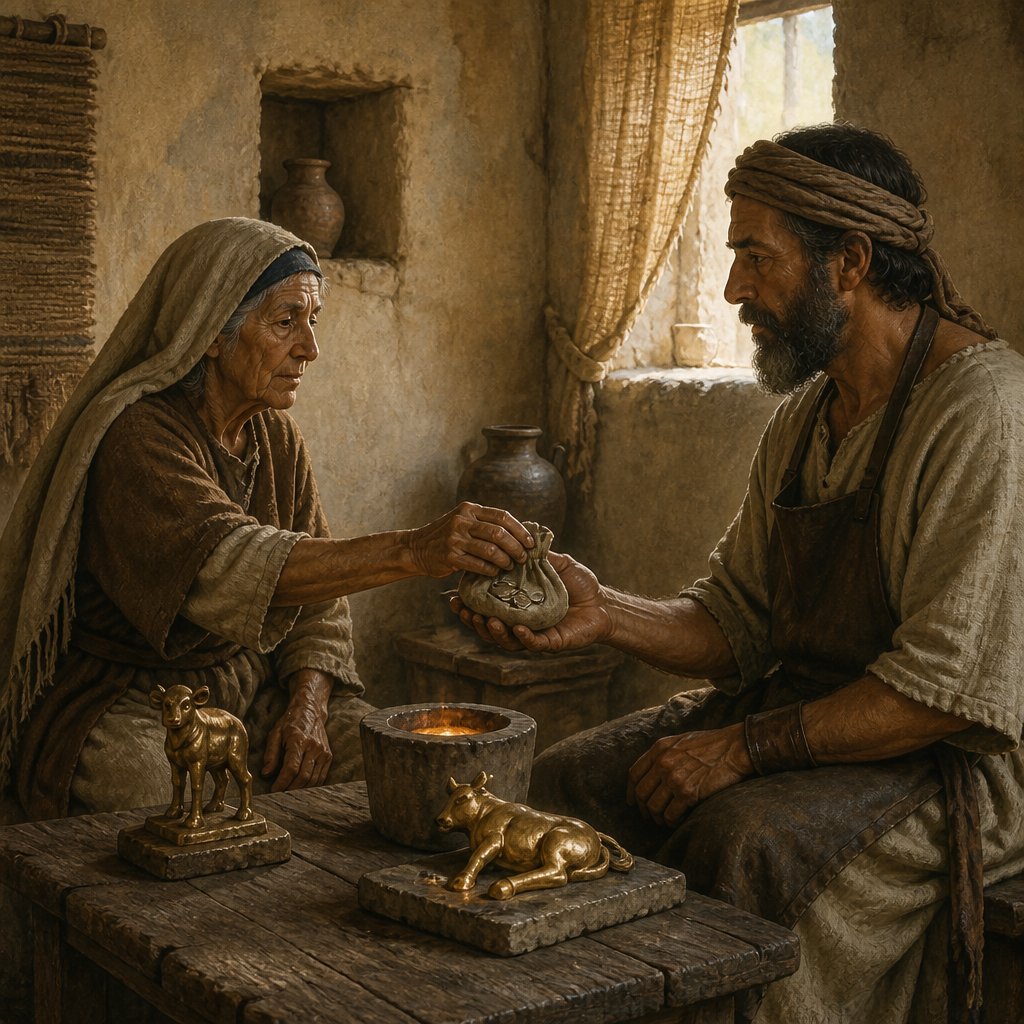
Judges 17:4 (KJV) states: "Yet he restored the money unto his mother; and his mother took two hundred shekels of silver, and gave them to the founder, who made thereof a graven image and a molten image: and they were in the house of Micah."
This passage from the book of Judges is a poignant reminder of the human condition, our struggles with desire, and the danger of our inclinations to fashion idols to serve our appetites. It narrates the story of Micah and his mother, whose zeal towards crafting idols paints a broader picture of spiritual wandering and the heart's propensity to abandon the true God for the comfort and conveniences of a created image.
To fully grasp the conflation of wealth, idolatry, and familial relationships in this text, we must first delve into the backdrop of the Israelites in the period of the Judges. This era was characterized by moral relativism, where "every man did that which was right in his own eyes" (Judges 21:25). The absence of strong, godly leadership led to a breakdown of societal norms and an entrenchment in self-serving ways. Micah's story encapsulates this waywardness, where even the familial bond is aroused to sin through an act that could have been undergirded by a heart seeking God.
Micah’s action of restoring the money to his mother stems from a complicated lineage of theft and redemption. His desire to return the silver suggests a longing for reconciliation and perhaps even a sense of duty, yet it fosters an insidious backdrop that unveils a heart longing for more than God. We see his mother, once the beneficiary of the silver, immediately diverting it toward the manufacture of idols, indicating that the reverent nature of their familial relationship quickly deteriorates into apostasy.
As she gives the silver to the founder, she does not direct it toward an offering to God, but instead, she uses it to create something that stands against the very worship she should pursue. It reflects a layered complexity of devotion to the wrong thing—an idol that could not deliver or sustain true worship or satisfaction.
This moment raises a critical question for believers: what are we allowing to dictate our worship? Many of us may not carve physical idols, but the essence of idolatry transcends mere statues. Idols can manifest as our careers, relationships, material possessions, or even our aspirations for status and success—anything that we prioritize above our relationship with God. The act of fashioning these graven images in our hearts can occur subtly as we prioritize our desires, needs, and wants ahead of divine intention.
In examining this scripture deeply, we must reflect on how easily it is to become ensnared in similar patterns. Allowing our hearts to be led by desires instead of divine instruction can culminate in a distorted view of worship—just as Micah and his mother did. Their zeal to pursue intimacy through the malleable and tangible led to alienation from the one true source of peace and fulfillment. God’s call to His people remains the same: forsake not the worship of the living God! (Jeremiah 2:13)
Paul, in Colossians 3:5, instructs us to put to death those earthly things within us, emphasizing the importance of discerning what occupies our thoughts and actions. This involves a heart examination—inspecting where we invest our resources, our attention, and even our worship.
As we meditate upon Judges 17:4, let us walk away with the awareness of our own idols that may have crept into our homes or hearts. Let us seek God earnestly, asking for His grace to demolish these idols through repentance, allowing Him to replace them with a worshipful spirit that longs solely for Him. May the restoration of right thinking lead to restored relationships with our Creator, steering us away from our tendencies toward personal gratification and back to true devotion.
Get our apps


Artwork for Judges 17:4

Judges 17:4 - "Yet he restored the money unto his mother; and his mother took two hundred shekels of silver, and gave them to the founder, who made thereof a graven image and a molten image: and they were in the house of Micah."
"Yet he restored the money unto his mother; and his mother took two hundred shekels of silver, and gave them to the founder, who made thereof a graven image and a molten image: and they were in the house of Micah." - Judges 17:4

Judges 4:17 - "Howbeit Sisera fled away on his feet to the tent of Jael the wife of Heber the Kenite: for there was peace between Jabin the king of Hazor and the house of Heber the Kenite."

Judges 4:4

Judges 4:4 - "¶ And Deborah, a prophetess, the wife of Lapidoth, she judged Israel at that time."

Judges 17:1 - "And there was a man of mount Ephraim, whose name was Micah."

Job 12:17 - "He leadeth counsellors away spoiled, and maketh the judges fools."

Judges 8:17 - "And he beat down the tower of Penuel, and slew the men of the city."

Judges 21:17 - "And they said, There must be an inheritance for them that be escaped of Benjamin, that a tribe be not destroyed out of Israel."

Judges 17:12 - "And Micah consecrated the Levite; and the young man became his priest, and was in the house of Micah."

Judges 3:17 - "And he brought the present unto Eglon king of Moab: and Eglon was a very fat man."

Judges 17:11 - "And the Levite was content to dwell with the man; and the young man was unto him as one of his sons."

Judges 2:17 - "And yet they would not hearken unto their judges, but they went a whoring after other gods, and bowed themselves unto them: they turned quickly out of the way which their fathers walked in, obeying the commandments of the LORD; but they did not so."

Judges 4:4 - "¶ And Deborah, a prophetess, the wife of Lapidoth, she judged Israel at that time."

Judges 17:7 - "¶ And there was a young man out of Beth-lehem-judah of the family of Judah, who was a Levite, and he sojourned there."

"¶ And Deborah, a prophetess, the wife of Lapidoth, she judged Israel at that time." - Judges 4:4

Judges 17:6 - "In those days there was no king in Israel, but every man did that which was right in his own eyes."

James 2:4 - "Are ye not then partial in yourselves, and are become judges of evil thoughts?"

Judges 9:17 - "(For my father fought for you, and adventured his life far, and delivered you out of the hand of Midian:"

Judges 10:17 - "Then the children of Ammon were gathered together, and encamped in Gilead. And the children of Israel assembled themselves together, and encamped in Mizpeh."

"And there was a man of mount Ephraim, whose name was Micah." - Judges 17:1
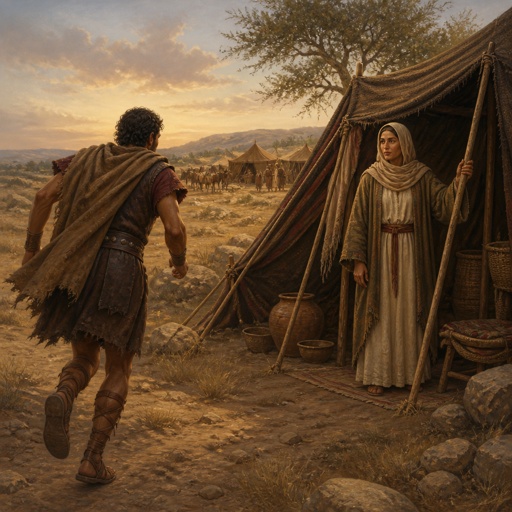
"Howbeit Sisera fled away on his feet to the tent of Jael the wife of Heber the Kenite: for there was peace between Jabin the king of Hazor and the house of Heber the Kenite." - Judges 4:17

Judges 4:15 – "The Lord routed Sisera and all his chariots and army by the sword."

Judges 1:17 - "And Judah went with Simeon his brother, and they slew the Canaanites that inhabited Zephath, and utterly destroyed it. And the name of the city was called Hormah."

Judges 17:13 - "Then said Micah, Now know I that the LORD will do me good, seeing I have a Levite to my priest."

Judges 4:12 - "And they shewed Sisera that Barak the son of Abinoam was gone up to mount Tabor."

Judges 17:5 - "And the man Micah had an house of gods, and made an ephod, and teraphim, and consecrated one of his sons, who became his priest."

Judges 5:17 - "Gilead abode beyond Jordan: and why did Dan remain in ships? Asher continued on the sea shore, and abode in his breaches."

Deuteronomy 19:17 - "Then both the men, between whom the controversy is, shall stand before the LORD, before the priests and the judges, which shall be in those days;"

Judges 20:17 - "And the men of Israel, beside Benjamin, were numbered four hundred thousand men that drew sword: all these were men of war."